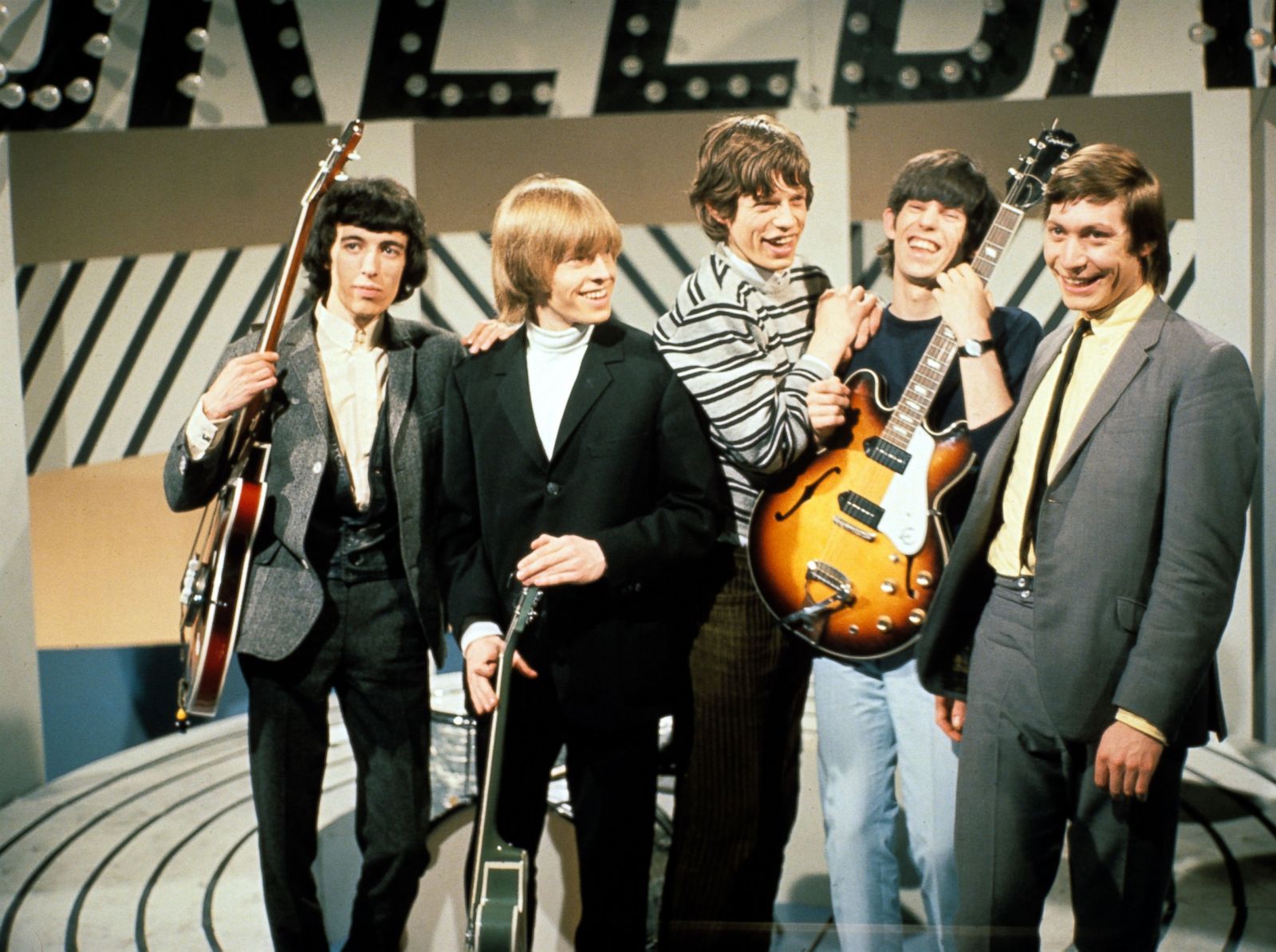
Bob Spitz’s new biography of the Rolling Stones is exactly what you’d expect from the rock-and-roll hagiography machine: a 600-page exercise in myth-making that mistakes longevity for greatness. Spitz, like every other boomer-era chronicler, wants you to believe the Stones are the "Greatest Rock and Roll Band in the World."
They aren't. They are the greatest marketing operation in musical history.
The "Greatest Band" title is a vestigial organ of 1970s PR that has somehow survived into the 2020s. We have been conditioned to accept the Jagger-Richards axis as a fountain of raw, rebellious creativity. In reality, the Stones have spent sixty years perfecting the art of the High-End Mimicry Loop. They didn’t invent the sound; they curated it for a demographic that was too scared to go to the source.
The Myth of the Glimmer Twins as Innovators
The "lazy consensus" surrounding the Stones is that they were the dangerous, blues-infused alternative to the Beatles' pop sensibilities. This narrative falls apart under the slightest scrutiny.
If you look at the fundamental mechanics of their early discography, the Stones weren't innovating; they were translating. They took the Chicago blues of Muddy Waters and the rock-and-roll architecture of Chuck Berry, stripped away the cultural weight, and sold it back to white teenagers with a side of faux-Satanic posturing.
Spitz's book leans heavily on the grit of the early years, but grit isn't a substitute for composition. While the Beatles were experimentng with $a_{i,j}$ matrices of sound in Sgt. Pepper or the complex polyphony of George Martin’s arrangements, the Stones were still trying to figure out how to play a basic 12-bar blues without sounding like a garage band.
The dirty secret of the Stones' "Golden Era" (roughly 1968 to 1972) is that it relied entirely on the input of outsiders. You want the "Stones Sound"? You’re actually looking for:
- Nicky Hopkins: The session pianist who provided the melodic backbone the band lacked.
- Jimmy Miller: The producer who literally taught them how to groove.
- Mick Taylor: The only guitarist in the band's history who could actually play a fluid, sophisticated lead.
Once Taylor left and Miller was gone, the "Greatest Band" became a self-parody. Since 1975, the Rolling Stones have been a legacy brand selling nostalgia for a rebellion that never actually happened.
The Billion-Dollar Zombie
We need to address the "People Also Ask" obsession with the Stones' touring revenue. Everyone asks, "How do they still do it at 80?"
The answer isn't "passion" or "the soul of rock." It’s Vertical Integration.
The Stones were the first to realize that rock and roll was a commodity, not a movement. They pioneered the stadium tour model that turned a concert into a logistical exercise rather than a musical performance. They didn’t stay on the road because they had something new to say—they stayed on the road because the overhead of being "The Rolling Stones" requires a GDP-level cash flow.
I’ve sat in rooms with promoters who describe the Stones' touring contract as a legal masterpiece. It’s not about the music; it’s about the brand equity. They are the Starbucks of rock. You know exactly what you’re getting: a high price point, a predictable experience, and a logo that looks good on a t-shirt.
Calling them the greatest band because they sell the most tickets is like calling McDonald’s the world’s greatest chef because they sell the most burgers. It’s a category error.
The Keith Richards "Authenticity" Trap
Spitz’s biography, like many before it, romanticizes Keith Richards as the "human riff" and the "soul" of the band. This is the most successful PR pivot in history.
Richards’ persona—the survivor, the pirate, the guy who "doesn't care"—is a carefully maintained costume. He’s the personification of the "Authenticity Trap." By appearing messy and unpolished, he convinces the audience that what they’re hearing is "real."
In reality, the Stones' music is meticulously calculated. Mick Jagger is a London School of Economics dropout who approaches setlists like a corporate strategist. He knows that "Brown Sugar" (despite its increasingly problematic lyrics) and "Start Me Up" are the KPIs that drive merchandise sales.
The idea that these guys are "street fighting men" is laughable. They are landed gentry playing at being rebels. The discord between their lifestyle and their lyrical themes should have made them a joke decades ago, but the "Greatest Band" tag acts as a shield against any actual critical thought.
Why the Beatles Won (And Why It Hurts to Admit)
The competitor article tries to frame the Stones as the winners of the "Beatles vs. Stones" debate because they outlasted them. This is the ultimate participation trophy logic.
The Beatles quit when they ran out of things to say. They chose to stop existing as a unit rather than become a caricature of themselves. That is an act of artistic integrity. The Stones, conversely, have spent the last forty years diluting their own brand.
Consider the "Stones Formula":
- Open with a Chuck Berry-style riff from Keith.
- Add a syncopated Charlie Watts beat (rest in peace, but he was a jazz drummer who was bored by rock).
- Have Mick do his best James Brown impression.
- Add a layer of backing vocalists to hide the fact that the lead vocals are shot.
This isn't evolution. It's a loop. Every album since Some Girls (1978) has been a pale imitation of what came before it. We are told to celebrate Hackney Diamonds because "it sounds like the Stones." Of course it does. It was engineered by Andrew Watt to hit every nostalgia trigger in the lizard brain of a 60-year-old male. It’s an AI-generated album made by humans.
The Ethics of the "Greatest" Label
When we keep the Stones on this pedestal, we do a massive disservice to the bands that actually pushed the boundaries of the genre.
If "Greatest" means influence, the Velvet Underground dwarfs them.
If "Greatest" means technical mastery and innovation, Led Zeppelin laps them.
If "Greatest" means cultural resonance and evolution, Radiohead owns them.
The Stones are the "Greatest" only if your metric is Longevity + Revenue. They are the incumbent that refuses to step down, hogging the oxygen in the room and preventing new, truly dangerous music from reaching the mainstream. They represent the "Safe Rock" era—music that sounds loud but says absolutely nothing.
The Spitz biography isn’t a tribute; it’s a eulogy for a time when we weren't savvy enough to see the strings. We were sold a package of rebellion that was actually a corporate takeover.
Stop buying the lie. Stop calling them the greatest. They are a multi-national conglomerate that occasionally makes noise.
If you want to hear the "Greatest Band in the World," go find a group of kids in a basement who are actually angry about something. The Stones haven't been angry since they realized they could avoid UK taxes by moving to France.
The circus is still in town, but the tigers have been toothless for half a century. Put down the biography and turn off the radio. The myth only lives if you keep believing it.