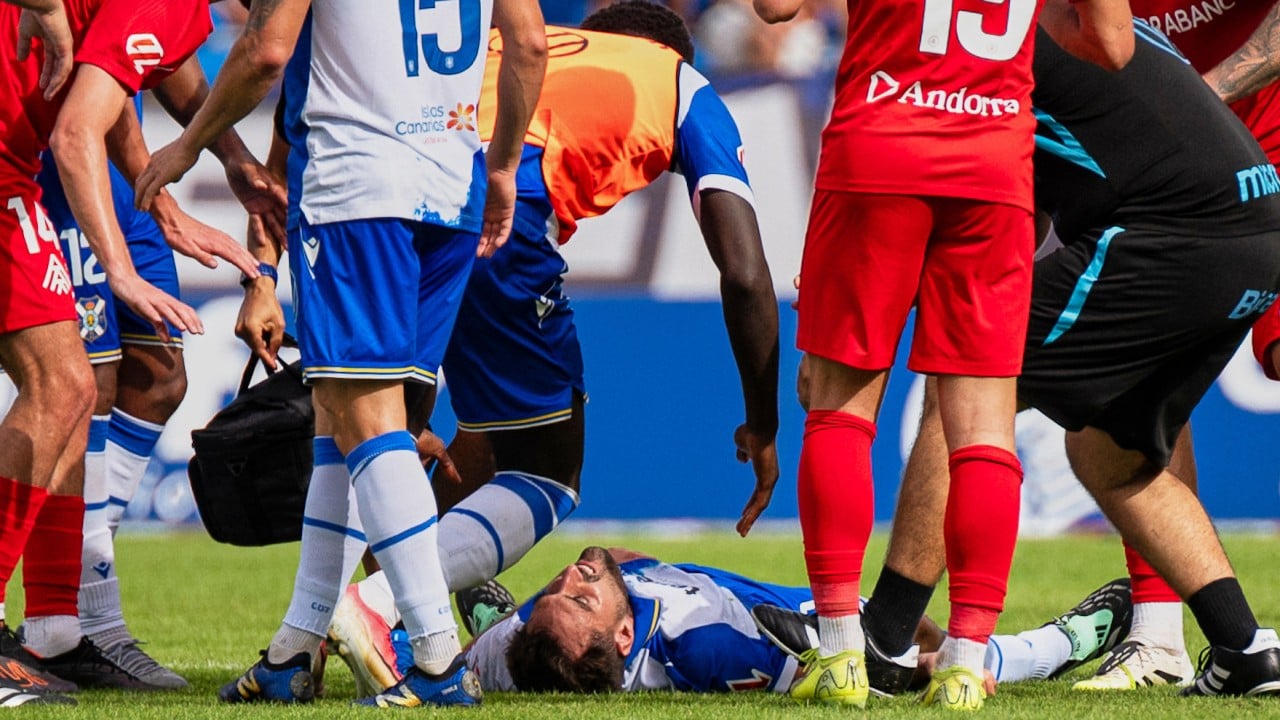
Spanish police have opened a formal manslaughter investigation following the death of a footballer who suffered fatal injuries during an on-pitch collision, shifting a tragic sporting incident into the jurisdiction of criminal courts. The inquiry seeks to determine whether the fatal contact crossed the legal threshold from an accepted risk of contact sport into reckless or criminally negligent conduct. While fatal collisions in football are historically rare, the intervention of law enforcement exposes a growing tension between internal sports governance and state criminal law. Investigators are examining match footage, referee reports, and medical response timelines to establish accountability.
For decades, football operated under an unwritten rule. What happened between the white lines stayed between the white lines. Referees issued yellow or red cards, disciplinary committees handed down touchline bans, and civil courts occasionally settled financial disputes over career-ending tackles. Criminal prosecutors rarely stepped onto the grass.
That barrier is eroding. When an athlete dies on the field of play, the state's duty to investigate unnatural deaths overrides the autonomy of any sporting federation. In Spain, the Penal Code makes no special carve-out for athletes. If an action on a football pitch results in a fatality, police and investigative magistrates are legally obligated to examine whether the harm resulted from an unavoidable accident or a breach of the duty of care that every citizen owes another, regardless of whether they are wearing shin guards.
The Thin Line Between Aggression and Criminality
To understand why Spanish police opened a manslaughter inquiry, one has to look at how European legal systems treat assumed risk. When a player steps onto a pitch, they implicitly consent to the normal physical hazards of the game. Shoulder charges, sliding tackles, and aerial challenges for a contested ball carry inherent danger. Under the doctrine of volenti non fit injuria—to a willing person, injury is not done—the law shields athletes from liability for injuries sustained during legitimate play.
The shield shatters when conduct falls outside the rules and spirit of the sport.
In Spanish jurisprudence, involuntary manslaughter (homicidio imprudente) requires proof of negligence or recklessness that leads directly to a death. Investigators do not need to prove that a player intended to kill an opponent. Intent to kill would elevate the charge to murder. Instead, police look for gross imprudence—a reckless disregard for the physical safety of another person.
Consider a hypothetical example to clarify how prosecutors draw this boundary. Imagine two players jumping for a header in the penalty box. Their heads clash accidentally, resulting in a fatal brain hemorrhage. Because both players were legitimately contesting the ball within the laws of the game, no crime has occurred. Now alter the scenario. Suppose the ball has already cleared the area, and a defender launches a late, high-speed elbow directly into the striker's temple out of frustration. That action serves no sporting purpose. It violates the rules of the game and basic human safety. In the eyes of a magistrate, the pitch ceases to be a sporting arena and becomes the scene of a criminal assault.
What Investigators Look For First
When law enforcement takes over a sports fatality case, their methodology differs sharply from that of a football federation's disciplinary panel. A federation asks whether a rule was broken. Police ask whether a crime was committed.
The investigation immediately branches into three distinct evidentiary tracks:
- Biomechanical and Video Analysis: Forensic experts dissect available broadcast footage, tactical camera angles, and even spectator smartphone videos frame by frame. They calculate closing speeds, angles of impact, and whether the offending player made any attempt to pull out of the challenge once the ball was lost.
- Witness Testimony and Audio: Police interview the referee, assistant referees, opposing players, and coaching staff. Crucially, they look for evidence of prior hostility. Was there bad blood earlier in the match? Did the player issue verbal threats before the fatal clash? Pre-existing malice transforms a split-second miscalculation into a calculated act of aggression.
- The Autopsy and Medical Causation: Forensic pathologists must establish the exact physiological mechanism of death. Did the impact itself cause fatal trauma, such as a ruptured spleen, a cervical spine fracture, or a catastrophic intracranial bleed? Or did the collision trigger an underlying, undiagnosed cardiac condition? If an autopsy reveals that a player died from an undetected heart arrhythmia coincidentally triggered by the adrenaline of a minor bump, the criminal case against the opposing player collapses immediately.
The Overlooked Factor of Pitchside Emergency Response
A thorough manslaughter inquiry never stops at the moment of impact. Under Spanish law, negligence can also be institutional. Once a player collapses, the clock starts ticking on a completely different set of legal obligations involving stadium safety, medical staffing, and emergency protocols.
In top-flight professional leagues like La Liga, stadiums resemble mobile trauma centers. Pitchside ambulances, defibrillators, and specialized sports trauma physicians are mandatory. The reality drops off precipitously as you move down the pyramid into regional divisions, amateur leagues, and youth tournaments.
Police routinely subpoena the matchday medical logs to answer uncomfortable questions. How many seconds elapsed between the collision and the arrival of trained medical personnel? Was a functioning automated external defibrillator (AED) within immediate reach, or was it locked in an administrative office two hundred meters away? Was an ambulance stationed at the ground, or did staff have to dial emergency services and wait twenty minutes for a unit to navigate local traffic?
If forensic pathologists determine that the initial on-pitch collision was survivable, and that the player died because of delayed airway management or a lack of basic resuscitation equipment, the focus of the manslaughter inquiry shifts entirely. The opposing player may be cleared of wrongdoing, while club officials, match organizers, or regional federation executives suddenly find themselves facing charges of negligent homicide by omission.
Historical Precedents and the Legal Shift in Europe
The involvement of police in on-field incidents is not without precedent, though fatalities remain exceedingly rare. European courts have spent the past three decades slowly dismantling the idea that sports governing bodies hold exclusive jurisdiction over on-field violence.
In the United Kingdom, the landmark 1995 conviction of Scottish striker Duncan Ferguson marked a watershed moment. Ferguson headbutted an opponent during a match, an act missed by the referee at the time. Despite receiving a disciplinary suspension from the Scottish Football Association, criminal prosecutors pursued the case, resulting in a three-month prison sentence. The court ruled that a football pitch is not a sanctuary from the law of the land.
Similarly, in 2004, Dutch courts convicted footballer Rachid Bouaouzan of aggravated assault after a horrific tackle broke the leg of Niels Kokmeijer, ending his career. The court rejected the defense that hard tackles are simply part of professional football, noting that the challenge was entirely disproportionate and carried a foreseeable risk of severe harm.
When a fatality occurs, the legal pressure intensifies exponentially. In 2014, Italian judicial authorities opened manslaughter investigations following several high-profile deaths in amateur and semi-professional matches, scrutinizing both physical clashes and medical clearance certificates. In Spain itself, judicial inquiries into sports deaths have historically forced major regulatory overhauls, particularly regarding mandatory cardiac screenings and defibrillator availability at municipal grounds.
The Friction Between Sports Tribunals and Criminal Courts
Whenever police open an inquiry into an on-pitch incident, it triggers an immediate procedural clash between the sporting federation and the state judiciary. Under Spanish legal principles, criminal proceedings take absolute precedence over administrative or sporting disciplinary processes.
This creates a frustrating limbo for everyone involved. The regional or national football federation must freeze its own disciplinary hearing regarding the red card or violent conduct until the investigating judge concludes the criminal inquiry. A player accused of causing a fatal injury might not face a formal sporting ban for months, or even years, while forensic reports crawl through overloaded municipal courts.
Simultaneously, the psychological toll on the surviving player is immense. Even in cases where video evidence eventually proves the collision was a tragic, unavoidable sporting accident, the stigma of being the subject of a police manslaughter investigation can destroy a career. Players in lower divisions lack the high-powered legal teams and crisis management apparatus available to elite professionals. They are thrust into a criminal justice system designed to prosecute street crime, forced to hire defense attorneys to explain the split-second physics of a sliding tackle to a magistrate who may have never kicked a ball.
Why Referees Are Suddenly Under Oath
Match officials also find themselves pulled into unfamiliar territory. On a Saturday afternoon, a referee's word is final. Their match report is the foundational document for league sanctions. In a criminal court, the referee is merely an eyewitness, and their on-field judgment carries zero legal authority.
If a referee showed a yellow card for a reckless challenge that later proved fatal, defense lawyers will wave that match report in front of the judge as proof that the official on the scene did not view the act as excessively violent. Conversely, prosecutors will argue that a referee's split-second view from thirty yards away is vastly inferior to slow-motion forensic video analysis. The referee is forced to testify under oath, defending their positioning, line of sight, and interpretation of the laws of the game under cross-examination.
The Gray Area of Intent and Speed
The fundamental problem facing Spanish investigators in any on-pitch fatality is that modern football is played at speeds that blur the line between accident and recklessness. Even at semi-professional and amateur levels, players are faster and physically stronger than previous generations, while the tactical emphasis on high pressing creates more high-velocity collisions in congested areas of the pitch.
A tackle initiated when a ball is there to be won can turn catastrophic in a fraction of a second. A bobble on an uneven grass surface, a slight slip on wet turf, or an opponent shifting their weight a tenth of a second earlier than anticipated can turn a routine block into a lethal impact.
Criminal law struggles to measure intent within a two-hundred-millisecond window. Prosecutors must prove beyond a reasonable doubt that the player's conduct deviated sharply from what a reasonable athlete would do in the exact same circumstance. That is an extraordinarily high bar to clear unless the video shows unambiguous, off-the-ball violence.
Yet the mere existence of the police inquiry sends a stark warning through every dressing room in Spain. The white chalk lines painted on the grass do not form a border where national law ceases to exist. Whether the investigation ultimately ends in criminal charges or a judicial finding of accidental death, the message to players, coaches, and club administrators is unmistakable: the state is watching, and the excuse that it was just part of the game no longer holds weight when someone fails to walk off the pitch.