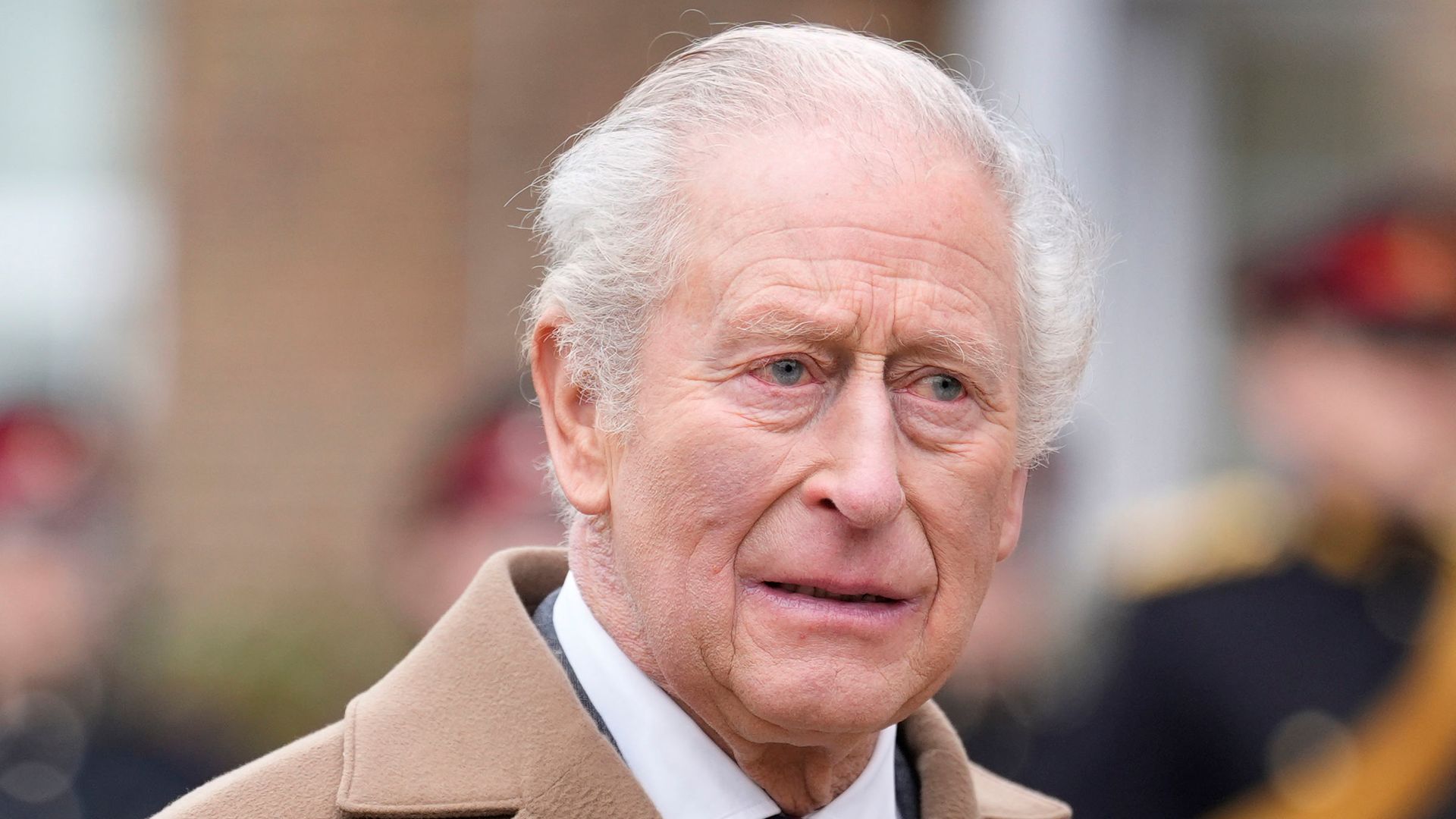
The press is currently salivating over the prospect of a British monarch dropping "veiled references" to a Middle Eastern conflict during a summit of 56 nations. They call it soft power. They call it a delicate balancing act of international relations.
I call it a distraction from the reality of how global power actually functions in 2026.
We are told that when the King speaks to the Commonwealth, the world holds its breath. The narrative suggests that a coded phrase about "regional stability" or "unnecessary escalation" serves as a masterstroke of diplomacy that can cool the tempers of hawks in Tehran or decision-makers in Washington. This is a fairy tale for people who still think world history is written with quill pens.
If you believe a "veiled reference" changes the trajectory of a potential war, you aren't paying attention to the hard math of modern conflict.
The Myth of the Royal Red Line
The common misconception is that the British Monarchy acts as a stabilizing "moral compass" for the Commonwealth. The theory goes like this: the King speaks, the 56 member states listen, and a collective diplomatic pressure builds.
Here is the truth: The Commonwealth is not a geopolitical bloc. It is a historical social club with a branding problem.
In my years analyzing trade flows and defense procurement, I’ve seen more influence exerted by a mid-level analyst at a private equity firm than by a dozen royal speeches. Why? Because power today is measured in kilowatt-hours, semiconductor yields, and naval choke points.
When the King alludes to the "shadow of conflict" in the Middle East, he isn't signaling a shift in policy. He is performing a ceremonial duty to acknowledge the obvious without having the constitutional authority to do anything about it.
Diplomacy as High-Stakes Pantomime
Modern diplomacy has become a game of optics where the appearance of concern is treated as a substitute for the exercise of power. The competitor's focus on "veiled references" highlights exactly what is wrong with the current analysis. It rewards subtlety in a world that only responds to friction.
Consider the players involved in the current tensions:
- Energy Markets: Traders don't check the King's speech to price Brent Crude. They check satellite imagery of refinery throughput and insurance premiums for the Strait of Hormuz.
- The Commonwealth Members: Many of these 56 nations have diverging interests. Some are pivoting toward Chinese infrastructure investment; others are securing security pacts with regional hegemons. A speech in London or a summit in Samoa doesn't change their internal GDP requirements.
- The Aggressors: No state actor is pausing a drone program or a naval blockade because a monarch used a clever metaphor about "the winds of war."
Stop Looking for Subtext and Start Looking for Supply Chains
The "veiled reference" is the ultimate lazy consensus. It allows journalists to feel smart by "decoding" a message that was designed to be undecipherable. It is the diplomatic equivalent of a horoscope—vague enough that anyone can project their own fears or hopes onto it.
The real story isn't what the King says about the war; it’s about why we are still pretending these speeches are the levers of history.
In a real-world scenario, if a conflict in the Gulf escalates, the Commonwealth doesn't act as a unified front. It fragments. India, a Commonwealth heavyweight, will prioritize its own strategic autonomy and energy security. Canada and Australia will align with Five Eyes intelligence priorities. The smaller island nations will worry about the literal rising tide of climate change and the cost of imported grain.
There is no "King’s peace." There is only the brutal reality of the Security Dilemma: the idea that one state's attempt to increase its security is viewed as a threat by another, leading to a spiral that no amount of royal charisma can halt.
The Cost of Symbolic Posturing
The danger of focusing on these "veiled references" is that it creates a false sense of security. It suggests that "the adults are in the room" and that the old structures of the 20th century are still holding the line.
They aren't.
The old structures are hollowed out. We are living in a multipolar environment where influence is transactional, not traditional.
- Logic Check: If the King’s words carried the weight the media claims, the UK's influence in the Middle East would have expanded over the last decade. Instead, it has contracted.
- Data Check: Look at the voting records of Commonwealth nations at the UN. They do not vote as a bloc. They vote according to regional pressure and debt obligations.
The Counter-Intuitive Truth: Silence is More Powerful
If the Monarchy actually wanted to exert influence, the most disruptive thing the King could do is say absolutely nothing about the war.
By acknowledging the conflict through "veiled" language, the Crown stays within the permitted lanes of the UK Foreign Office. It becomes a mouthpiece for a government that is often struggling to find its own footing on the world stage.
True power in the 21st century is the ability to ignore the noise. Imagine a scenario where the King ignored the geopolitical script entirely and focused the summit exclusively on the mechanical realities of intra-Commonwealth trade and tech transfer. That would be a signal. It would say: "We are moving on from the old wars to the new economies."
Instead, we get the same tired dance. A speech is drafted. It is vetted. A "veiled reference" is inserted to give the press something to talk about. The press writes about the "bravery" of the message. The war continues unabated.
How to Actually Read a Global Crisis
If you want to know if we are headed for a major escalation, stop reading the royal tea leaves. Watch these three metrics instead:
- War Risk Insurance Premiums: When Lloyds of London raises the cost to sail through a specific meridian, that is the world’s most honest assessment of risk.
- Central Bank Gold Reserves: Watch where the "Global South" is moving its liquid assets. If they are dumping T-bills for physical bullion, they are preparing for a breakdown in the rules-based order.
- Submarine Cable Security: In 2026, a war isn't just fought with missiles; it’s fought by cutting the fiber optic cables that handle 99% of international data.
The "King's message" is a legacy product. It's the vinyl record of geopolitics—cool to look at, nostalgic, but a terrible way to run a high-speed data center.
The Commonwealth is a Ghost, Not a Guardrail
We have to stop treating the Commonwealth as a strategic asset in hard-power conflicts. It isn't. It is a cultural network. That has value—in education, in law, in language—but it is useless against a ballistic missile or a cyber-attack.
By framing the King's speech as a major event in the Iran-West tension, the media is doing a disservice to the public. They are selling you a version of the world that died in 1956.
The reality is that we are in a post-influence era. No one is coming to save the "international community" with a well-timed adjective.
I’ve watched as analysts spent hours debating the "tone" of a communique while the actual players on the ground were busy moving hardware and securing mineral rights. The tone doesn't matter. The hardware does.
The King's message to these 56 nations will be a masterclass in saying nothing while appearing to say everything. It is a sophisticated form of theater designed to reassure the British public that they are still at the center of the world.
But look at the map. Look at the money. Look at the energy.
The center has moved.
If you're still waiting for a "veiled reference" to save the day, you've already lost the war.
Diplomacy isn't a speech. It's a shipment. Everything else is just noise for the evening news.
Stop looking at the crown. Look at the cargo.