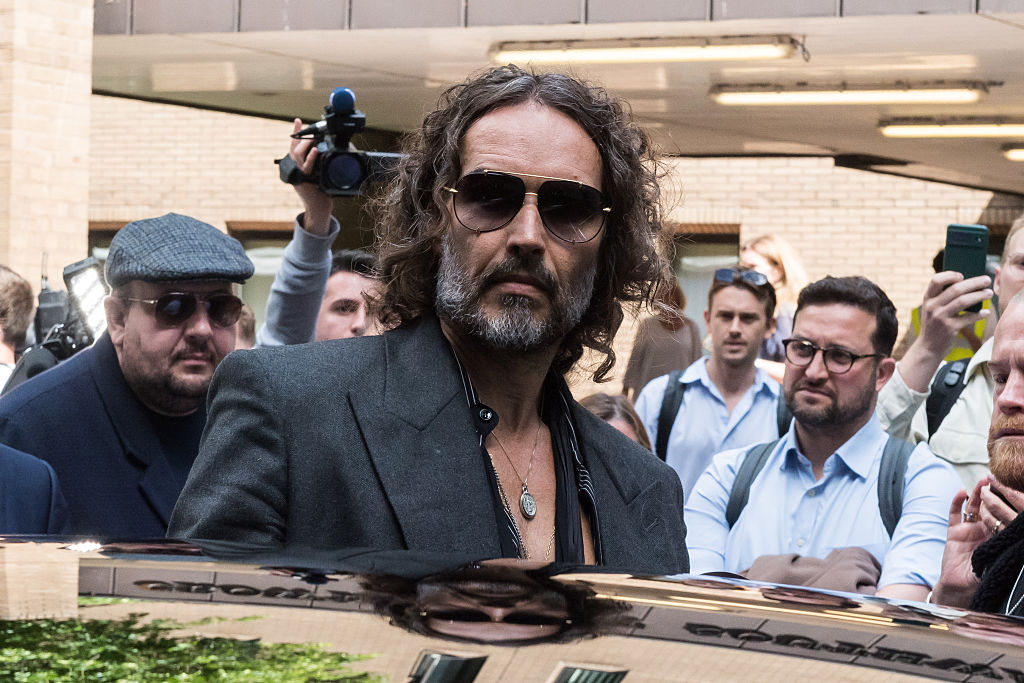
Russell Brand stood in the glass-fronted dock of Southwark Crown Court this week, a physical shadow of the flamboyant "shamanic" figure who once dominated British airwaves. Now 50, the comedian-turned-alternative-guru pleaded not guilty to two fresh charges: one count of rape and one count of sexual assault. These allegations, dating back to 2009, expand a legal battle that has already seen him charged with five other offenses involving four different women between 1999 and 2005. With a Bible clutched in his hand and a tiger-print shirt unbuttoned to the sternum, Brand’s appearance was a calculated juxtaposition of his hedonistic past and his new identity as a Christian traditionalist.
The core of the matter is no longer just a media scandal; it is a sprawling criminal prosecution that spans two decades of alleged predatory behavior. While the public focus often lingers on the theatricality of Brand’s arrival at court—his monogrammed fedora and his "blessed" soundbites to reporters—the legal reality is far more clinical and dangerous for him. The Metropolitan Police and the Crown Prosecution Service (CPS) have moved from the investigative phase into a concerted effort to hold one of the 2000s' most untouchable figures accountable for what they claim was a pattern of systemic abuse.
The Expansion of the Indictment
The two new charges are significant because they break the timeline previously established by the April 2025 charges. While the initial counts focused on the early years of his fame—including a 1999 rape allegation in Bournemouth and several incidents in Westminster between 2001 and 2005—these latest allegations move the needle to 2009. This was the peak of Brand’s Hollywood ascent, the year before his high-profile marriage to Katy Perry and the era of Get Him to the Greek.
By introducing these 2009 charges, prosecutors are building a narrative of persistence. It suggests that the behavior alleged by the initial four women was not an isolated phase of "youthful indiscretion" or drug-fueled chaos, but a consistent thread that continued even as he became a global A-list star. Brand’s defense team, led by high-powered counsel, is currently fighting to keep these new charges separate from the original trial scheduled for June 2026. They argue that the late addition of these counts prevents a fair preparation, but the prosecution’s strategy is clear: they want a jury to see the full scope of the accusations in one single, devastating trial.
The Rebrand as a Shield
There is an undeniable irony in Brand’s current defense strategy. For years, he has cultivated a massive online following by positioning himself as a victim of a "coordinated media attack" by the mainstream press. He has skillfully pivoted from the "shagger of the year" persona to a whistleblower against the establishment. When he arrived at court this week, the Bible with colorful post-it notes was not just a religious accessory; it was a signal to his millions of followers that he is a persecuted man of faith.
However, the courtroom is not a YouTube comments section. In the dock, the rhetoric about "centralized digital currencies" and "media censorship" falls silent. The case rests on the testimony of six women who have come forward through the Metropolitan Police’s "Operation Bridge" investigation. These women aren't faceless entities of the "deep state"; they are individuals alleging specific, violent acts in hotel rooms, radio station offices, and private residences. The disconnect between Brand’s "enlightened" online persona and the grim details of the charges—which include oral rape and indecent assault—is the primary hurdle his legal team must manage.
The Institutional Fallout
This case is also an indictment of the institutions that enabled Brand’s rise. The BBC, Channel 4, and various production companies are under intense scrutiny for how they handled Brand during his most volatile years. We are seeing a delayed reckoning for the "lad culture" of the 2000s, where hyper-sexualized behavior was often laughed off as part of a performer's brand.
Internal investigations have already led to apologies from the BBC, acknowledging that staff felt unable to complain because of Brand’s status. The trial will likely reveal uncomfortable truths about who knew what and when. If the prosecution can demonstrate that Brand used his professional environment to facilitate these alleged assaults, the legal and financial implications for these broadcasters could be astronomical.
The Road to June
A further case management hearing is set for March, where Mr. Justice Bennathan will decide the fate of the "joinder" application—whether all seven charges across six women will be heard together. For Brand, a single trial is a nightmare scenario; it allows the prosecution to argue "propensity," suggesting a recognizable pattern of conduct. For the accusers, it represents a collective voice that is much harder to dismiss as a series of unrelated misunderstandings.
Brand remains on conditional bail, a man suspended between his past life as a jester and a future that may involve a significant prison sentence. He tells the cameras he is "blessed," but the cold reality of Southwark Crown Court suggests the blessings are running thin. The trial in June 2026 will not just be about one man; it will be a referendum on an era of celebrity that many would rather forget.
Would you like me to track the specific bail conditions or the upcoming March hearing dates for you?