When news breaks about a suspected plague death inside a high-security research facility, your mind probably jumps straight to cinematic tropes. You picture a breached containment zone, a panicked government cover-up, and a countdown to a global lockdown. But the reality of high-containment biological research is far messier, bureaucratic, and prone to human error than Hollywood admits.
Let's look at what happened when a Russian lab worker died under suspicion of a plague infection, triggering a massive medical observation sweep for roughly two hundred people. This incident isn't just a grim local tragedy. It serves as a glaring stress test for how nations handle containment protocols, institutional transparency, and the terrifying fragility of pathogen security in the twenty-first century. Building on this idea, you can find more in: Why Australia is Struggling to Fill Seats at the Climate Table.
The Reality of High Containment Laboratories
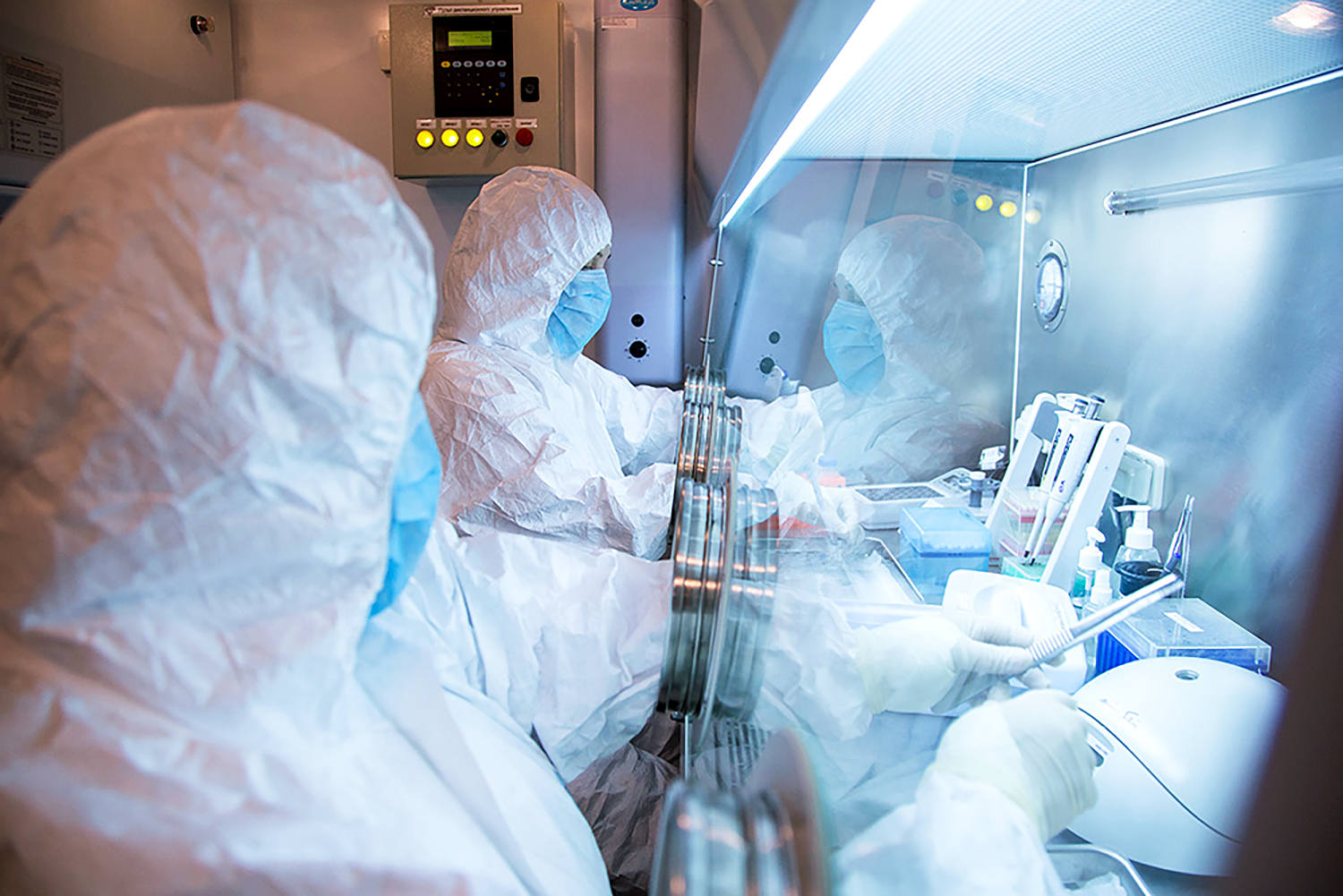
We treat biosafety level facilities like impenetrable fortresses. They aren't. They are workplaces populated by tired humans working long shifts, handling vials, and occasionally making mistakes.
When a researcher falls ill with a dangerous pathogen like Yersinia pestis, the immediate panic isn't about an engineered super-weapon. It's about standard protocols failing. Was a glove torn? Did an air-handling unit malfunction? Did someone rush a cleanup procedure at the end of a grueling week? Experts at BBC News have shared their thoughts on this trend.
Laboratories dealing with plague operate under strict controls, yet containment breaches happen through mundane oversights. The scariest part of handling zoonotic diseases isn't malicious intent. It's everyday fatigue meeting microscopic lethality.
Why Tracing Two Hundred Contacts is a Nightmare
Quarantining or medically observing two hundred people sounds efficient on paper. In practice, it is an administrative and epidemiological marathon.
Think about who interacts with a single lab technician on any given day. You have colleagues in the same bio-unit, administrative personnel sharing ventilation corridors, family members, local transport drivers, and healthcare workers who treated initial symptoms before a diagnosis was suspected.
Medical observation means daily temperature checks, symptom logs, preventative antibiotic therapy regimens, and massive psychological strain for everyone involved. When health authorities pull two hundred people into observation circles, they are admitting a terrifying margin of uncertainty. They don't know who caught an aerosolized droplet, who touched a contaminated surface, or who simply crossed paths with the victim during the incubation window.
This scattershot approach exposes a massive vulnerability in our public health infrastructure. We are notoriously bad at swift contact tracing when the exposure happens behind closed institutional doors rather than a crowded subway car.
The Historical Shadow of Soviet Biosecurity
Russia carries a heavy legacy when it comes to biological research accidents. Decades ago, the anthrax leak in Sverdlovsk proved that state secrecy and dangerous pathogens make a lethal cocktail.
Whenever a modern incident occurs in a Russian research facility, the global scientific community reacts with a distinct brand of anxiety. Transparency is rarely the strong suit of large state-run scientific complexes. Information trickles out through fragmented local reports, social media whispers, and delayed official statements.
This lack of open data breeds conspiracy theories on one side and dangerous complacency on the other. If we cannot get clear, unvarnished facts about how a researcher contracted plague inside a modern facility, independent researchers cannot learn from the mistake. Safety protocols only evolve when failures are studied in the sunlight, not buried under bureaucratic carpet.
What This Tells Us About Zoonotic Risks Today
The plague isn't a ghost of the Middle Ages. It circulates naturally in wild rodent populations across parts of Asia, the Americas, and Africa. Field researchers and laboratory workers handle wild strains constantly to monitor infection rates and develop countermeasures.
The danger doesn't just live in nature. It lives in freezers, test tubes, and centrifuge rotors across the globe. Every time a sample is transferred, sequenced, or studied, there is a tiny, non-zero risk of escape.
Most people assume bioterrorism is our biggest biological threat. The data says otherwise. Institutional accidents, procedural shortcuts, and simple bad luck cause the vast majority of lab-acquired infections.
Fixing the System Before the Next Breach
You can't fireproof a laboratory against human error completely, but you can build systems that catch mistakes before they turn fatal.
- Mandatory dual-operator protocols for high-risk extraction steps ensure no single person works alone with live strains of high-consequence pathogens.
- Real-time environmental sensors in exhaust systems can detect aerosol leakage long before a worker develops symptoms.
- Independent safety audits must replace internal compliance checks. When the people running the lab are the same people grading their own safety scorecards, disasters happen.
If you work in fields touching public health or biosafety, push for radical transparency. Demand better tracking of pathogen lineage within facilities. Support funding for passive monitoring systems that don't rely on a tired technician remembering to log a minor spill.
We dodged a wider catastrophe this time around, but luck is not a strategy. The next lab worker who gets sick might not be caught before walking out into a crowded city center. Treat every containment close call as a final warning.