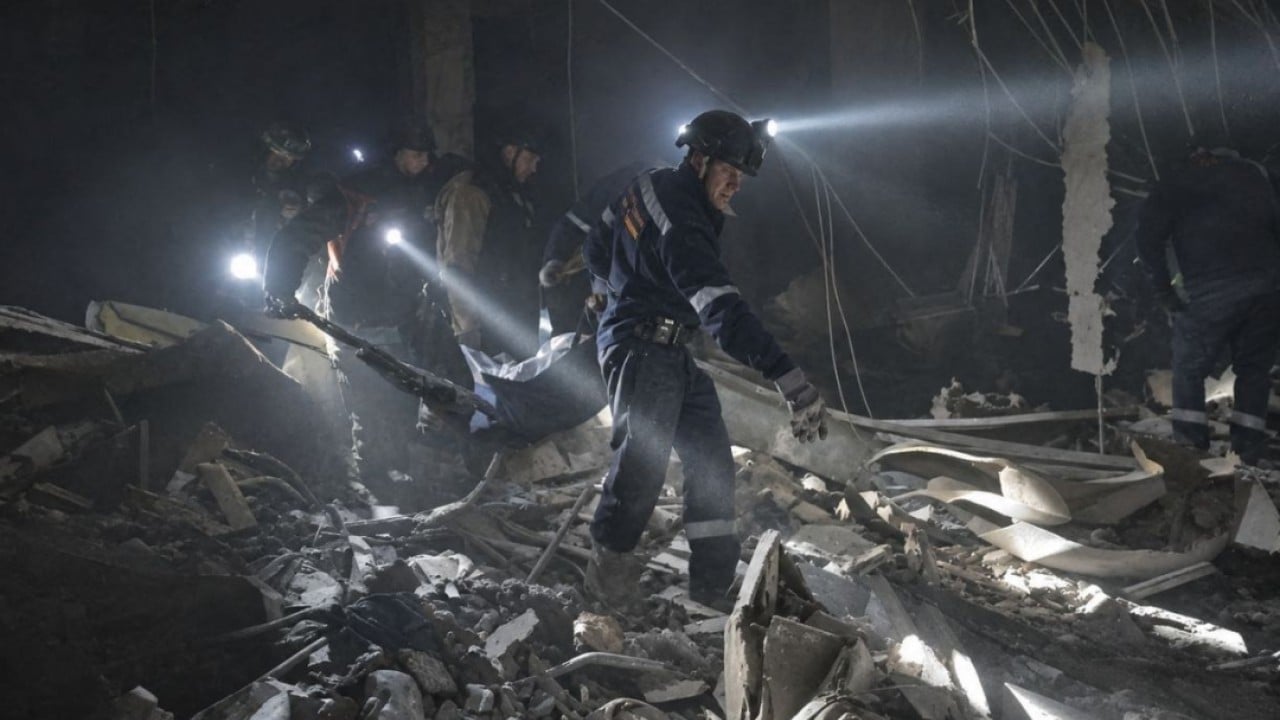
Twenty-four people are dead after Russian forces bombed an aid center and civilian shelter in southern Ukraine. That single headline captures a brutal reality that's been playing out across Ukrainian front-line communities for years now. You read the numbers, you feel a brief flash of outrage, and then the news cycle moves on.
Don't let it.
When a Russian strike hits a humanitarian distribution point or a designated shelter in southern Ukraine, it isn't an isolated tragedy or a simple targeting glitch. It's part of a documented, recurring pattern of warfare where civilian infrastructure becomes a primary pressure point. To understand what happened in this strike—and why Ukrainian authorities keep reporting mass-casualty events at aid hubs—you have to look at the geography of southern Ukraine, the mechanics of modern glide bombs, and the hard choices aid workers face every single morning.
What Actually Happened at the Southern Ukraine Aid Center
According to Ukrainian regional authorities, the attack struck a facility functioning simultaneously as a humanitarian aid distribution hub and a civilian shelter in southern Ukraine, killing 24 people and wounding dozens more. Strikes of this scale in the south—particularly across the Kherson and Zaporizhzhia regions—typically occur during peak daytime hours when elderly residents, families with children, and internally displaced people gather in one spot to collect food parcels, drinking water, hygiene kits, or cash assistance.
Think about the logistics of survival near the front line. You don't have working grocery stores. ATMs are dead. Running water and grid electricity have often been knocked out for months. When a humanitarian convoy arrives or a local Point of Invincibility opens its doors to distribute supplies, people show up because they have no other option.
That gathering creates a predictable crowd. Russian reconnaissance drones—systems like the Orlan-10 or ZALA—hover constantly over southern Ukrainian towns along the Dnipro River and the Zaporizhzhia line. Once drone operators spot a cluster of vehicles or a line of people outside a school, cultural center, or warehouse, strike coordinates get relayed within minutes.
Here's the problem with how Western media usually covers these attacks. Reporters treat each bombing like a standalone breaking-news shock. They quote local governors, note the death toll, mention Moscow's standard denial of targeting civilians, and wrap up the piece. That framing misses the bigger operational picture.
The Weaponry Behind Mass-Casualty Shelter Strikes
If you want to know why death tolls jump so high in a single blast—24 dead in one location isn't unusual anymore—look at the munitions Russia relies on across southern Ukraine.
Early in the full-scale invasion, Russian forces burned through vast stockpiles of precision cruise missiles and artillery shells. By 2024 and continuing through 2026, their primary tool for pulverizing front-line towns became the UMPK-equipped FAB glide bomb. These are Soviet-era unguided dumb bombs—weighing 500, 1,500, or even 3,000 kilograms—retrofitted with pop-out wings and satellite navigation kits.
Why does this technical detail matter to you? Because glide bombs change the entire math of civilian survival.
- Stand-off distance: Russian Su-34 fighter-bombers launch these weapons from 40 to 70 kilometers behind the front line, keeping the aircraft well outside the range of most Ukrainian short- and medium-range air defenses.
- Zero warning time: Unlike a Shahed drone that buzzes across the sky for hours, a glide bomb travels at high subsonic speeds with no engine signature. Residents in southern Ukraine often get less than two minutes between an air raid alert and impact.
- Massive blast radius: A 500-kilogram warhead doesn't just punch a hole in a roof. It collapses reinforced concrete floors, turns glass into shrapnel across city blocks, and buries people alive inside basements that were never designed to withstand direct aerial bombardment.
When a shelter or aid station takes a direct hit from one of these munitions, survival comes down to sheer luck. Even reinforced Soviet-era basements struggle against the concussive force of heavy aerial bombs.
Why Humanitarian Hubs Are Uniquely Vulnerable
I've followed humanitarian logistics in conflict zones long enough to know that aid organizations face an impossible catch-22 every day in southern Ukraine.
If you centralize aid distribution in a large municipal building—like a former school, sports hall, or community center—you can process hundreds of vulnerable people quickly. You can store pallets of flour, medical supplies, and generators safely out of the rain. You can verify recipients and prevent theft.
At the exact same time, you've just created a massive heat and movement signature.
International humanitarian law, specifically the Geneva Conventions, explicitly prohibits attacks on civilians, civilian objects, and humanitarian relief personnel. Under Protocol I of the Geneva Conventions, parties to a conflict must distinguish at all times between combatants and civilians, and humanitarian relief operations are entitled to strict respect and protection. Even if an adversary claims military personnel were nearby, the principle of proportionality forbids any attack expected to cause incidental loss of civilian life that would be excessive in relation to the concrete military advantage anticipated.
In theory, clear markings and shared coordinates protect aid centers. In practice, aid workers operating in Kherson, Orikhiv, Huliaipole, and Nikopol have learned the hard way that visibility can be a death sentence.
Many local volunteer groups and international NGOs—including partners working alongside the UN Office for the Coordination of Humanitarian Affairs (OCHA)—have had to abandon large public distributions entirely. Instead, they've shifted to decentralized, rapid drop-offs. Small vans pull up to pre-arranged residential yards, unload boxes in under ten minutes, and speed away before a reconnaissance drone can call in fire.
Yet some communities still rely on fixed shelters. Elderly residents with limited mobility can't sprint to a van. People whose homes were destroyed by flooding after the Kakhovka Dam collapse or flattened by shelling need permanent warm spaces to sleep, charge phones, and get hot meals. Those fixed shelters remain sitting ducks.
Common Misconceptions About Attacks on Civilian Infrastructure
Whenever news breaks that Russia bombed an aid center or shelter, the exact same arguments erupt online. Most of them rest on fundamental misunderstandings of how this war is fought.
Misconception 1: It must have been a stray missile or bad intelligence
Sometimes munitions malfunction. Electronic warfare jamming from Ukrainian defenses can knock satellite-guided bombs off course by several hundred meters. That's real, and honest military analysts acknowledge it.
But you can't chalk up dozens of separate strikes on humanitarian hubs, hospitals, schools, and power stations to electronic warfare. When the United Nations Independent International Commission of Inquiry on Ukraine investigated repeated strikes on civilian infrastructure and energy grids, investigators found a consistent pattern of widespread and systematic attacks affecting civilians, classifying many of them as war crimes and, in specific contexts, potential crimes against humanity. Mistakes happen once or twice. Patterns happen by design.
Misconception 2: Civilians should just evacuate front-line towns
People love saying this from the safety of a couch thousands of miles away. "Why didn't they leave?"
Try moving an 82-year-old grandmother who survived a stroke, owns nothing outside her two-room house, has a pension of barely $100 a month, and doesn't know a single soul in western Ukraine. Mandatory evacuation orders exist across dozens of settlements in southern Ukraine, and volunteer groups like White Angels (run by Ukrainian police) and Vostok SOS risk their lives daily pulling families out under fire. Still, thousands stay behind. For them, leaving means total destitution in an overcrowded state dormitory with no guarantee of long-term care. Staying means taking your chances at the local aid shelter.
Misconception 3: International law automatically triggers enforcement
When authorities announce that 24 civilians were killed at an aid shelter, people assume the International Criminal Court (ICC) will immediately step in and force a halt. The ICC has already issued arrest warrants for senior Russian military and political leaders—including Sergei Shoigu and Valery Gerasimov—over strikes against Ukrainian civilian infrastructure.
Arrest warrants matter for long-term historical accountability and diplomatic isolation. They don't stop a fighter jet from releasing a glide bomb tomorrow afternoon. Enforcement depends entirely on air defense interceptors on the ground and sustained political pressure from allied nations.
The Human and Strategic Toll on Southern Ukraine
Strikes on aid centers do way more than kill the people standing inside the building. They fracture the entire support network keeping southern Ukrainian towns alive.
First, surviving aid workers have to suspend operations. Every time a hub gets bombed, local authorities and NGOs must pause distributions across the surrounding district to assess security, mourn dead colleagues, and find new underground locations. That means thousands of residents go without clean water, insulin, bread, or heating fuel for days or weeks.
Second, terror drives forced displacement. When residents realize that gathering for a loaf of bread carries a lethal risk, communities hollow out faster. That serves a clear strategic goal for Moscow: depopulating border and front-line zones turns vibrant towns into empty gray zones, stripping Ukrainian defenders of local logistical support and complicating governance for Kyiv.
Third, emergency responders suffer compounding casualties. Russian forces frequently employ "double-tap" tactics—striking a civilian site, waiting 15 to 30 minutes until paramedics, firefighters from the State Emergency Service of Ukraine (DSNS), and neighbors rush in to pull survivors from the rubble, and then hitting the exact same spot again. Rescue crews in southern Ukraine now wear heavy ballistic armor and constantly scan the sky while digging through concrete with their bare hands.
How You Can Track, Verify, and Respond Effectively
Reading about 24 innocent people dying at an aid shelter leaves most folks feeling helpless. You can't shoot down a glide bomb yourself, and doomscrolling social media won't rebuild a flattened community center. You can, however, cut through disinformation and direct your attention or support where it actually counts.
- Verify casualty reports through primary monitors: Before sharing viral claims or conflicting numbers from Telegram channels, cross-check updates with the UN Human Rights Monitoring Mission in Ukraine (HRMMU), Human Rights Watch, or official regional military administrations. Disinformation networks routinely flood comment sections within minutes of a mass-casualty strike to blame Ukrainian air defenses or claim the shelter was a barracks.
- Support decentralized humanitarian responders: If you donate to Ukrainian relief, prioritize organizations operating mobile, low-profile medical and aid delivery rather than massive overhead bureaucracies. Groups like World Central Kitchen, Razom for Ukraine, United24 (specifically their medical and rebuilding programs), and verified local evacuation teams directly fund armored evacuation vans, mobile water filtration units, and underground medical stabilization points.
- Follow air defense and long-range capability debates: Pay close attention to policy decisions regarding Western air defense systems—like Patriot, SAMP/T, and IRIS-T batteries—and restrictions on striking Russian airfields. The only reliable way to stop glide-bomb attacks on southern Ukrainian shelters isn't shooting down every bomb mid-air; it's pushing Russian launch aircraft further back from the border so those bombs can't reach civilian towns in the first place.
- Document and archive open-source evidence: If you work in journalism, law, or OSINT research, save original local video footage, satellite imagery, and municipal statements promptly. Platforms frequently remove graphic war footage under automated moderation rules, accidentally erasing critical evidence needed by war crimes investigators years down the road.
The 24 people killed in southern Ukraine weren't soldiers on a battlefield. They were neighbors standing in line for basic human necessities—food, water, and a safe place to sit out the war. Treating their deaths as just another routine headline guarantees we'll be reading the exact same story from another Ukrainian town next week.