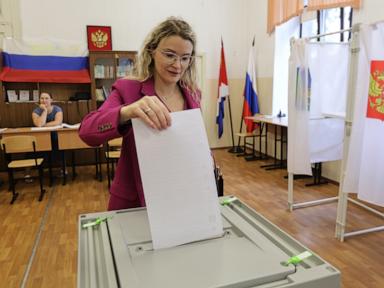
Democracy rarely vanishes overnight. Sometimes, it gets stretched thin across three consecutive days, wrapped in electronic voting portals, and carried out against the backdrop of an ongoing war. When polls opened across Russia for the State Duma elections, the outcome wasn't a question of political suspense. It was an exercise in administrative gravity.
If you're wondering why a legislative race featuring virtually no genuine anti-war opposition matters on the global stage, you have to look past the ballot boxes. This isn't just about who sits in the 450 seats of the lower house. It's about how a government locks down its authority during wartime, neutralizing dissent long before voters ever step inside a school gym or community center.
The Mechanics of a Controlled Political Machine
To understand how contemporary Russian elections operate, you have to look at the structural design. The State Duma splits its 450 seats down the middle. Half are filled through party lists where voters pick political organizations, while the other half are contested in single-seat constituencies. On paper, it looks like a standard legislative contest. In practice, the architecture heavily favors the ruling party, United Russia.
The introduction of multi-day voting fundamentally altered how these cycles function. What started as a public health measure during the pandemic has transformed into a permanent fixture. Independent election monitors and data analysts point out that spreading balloting across Friday, Saturday, and Sunday creates massive vulnerabilities in chain-of-custody oversight. Ballots sit overnight in classrooms and municipal offices, often with minimal independent supervision.
Electronic voting compounded these concerns. Authorities heavily promoted online ballot systems across dozens of regions, drawing millions of participants. While officials claimed it modernized the process and boosted engagement—pushing official turnout figures past 59 percent—critics argued that digital systems lack transparent paper trails. Tatyana Stanovaya of the Carnegie Russia Eurasia Center noted that the entire apparatus allowed authorities to conduct the campaign and the voting with optimal control, ensuring zero unexpected turbulence.
A Wartime Ballot in Annexed Territories
This parliamentary cycle marked a stark milestone. For the first time, voting extended into Ukrainian regions illegally annexed by Moscow, including areas in Donetsk and other contested zones. Soldiers secured polling stations while residents cast ballots under the heavy shadow of active military conflict. Kyiv immediately denounced these ballots as entirely illegal, urging international bodies to reject the legitimacy of any deputies elected from these territories.
Yet, domestic messaging pushed a very different narrative. State media framed the vote as a test of national unity. Campaign slogans urged citizens to rally behind the state, portraying every ballot cast as a direct contribution to stability. Pensioners interviewed outside Moscow polling stations echoed state talking points verbatim, expressing a singular desire for safety and government success. When survival and security dominate the public consciousness, political alternatives struggle to gain any traction.
The Illusion of Choice and the Systemic Opposition
You won't find any genuine anti-war candidates on the ballot. Ahead of the election cycle, prominent opposition figures faced harsh legal crackdowns, imprisonment, or exile. Those labeled as foreign agents found themselves legally barred from holding public office or running campaigns. Independent media outlets faced total blockades, leaving state-aligned television and official channels as the primary source of information for millions of citizens.
What remains on the ballot are parties belonging to the so-called systemic opposition. Groups like the Communist Party, the Liberal Democratic Party, and New People retain their visibility, but they rarely challenge the Kremlin on foundational matters. They vote in sync with the ruling administration on key security and foreign policy decisions. They function as safety valves, capturing votes from disgruntled citizens who want change without actually threatening the existing power structure.
Even minor friction during the campaign revealed how tightly managed the environment was. Election observers faced sudden police interventions or administrative hurdles. Independent organizations were denied accreditation, and international watchdogs from the Organization for Security and Co-operation in Europe were kept away entirely, repeating patterns seen in previous cycles.
Decoding the True Impact on Kremlin Dominance
When the final numbers rolled in, United Russia secured its commanding supermajority, cementing the Kremlin's grip on the legislative branch. For observers expecting an electoral upset, the result confirms that modern authoritarian systems have mastered the art of managing political survival through procedural endurance.
The real story of this election isn't the percentage points won or lost by individual factions. It's the normalization of a political reality where elections serve to ratify decisions already made at the top. As the war in Ukraine drags on and economic sanctions reshape daily life inside the country, the ruling apparatus has opted for absolute internal predictability.
If you want to understand where the country is heading, don't look at the opposition manifestos or campaign promises. Look at the walls closing in around any alternative vision of governance. The machinery of state power doesn't leave room for surprises, and this election proved that the script remains entirely unchanged.