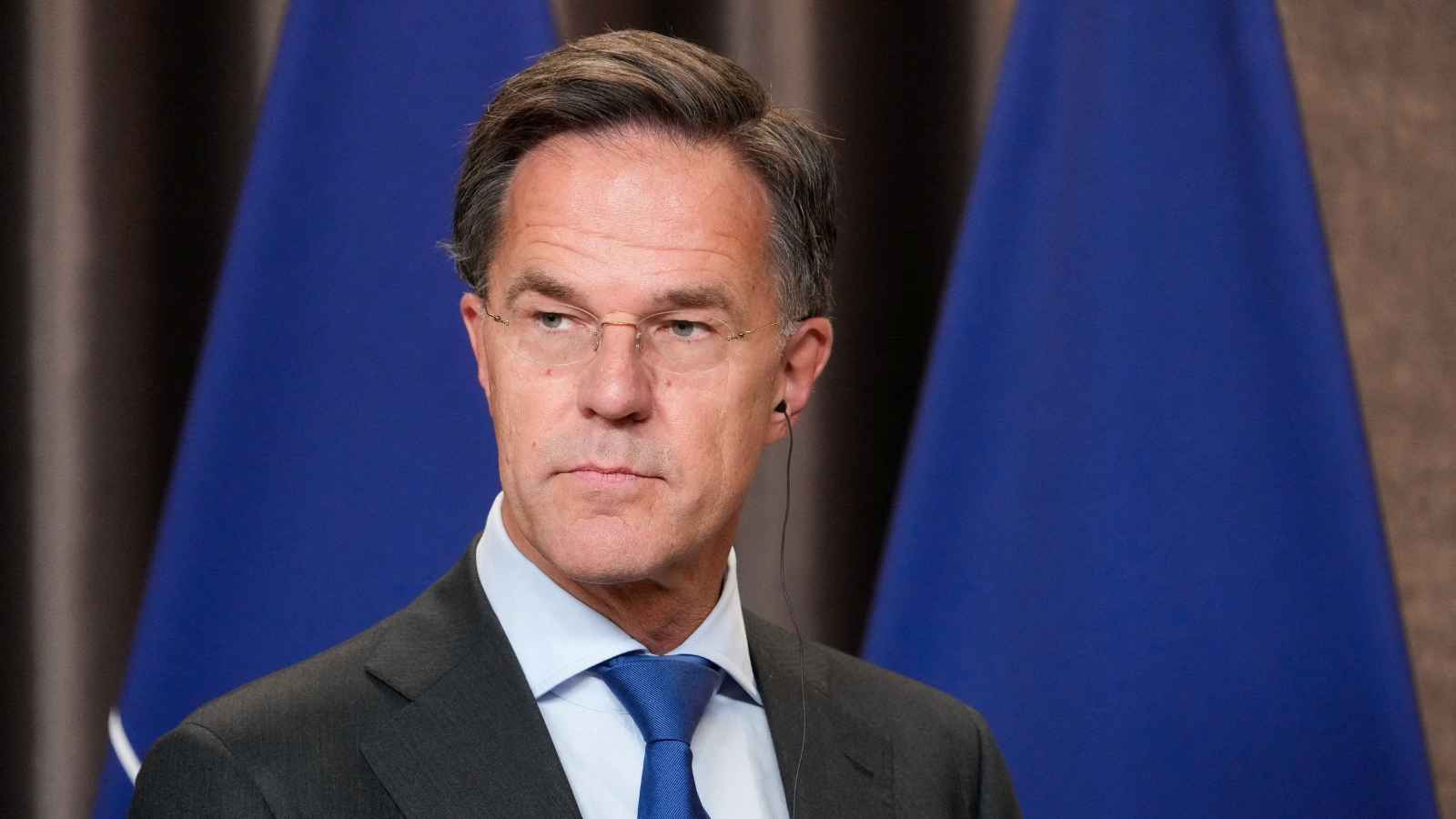
NATO Secretary General Mark Rutte didn't mince words in Warsaw. He stood alongside Polish Prime Minister Donald Tusk and promised that the alliance will defend every single inch of Polish territory.
Sound familiar? It should. Western leaders have repeated that exact phrase for years.
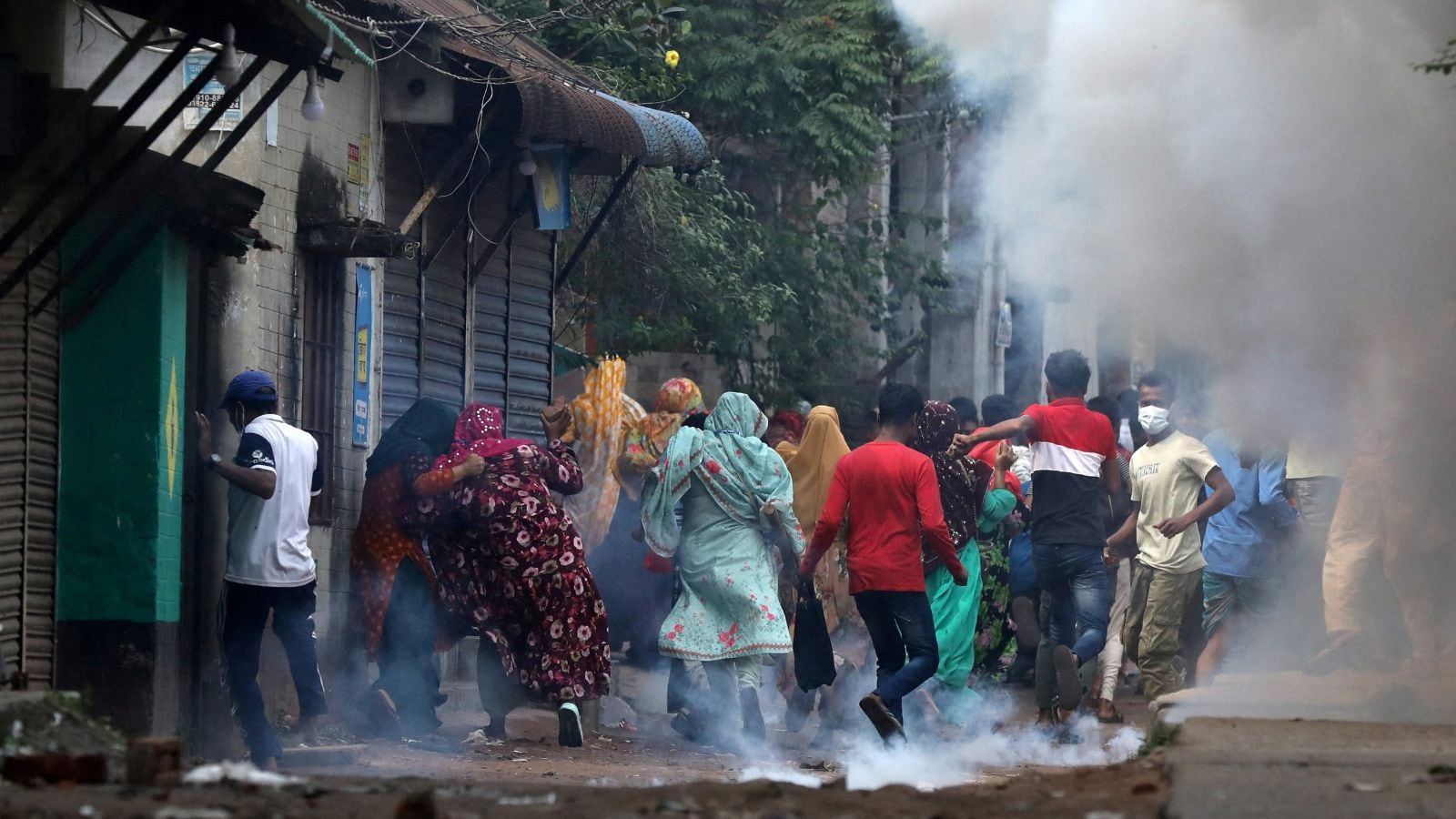
Yet when Mark Rutte says it now, the weight behind the words feels different. Europe isn't dealing with theoretical war games anymore. Russian drones and missiles have repeatedly violated Polish airspace during strikes on western Ukraine, forcing Warsaw to scramble fighter jets in the middle of the night. People living near the eastern border don't view NATO's collective defense guarantee as an abstract treaty clause. For them, it's the only thing standing between a tense border and an active war zone.
If you're trying to figure out whether this is just standard diplomatic reassurance or a genuine shift in European defense posture, you need to look past the soundbite. Let's break down what Rutte actually committed to, why Poland holds the keys to NATO's eastern flank, and where the real vulnerabilities still hide.
Why Mark Rutte's Warsaw Visit Matters Right Now
Diplomacy runs on timing. Rutte took over the top job at NATO from Jens Stoltenberg in October 2024, stepping into a role defined by the largest land war in Europe since 1945. When a new Secretary General visits a frontline state and uses uncompromising language, he's sending a message to three different audiences at once.
First, he's talking directly to Moscow. The Kremlin thrives on testing Western resolve through gray-zone provocations—cutting undersea cables in the Baltic, jamming GPS signals over northern Europe, and letting stray munitions drift across NATO borders. Rutte's explicit warning that any attack on Poland will be met with the full force of the 32-member alliance is meant to slam the door on Russian miscalculation.
Second, he's reassuring the Polish public. Poland has absorbed massive economic and social pressures since Russia's full-scale invasion of Ukraine began in February 2022. Millions of Ukrainian refugees crossed into Poland, and the country serves as the primary logistics hub funneling Western weapons into Kyiv. Without Poland, Ukraine's supply lines collapse overnight. Warsaw knows this, and they expect concrete backing in return for carrying that burden.
Third, Rutte is signaling to other NATO capitals. Washington, Berlin, and Paris have faced intense domestic political distractions. By planting his flag firmly in Warsaw, Rutte is reminding every allied government that Article 5 isn't optional.
What Does "Every Inch" Actually Look Like on the Ground
Politicians love sweeping promises. Generals care about logistics, ammunition stockpiles, and response times.
If you look at how NATO actually defends Poland today compared to ten years ago, the transformation is massive. Before 2014, NATO's eastern strategy relied heavily on a "tripwire" concept. The idea was grimly simple: station a small multinational force in the east, let them get overrun if Russia attacked, and then spend months mobilizing a massive counteroffensive from Western Europe and North America to liberate the territory.
Poland and the Baltic states hated that plan. Rightly so. You don't want your cities liberated after months of occupation—you want them defended from minute one.
Under NATO's current regional defense plans, approved at the Vilnius summit and refined since, the tripwire model is dead. Forward defense is the new standard. Here's what backs up Rutte's words in practical terms:
- Permanent and rotational troop deployments: Roughly 10,000 U.S. troops operate in Poland on a rotational basis, headquartered at Camp Kościuszko in Poznań, which serves as the forward command post for the U.S. Army's V Corps. Alongside American forces, British, Romanian, and Croatian troops serve in the NATO Multinational Battlegroup stationed in Orzysz, just miles from the strategic Suwałki Gap.
- Integrated air and missile defense: Poland sits under an expanding umbrella of Patriot missile batteries, British Sky Sabre systems, and allied fighter jets running continuous Baltic Air Policing missions.
- Pre-positioned heavy equipment: The U.S. Army built a massive Long-Term Equipment Storage and Maintenance Complex in Powidz. Instead of waiting weeks to ship tanks across the Atlantic during a crisis, armored brigades can fly in troops who simply fall in on waiting Abrams tanks and Bradley fighting vehicles.
That's the muscle behind the rhetoric. It's expensive, complicated, and harder for an adversary to ignore than a press conference.
Poland Isn't Waiting Around for Rescue
Here's the part most coverage misses. Poland isn't acting like a helpless dependent begging for protection. Warsaw has turned itself into the most aggressive military spender in the entire alliance.
While wealthy Western European nations spent decades arguing over whether they could scrape together 2% of their GDP for defense, Poland blew right past that benchmark. Warsaw pushed its defense spending above 4% of GDP—the highest proportion of any NATO member, outpacing even the United States in relative terms.
Walk through the procurement contracts Warsaw has signed over the past few years and the scale becomes staggering:
- Tanks and armor: Poland ordered 1,000 K2 Black Panther tanks from South Korea alongside 366 M1A2 Abrams tanks from the United States. When those deliveries finish, Poland will operate a larger tank fleet than the United Kingdom, Germany, France, and Italy combined.
- Artillery: Hundreds of South Korean K9 self-propelled howitzers and American HIMARS rocket launchers are replacing older Soviet-era gear.
- Air power: Poland purchased 32 fifth-generation F-35 stealth fighters from Lockheed Martin and 48 FA-50 light combat aircraft to modernize its air force.
- Border fortifications: Through its "East Shield" initiative, Warsaw is investing billions of dollars into physical barriers, anti-tank ditches, surveillance systems, and fortified bunkers along its borders with Belarus and the Russian exclave of Kaliningrad.
Honestly, Polish defense planners operate under a simple assumption: allies are vital, treaties matter, but nobody will fight harder for Polish soil than Poles themselves. Rutte praised this exact commitment during his remarks, holding Poland up as the gold standard for what every European ally should be doing.
The Uncomfortable Gaps Nobody Likes Talking About
If everything sounds airtight on paper, why are European defense officials still losing sleep? Because deterrence only works if your adversaries believe you have both the capability and the political will to follow through. And right now, several glaring weaknesses threaten NATO's posture on the eastern flank.
Air Defense Is Stretched Thin
Ukraine's daily struggle against Russian drone swarms and ballistic missiles exposed a harsh reality for Western militaries. Modern air defense interceptors cost millions of dollars per shot, take years to manufacture, and get burned through at terrifying speeds.
Poland has ordered advanced Patriot batteries and integrated battle command systems, yet full delivery takes time. When Russian cruise missiles briefly entered Polish airspace en route to targets in western Ukraine, Polish authorities had to weigh the risk of shooting them down over their own territory—where falling debris could kill civilians—against letting them pass. Defending every inch of airspace against low-flying drones and hypersonic threats remains one of NATO's toughest technical headaches.
The Suwałki Gap Remains a Chokepoint
Pull up a map of northeastern Poland. Look at the narrow 65-mile strip of land wedged between Belarus to the southeast and Russia's heavily militarized Kaliningrad exclave to the northwest. That's the Suwałki Gap.
It's the only overland connection linking Poland—and by extension the rest of mainland NATO—to Lithuania, Latvia, and Estonia. If Russian and Belarusian forces ever closed that corridor, the Baltic states would be cut off by land, turning a local crisis into a full-scale alliance emergency overnight. NATO has poured resources into reinforcing this corridor, including Germany's commitment to permanently station a combat-ready brigade in Lithuania, yet geography doesn't change. That narrow stretch of forest and farmland remains the alliance's most sensitive pressure point.
European Industrial Capacity Lags Behind
You can sign all the defense contracts you want, but factories don't appear out of thin air. For thirty years after the Cold War ended, European governments gutted their defense industrial bases. Ammunition plants closed. Supply chains shrank.
Today, Europe struggles to produce basic 155mm artillery shells at the volume required for high-intensity warfare. Rutte has repeatedly hammered European leaders on this exact issue, warning that peacetime procurement rules won't cut it when authoritarian regimes have shifted their economies onto a war footing. Money helps, sure, but turning euros into hardware takes years of steady political resolve.
How to Read NATO's Messaging Going Forward
When you see headlines quoting NATO leaders promising to defend every inch of allied territory, don't dismiss them as empty political theater, and don't treat them as an automatic guarantee of peace either. Treat them as a benchmark.
Watch the concrete indicators instead of the press releases. Pay attention to whether Western European parliaments actually fund the multi-year defense budgets they've promised, whether joint military exercises near the Belarusian border grow in scale and complexity, and how quickly allied air defense rotations integrate into Poland's national grid.
Deterrence isn't a speech delivered at a podium in Warsaw. It's a daily, expensive grind of moving steel, training troops, and proving to Moscow that testing Poland's border would be the worst mistake the Kremlin ever made.