The wind off the Adriatic Sea carries a specific weight. It smells of briny mud, rotting seagrass, and the sharp, clean bite of open water. If you stand perfectly still on the edge of the Narta Lagoon in southwestern Albania, you can hear a sound that feels entirely out of place in the twenty-first century. It is a low, collective murmur. Thousands of pink wings shifting against the wind.
Flamingos do not care about geopolitical real estate. They do not read investment brochures. For centuries, these birds have used the Vjosa-Narta delta as a vital highway oasis, a place to rest, feed, and breed during their long migrations between Europe and Africa.
But their sanctuary has recently become a coordinates grid on a billionaire’s blueprint.
A massive luxury tourism development project, backed by American investment firm Affinity Partners—led by Jared Kushner—aims to transform this rugged coastal wetland into a playground for the global elite. Villas. Eco-resorts. Yacht marinas. The project promises to bring hundreds of millions of dollars into one of Europe’s poorest nations.
To the investors, it is an underutilized blank space on a map. To the local fishermen and an increasingly vocal resistance movement known colloquially as the Flamingo Revolution, it is an existential theft.
This is not just a standard fight between environmentalists and developers. It is a battle over the soul of a coastline, a clash between the fast, blinding flash of international capital and the slow, deep-rooted rhythm of a ecosystem that cannot be rebuilt once it is paved over.
The Man with the Net
Consider Nexhip Hysolokaj. He is a local researcher and a man whose hands are permanently chapped from salt water. For years, his morning routine has involved stepping out into the wetlands with binoculars, counting the flashes of pink against the gray Albanian sky.
When you speak to people who live around the lagoon, they talk about the birds like neighbors. The flamingos are a barometer of the land's health. If the water is too polluted, the shrimp die. If the shrimp die, the flamingos lose their pink hue, turning a ghostly, dull white before abandoning the lagoon entirely.
"People see a swamp," Hysolokaj says, pointing toward the marshy horizon where the horizon blurs into the sky. "They see mud and mosquitoes. They think, 'Why not put a hotel here?' But this mud filters our water. It protects our villages from the sea's anger. You cannot replace a kidney with a concrete block and expect the body to live."
The proposed development spans hundreds of hectares within the protected Vjosa-Narta landscape. It is part of a broader push by the Albanian government to position the country as the next Mediterranean hotspot. On paper, the economic arguments are seductive. Albania’s economy has long relied on remittances from citizens working abroad. A massive influx of foreign luxury tourism promises jobs, infrastructure, and international prestige.
But look closer at the economics of luxury enclaves. The wealth generated rarely trickles down to the man repairing a wooden fishing boat on the shoreline. Instead, the local population is often displaced, priced out of their own heritage, and left to watch through security fences as foreigners enjoy the beaches their grandfathers fished.
The Invisible Machinery of Capital
The transformation of Albania’s coast did not happen overnight. It is the result of legal shifts designed to attract foreign investment. In recent years, the Albanian government amended its laws regarding protected areas, opening a legal loophole that allows for strategic tourism investments within national parks and protected zones under certain conditions.
This opened the floodgates.
Affinity Partners stepped in with plans that sound beautiful in a glossy pitch deck. They use terms like "low-density eco-tourism" and "harmonious design." They promise to preserve the natural beauty that attracts people in the first place.
But true ecology is messy. It requires vast, uninterrupted spaces. Flamingos are notoriously sensitive to noise and human activity. The construction of a luxury resort involves heavy machinery, artificial lighting that disrupts nocturnal migrations, and the inevitable alteration of water flows to create pristine beaches and yacht slips.
Imagine a hypothetical family of flamingos arriving after a grueling flight across the Mediterranean. Instead of the quiet, shallow waters where they can sift for food, they find the thumping bass of a beach club and the glare of security lights. They do not adapt. They simply fly on until they drop from exhaustion.
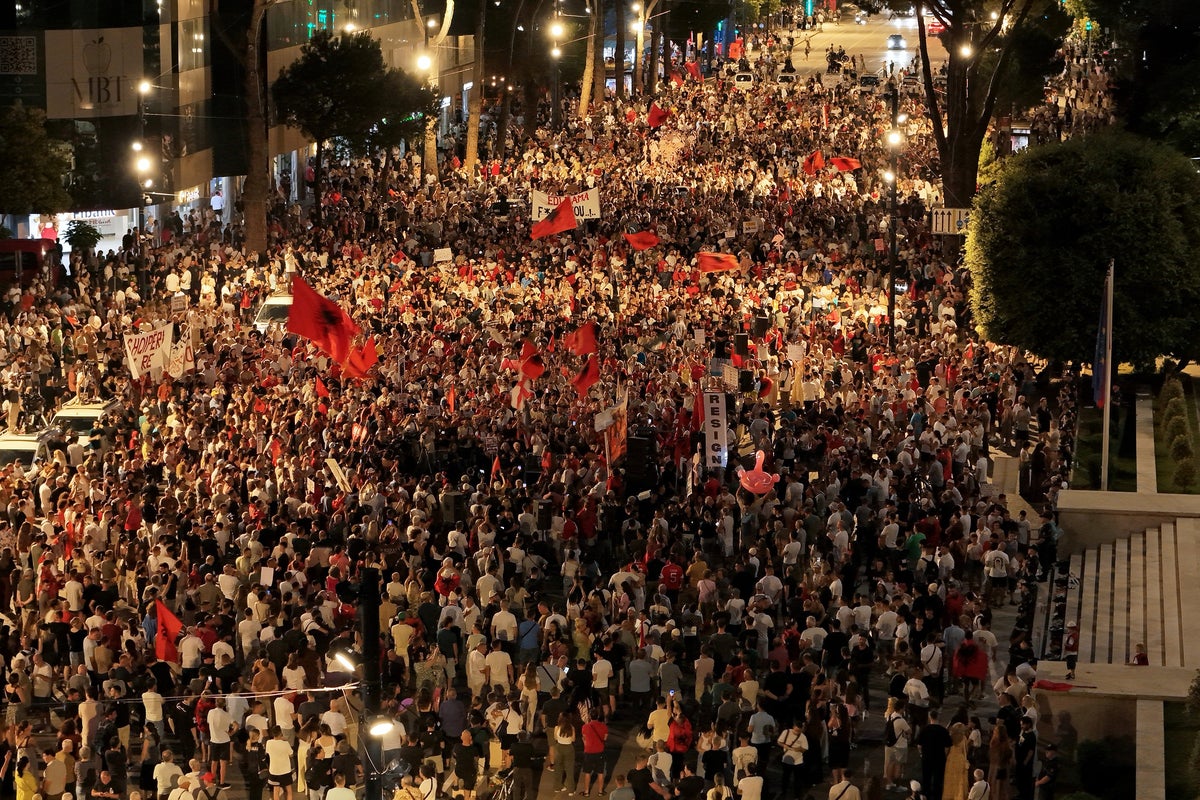
The local activists who have formed the core of the resistance are not traditional radicals. They are university students from Tirana, local hotel owners who fear being crushed by mega-resorts, and older villagers who remember when the coastline was a communal resource. They have taken to the streets, held exhibitions, and filed lawsuits. They call themselves the protectors of the delta, but international media quickly dubbed them the Flamingo Revolution.
It is an unequal fight. On one side are young activists with cardboard signs and Facebook pages. On the other side is the immense political capital of a former American presidential advisor and the full backing of an Albanian administration eager to signal that the country is open for business.
The Illusion of the Blank Slate
There is a profound arrogance in looking at an ancient landscape and seeing nothing.
The Vjosa River, which feeds into the delta system, was declared Europe’s first Wild River National Park after a long, grueling international campaign. It was a massive victory for conservation. The river runs entirely unobstructed from its source in Greece to the Adriatic Sea, free of dams and power plants. It is a living, breathing artery.
The Narta Lagoon is the mouth of that artery. By developing the lagoon, investors are effectively putting a tourniquet on the system.
The argument from developers often hinges on the idea of compromise. Can we not have both? Can we not have a luxury villa next to a bird sanctuary?
The answer from conservationists is a definitive no. Some ecosystems are binary. They either exist in their wild, chaotic state, or they degrade into something artificial. A manicured wetland with a paved walking path and a curated flock of birds is not nature. It is a theme park.
The stakes extend far beyond Albania. The Mediterranean is already heavily developed. Spain, Italy, and the French Riviera have transformed much of their coastlines into walls of concrete and private beaches. Albania’s coast was one of the last remaining wild frontiers, a glimpse of what the Mediterranean used to be before the age of mass tourism.
The Cost of the View
Walk through the village of Zvërnec, which sits on the edge of the lagoon. The houses here are modest, many painted in fading shades of blue and white. Fig trees hang over stone walls. The young people are mostly gone, having left for Italy or Germany in search of work.
An elderly woman sits on a wooden stool outside her home, selling small jars of local honey to the occasional traveler. When asked about the new resorts, her face darkens.
"They tell us it will bring wealth," she says, her voice dry as tinder. "But whose wealth? I cannot buy a coffee in a hotel that costs a thousand euros a night. They will take the water, they will take the view, and they will leave us the trash."
Her anxiety is grounded in a well-documented phenomenon known as tourism gentrification. When a luxury brand moves into an underdeveloped area, land values skyrocket. Property taxes rise. Local shops are replaced by high-end boutiques. The culture that made the place unique is hollowed out, packaged, and sold back to tourists as a commodity.
The Flamingo Revolution is fighting for the birds, yes, but they are also fighting for this woman. They are fighting for the right of Albanians to inherit their own country.
The legal battles are currently winding through the courts, a slow, tedious process of injunctions, filings, and bureaucratic delays. Meanwhile, the clock is ticking. Surveys are being conducted. Soil samples are being taken. The shadow of the bulldozers grows longer every month.
A Choice of Futures
The conflict at Narta Lagoon forces us to ask a fundamental question about progress. What do we value more: the immediate, measurable return on a spreadsheet, or the invaluable, unquantifiable survival of a wild space?
If the development proceeds as planned, the Narta Lagoon will undoubtedly look spectacular in architectural magazines. The infinity pools will reflect the sunset beautifully. The guests will sip champagne and look out over the water, perhaps catching a glimpse of a solitary flamingo that lost its way.
They will think they are experiencing paradise. But they will be occupying a graveyard.
The birds are still there for now. Every evening, as the sun dips below the Adriatic, the sky turns a deep, bruised violet, and the flamingos lift off from the shallow waters in great, sweeping arcs. They move together, a single, fluid organism of pink and black against the darkening sky. They do not know that their home is being negotiated in boardrooms across the Atlantic. They only know the wind, the salt, and the necessity of the marsh.
When that flight stops, a piece of the world’s wild heart stops beating with it.