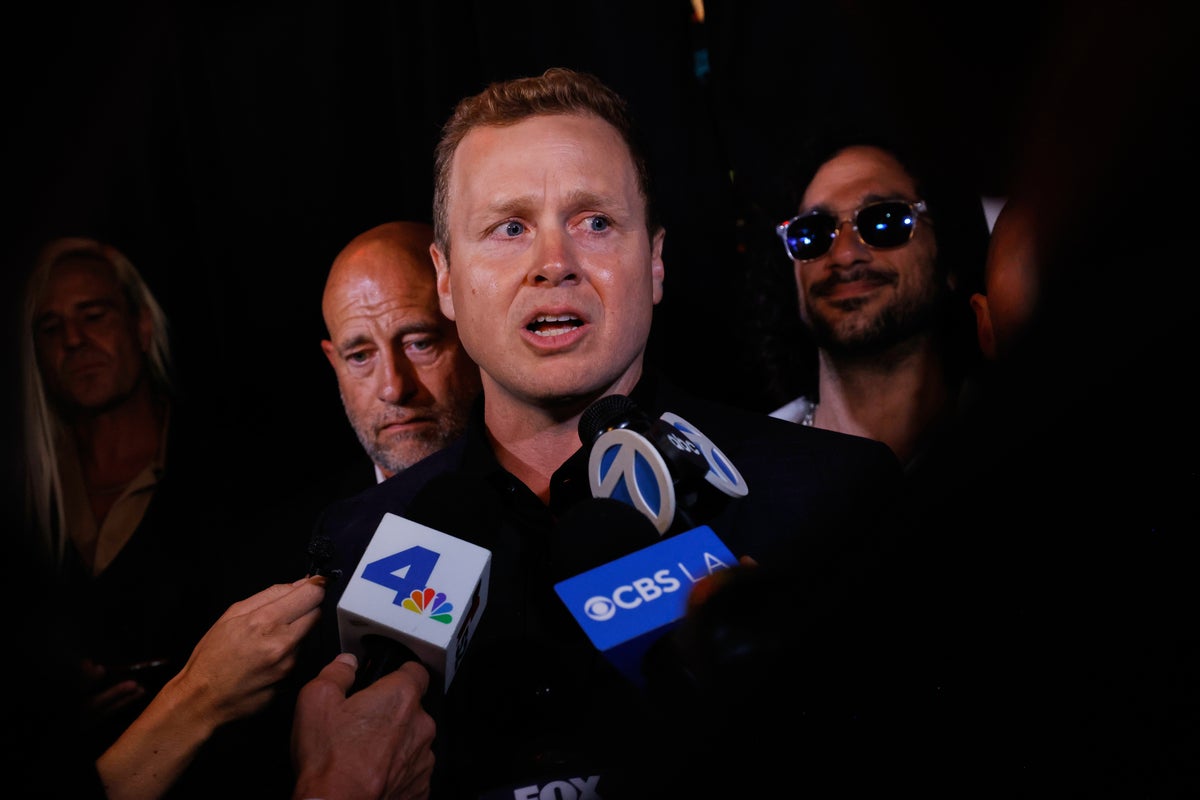
Sam Asghari is moving beyond the shadow of a high-profile divorce to position himself as a vocal advocate for regime change in Iran. While many see a fitness model turned actor, the Iranian-American performer is leveraging his platform to highlight the "Woman, Life, Freedom" movement. His recent public appearances and interviews signal a shift from tabloid fixture to a political messenger attempting to bridge the gap between Western entertainment and Middle Eastern geopolitics. This transition raises a critical question: Can a Hollywood persona truly influence a movement defined by grassroots bravery on the streets of Tehran?
The Mechanism of the Diaspora Voice
Western celebrities with Iranian roots occupy a unique, often precarious space. They possess the reach that activists inside Iran lack due to state-mandated internet blackouts and severe censorship. When Asghari speaks to major outlets about the Iranian government, he isn't just sharing an opinion. He is participating in a coordinated effort by the diaspora to keep the Iranian struggle in the global news cycle.
The attention span of the international community is notoriously short. News cycles move from one crisis to the next, often leaving Iranian protesters isolated once the initial shock of a viral video fades. Asghari understands this cadence. By consistently centering his narrative on the courage of the youth in Iran, he forces the conversation back to the fundamental human rights violations occurring under the current leadership. This is not about policy white papers. It is about emotional resonance.
The Weight of Personal History
Asghari moved to the United States when he was 12 years old. This biographical detail is not just trivia; it is the foundation of his credibility. He remembers a different life. Unlike many who comment on foreign affairs from the comfort of a studio, he has family ties and cultural memories that ground his rhetoric.
When he talks about the potential of the Iranian people, he is referencing a highly educated, tech-savvy population that is currently stifled by a rigid theocracy. The contrast between the vibrant Iranian culture he knows and the restrictive laws enforced by the morality police is the primary driver of his advocacy. He isn't asking for Western intervention in the military sense; he is cheering for an internal evolution led by the people who live there.
Beyond the Britney Spears Shadow
For years, the public viewed Asghari through the lens of his relationship with Britney Spears. To many, he was a supporting character in a larger-than-life pop music drama. Breaking out of that mold requires more than just acting credits; it requires a cause.
By championing the Iranian cause, Asghari is redefining his brand. He is moving from "the husband" to "the advocate." This is a calculated risk in an industry that often prefers its stars to stay neutral on divisive international issues. However, the "Woman, Life, Freedom" movement has garnered unprecedented bipartisan support in the West, making it a safer, though still bold, entry point for a celebrity looking to establish gravitas.
The Digital Front Line
The battle for Iran's future is being fought as much on Instagram and X as it is in the squares of Isfahan. Digital activism serves as a vital artery for information. When a celebrity with millions of followers shares a post about a political prisoner or a strike in the oil sector, it bypasses traditional diplomatic channels.
Asghari utilizes this digital reach to humanize the statistics. We often hear about "arrests" or "unrest," which are sterile terms. Advocacy efforts translate these terms into names and faces. This strategy aims to create a sense of global accountability. If the world is watching, the hope is that the cost of state violence becomes too high for the authorities to maintain.
The Limits of Advocacy from Afar
We must be honest about what celebrity endorsements can and cannot do. A video clip of an actor cheering for change does not provide bread to a striking worker or protection to a student in a dormitory. There is a disconnect between the glamorous world of Los Angeles and the grit of Iranian resistance.
Critics often point out that it is easy to call for revolution when you do not have to face the Basij. This is a fair assessment. Asghari and others like him are not the leaders of the movement; they are the amplifiers. Their role is to ensure that the actual leaders—those on the ground—are not forgotten in a dark cell. The danger lies in the "savior" narrative, where Western-based figures become the face of a struggle they are not physically enduring.
Economic Sanctions and the Human Cost
Asghari’s support for change often touches on the desire for a better economic future for Iranians. Currently, the Iranian Rial is in a state of collapse, and inflation has decimated the middle class. While the government blames external sanctions, activists point to internal corruption and the mismanagement of resources.
The argument Asghari puts forward is that the current system is incompatible with a modern global economy. He envisions an Iran that is open for business, where the immense talent of its youth can be harnessed without the fear of persecution. This economic lens is crucial because it appeals to the pragmatic concerns of the Iranian populace. Freedom is not just an abstract concept; it is the ability to provide for one's family without the shadow of a failing state.
The Regional Ripple Effect
A change in Iran would not happen in a vacuum. The entire Middle East would feel the tremors. Iran’s influence extends into Lebanon, Syria, Yemen, and Iraq. Consequently, the "change" Asghari cheers for is not just a domestic issue.
This is why his advocacy is scrutinized by more than just entertainment journalists. Geopolitical analysts watch how the diaspora shapes the narrative, as it can influence the foreign policy of the United States and the European Union. If the diaspora can present a unified, democratic alternative to the current regime, it makes it easier for Western governments to justify a tougher stance or support for transition movements.
The Evolution of the Celebrity Activist
We are seeing a new era of the celebrity activist. Gone are the days of just appearing in a charity telethon. Today’s influencers are expected to take hard stances on complex political issues. Asghari is a product of this environment. He understands that his physical fitness and acting roles provide the platform, but his convictions provide the substance.
The skepticism he faces is inevitable. Whenever a person known for their looks or their personal life enters the political fray, they are met with "stick to your day job" critiques. But for Asghari, the "day job" of an Iranian in the diaspora is increasingly inseparable from the fate of the homeland. He is betting that his audience is ready to see him as more than a gym-goer or a tabloid headline.
The Unfinished Narrative
The situation in Iran remains fluid. The protests ebb and flow, but the underlying resentment toward the status quo has not dissipated. Asghari’s role in this narrative is still being written. Whether he can sustain this level of advocacy or if it will be a footnote in his career depends on his consistency.
He is currently using his visibility to ensure the flames of the 2022 uprising do not go out. He talks about a future where he can return to a free Iran, a sentiment shared by millions in the diaspora. This is not just a political goal; it is a deeply personal longing for a home that has been off-limits for too long.
Support the voices coming out of Iran by following verified human rights accounts and sharing the stories of those who cannot speak for themselves. The most effective way to help is to keep the conversation alive.