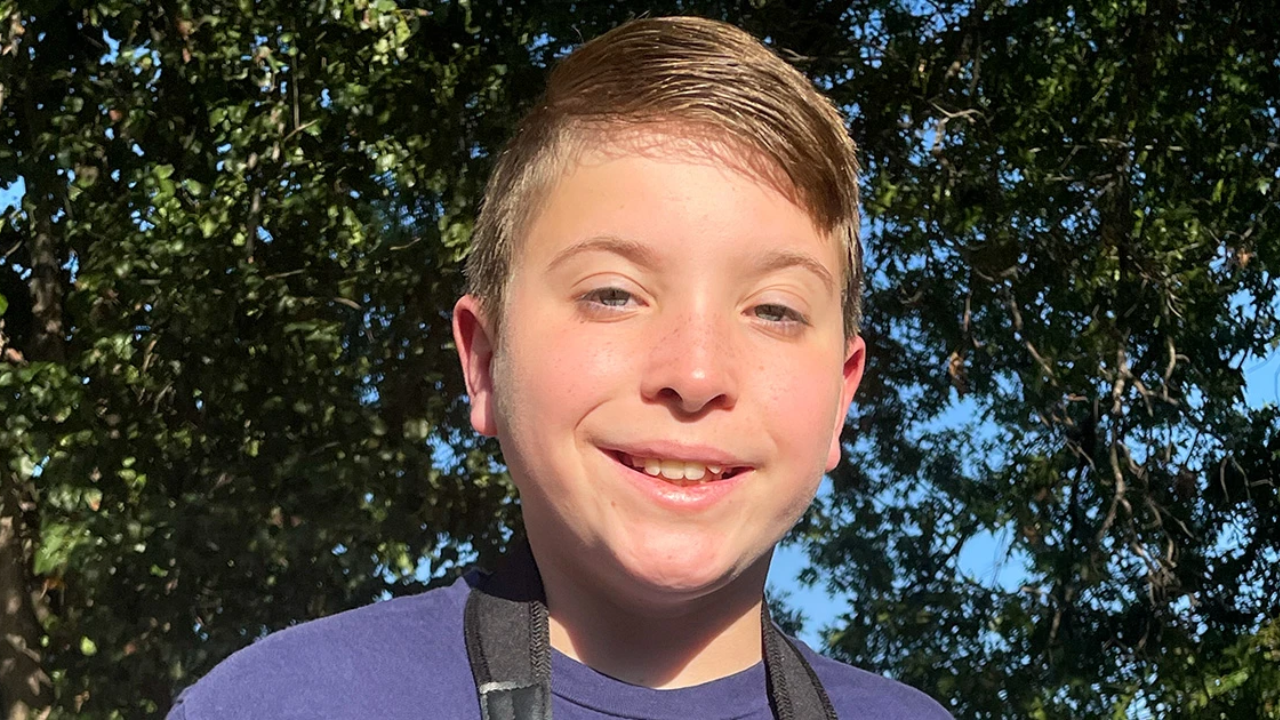
Most kids spend their time staring at screens or playing video games, but twelve-year-old Samuel Henderson spent his years perfecting a bizarrely specific talent. He can mimic more than one hundred different bird calls with terrifying accuracy. It started when he was just four years old, copying a great-tailed grackle outside a zoo, and it turned into a viral phenomenon that even fools professional birding apps.
If you haven't seen his clips yet, you're missing out on one of the most genuinely astonishing internet stories of the decade. Let's look at how a kid from Oklahoma mastered the avian language and why ornithologists are paying attention. Read more on a connected topic: this related article.
From a Single Grackle to Over a Hundred Calls
Samuel's journey didn't start in a sterile laboratory or a high-end music academy. It began at a local zoo when a wild great-tailed grackle chirped at him, and he chirped right back. The bird answered him. That single interaction hooked him.
Instead of moving on to other childhood hobbies, Samuel dove headfirst into the world of birds. By the time he hit his pre-teens, he had cataloged and mastered over 132 distinct bird calls. We aren't just talking about a generic chirp or a whistle. We are talking about complex, multi-beat vocalizations from creatures like the greater roadrunner, the barred owl, and the Carolina wren. Further reporting by Wall Street Journal highlights comparable perspectives on this issue.
His accuracy is so sharp that his audio impressions routinely trick the Merlin bird identification app into thinking an actual wild animal is sitting in the room.
The Science of Sounding Like an Animal
How does a human child pull off sounds that usually require a syrinx—the vocal organ unique to birds? Humans rely on lungs, a larynx, teeth, and lips to manipulate air. Samuel uses his whole body to bridge that biological gap.
When performing complex melodies like an Australian magpie's song, he pulls breath straight from his diaphragm and belly, shaping the resonance deep inside his oral cavity rather than just whistling through his teeth.
Ornithologists who have spent time field-testing him point out that Samuel understands the functional context behind the noise. Birds don't just sing to look pretty; they communicate territorial boundaries, sound predator alarms, and seek out mates. Samuel knows which calls mean what, treating the sounds as a real language rather than a simple party trick.
Breaking Through the Silence at School
For a long time, Samuel kept his talent close to home. Growing up on the autism spectrum, performing in front of a massive crowd terrified his parents. When he wanted to enter his middle school's annual talent show, his mother worried about teasing or awkward silence from classmates.
He took the stage anyway.
When he let out his first series of calls, the auditorium went dead silent before erupting into cheers. A cell phone video of that day hit social media platforms like TikTok, pulling in millions of views and turning an Oklahoma student into a global curiosity. Media appearances on national television and interviews with wildlife conservation magazines quickly followed.
What Comes Next for Young Samuel
Viral fame fades fast, but Samuel's passion for ornithology isn't a temporary phase. He has stated clearly that he plans to study birds in college and pursue a career as a professional ornithologist.
He spends his free time tracking down lifer birds—new species he hasn't checked off his personal list yet—and teaching his friends how to properly execute a crow caw on the playground. In a digital culture obsessed with manufactured hype, watching a kid master a rare real-world skill purely out of curiosity is a breath of fresh air.
Check out Amazing Bird Sounds Made by a 12-Year-Old to hear some of his most impressive vocal impressions in action.