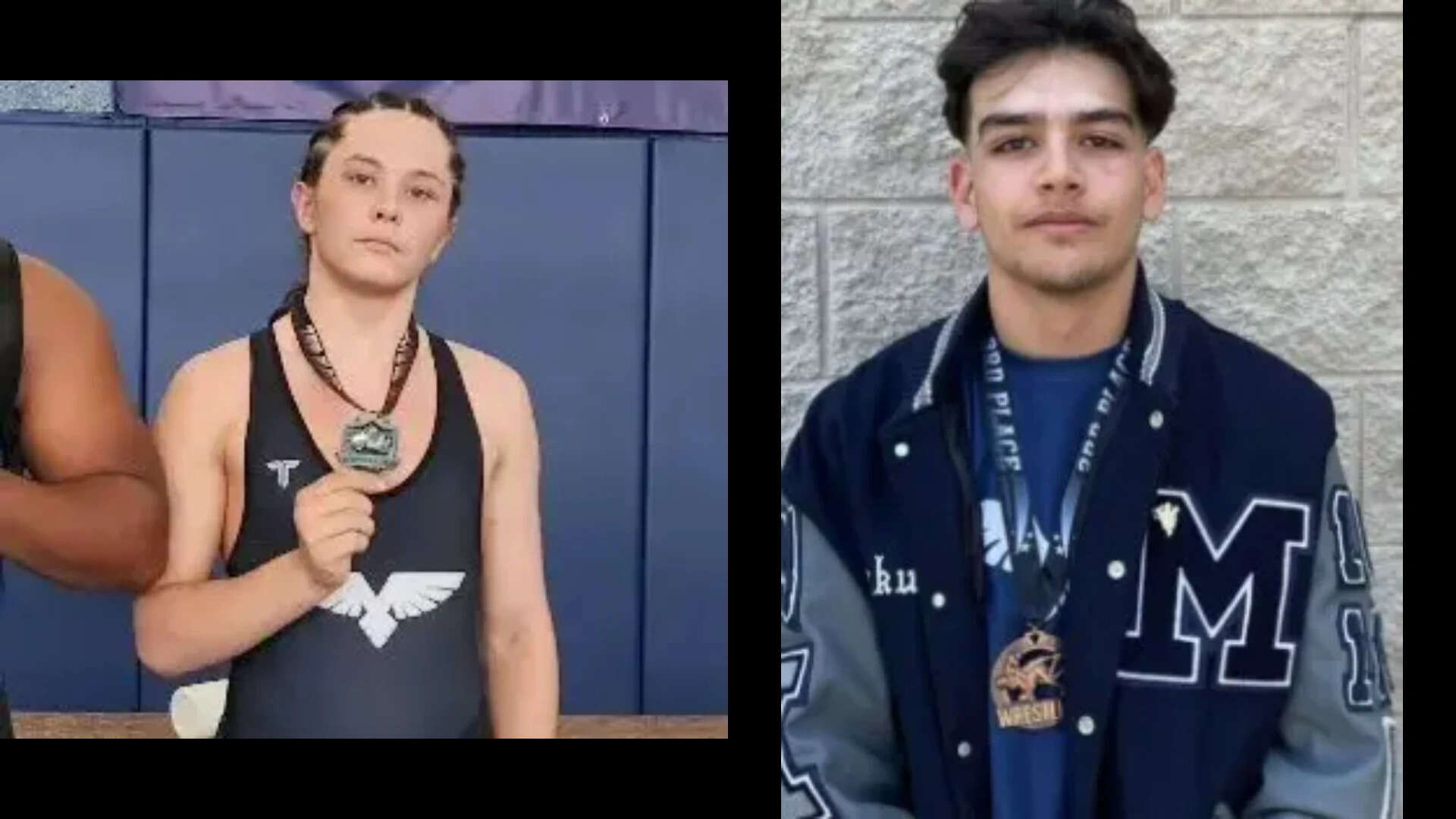
The two-hour window between a mother’s frantic 911 call and a mass shooting at the Islamic Center of San Diego exposes the limits of law enforcement's ability to intercept domestic terror before it strikes. When the mother of 17-year-old Cain Clark contacted the San Diego Police Department at 9:42 a.m. on Monday, she warned that her son was suicidal, missing alongside 18-year-old Caleb Vazquez, and had taken her vehicle and multiple firearms. By 11:43 a.m., both teenagers lay dead of self-inflicted gunshot wounds inside a car, leaving three victims dead at San Diego County's largest mosque.
This was not a sudden snapshot of teenage rebellion. It was a failure of radicalization interception. While police scrambled to deploy automated license plate readers and track the vehicle, the two boys were already executing a premeditated assault driven by white supremacist ideology. The tragedy raises critical questions about how two local teenagers—one a virtual high school student and standout wrestler—could quietly stockpile Nazi paraphernalia and plan a slaughter right under the noses of their families and internet monitoring systems.
The Timeline of a Modern Terror Strike
The speed with which the incident shifted from a runaway juvenile report to an active terror investigation underscores how quickly decentralized extremist radicalization transforms into real-world violence.
The San Diego Police Department received the initial distress call from Clark’s mother, who reported that her son and his companion were dressed in military-style camouflage fatigues. This detail immediately elevated the threat level from a standard suicide intervention to an active manhunt.
9:42 AM — Mother reports Clark missing with firearms, ammo, and vehicle.
10:15 AM — Police deploy automated license plate readers to locate the car.
11:43 AM — Active shooter reports emerge at the Islamic Center of San Diego.
11:50 AM — Police find three victims dead; suspects commit suicide blocks away.
The automated systems failed to flag the vehicle in time to block access to the Clairemont neighborhood. As officers were actively interviewing Clark’s mother to deduce where the pair might be heading, the first emergency calls flooded the 911 dispatch from the mosque.
Inside the Radicalization of Cain Clark and Caleb Vazquez
The public profile of Cain Clark presents a stark contrast to the hate speech found scrawled across his firearms. Clark was enrolled in the San Diego Unified School District’s iHigh Virtual Academy, an online program he had attended since 2021. Though he lived within the boundary for Madison High School, located roughly a mile from the targeted mosque, he never stepped into a traditional classroom there. His only physical connection to the campus was his participation on the varsity wrestling team during the 2024-25 season.
Family members, including his 78-year-old grandfather, David Clark, expressed total shock, claiming the family was completely unaware of the teenagers' extremist leanings. Yet the evidence recovered from the scene indicates a highly developed affinity for neo-Nazi aesthetics and white supremacist dogma:
- The SS Emblem: A gas can recovered near the suspects' vehicle featured a prominent sticker of the Schutzstaffel, the paramilitary wing of Adolf Hitler's Nazi regime.
- The Suicide Note: Investigators found a written manifesto inside the vehicle explicitly detailing motivations tied to "racial pride" and anti-Islamic animus.
- Weapon Modification: The firearms utilized in the attack—stolen directly from Clark's mother—were defaced with handwritten hate speech targeting Muslims.
Caleb Vazquez, the 18-year-old accomplice, occupied an even darker corner of the digital ecosystem. Unlike Clark, Vazquez had virtually no footprint in local school records or extracurricular activities. Investigative focus has shifted to the online forums and decentralized chat applications where both boys likely cross-radicalized away from parental oversight.
The Last Line of Defense
The victims of the attack were not random targets; they were the pillars of a community celebrating the first day of Dhul Hijjah, one of the holiest periods in the Islamic calendar. Among the dead was Amin Abdullah, a father of eight who worked as the mosque’s primary security guard.
According to mosque officials, Abdullah had noticed the camouflage-clad teenagers approaching the perimeter and managed to shout a warning to nearby teachers to lock the doors of the Bright Horizon Academy, a pre-kindergarten through third-grade school housed inside the complex. His quick action prevented the gunmen from entering classrooms full of children, but it cost him his life. The gunmen opened fire outside the entrance, killing Abdullah and two other worshippers before fleeing the scene and opening fire on a nearby landscaper.
The Flaw in Home-Grown Extremism Monitoring
The San Diego shooting highlights a glaring vulnerability in national security infrastructure. While billions of dollars are poured into monitoring foreign terror networks, the tracking of localized, internet-fueled lone wolves remains highly dependent on civilian reporting.
The primary issue rests on the classification of the warning signs. When Clark's mother noticed her firearms were missing, she acted immediately. However, the system processed the event as a localized mental health crisis rather than a domestic terror threat until the shooters were already at the mosque gates. Federal law enforcement agencies are currently serving search warrants to determine if the digital footprints of Clark and Vazquez contained actionable indicators that could have been flagged by corporate tech algorithms or federal cyber-monitoring units before the weapons were taken.
The reality is that decentralized hate groups no longer require physical meetings. They operate via aesthetic-driven subcultures that masquerade as edgy internet humor, making it exceptionally difficult for parents or standard web filters to identify true radicalization until it manifests in camouflage gear and stolen firearms.
This news report provides a direct broadcast look at the immediate aftermath and local law enforcement updates regarding the teenagers involved in the San Diego mosque shooting.


