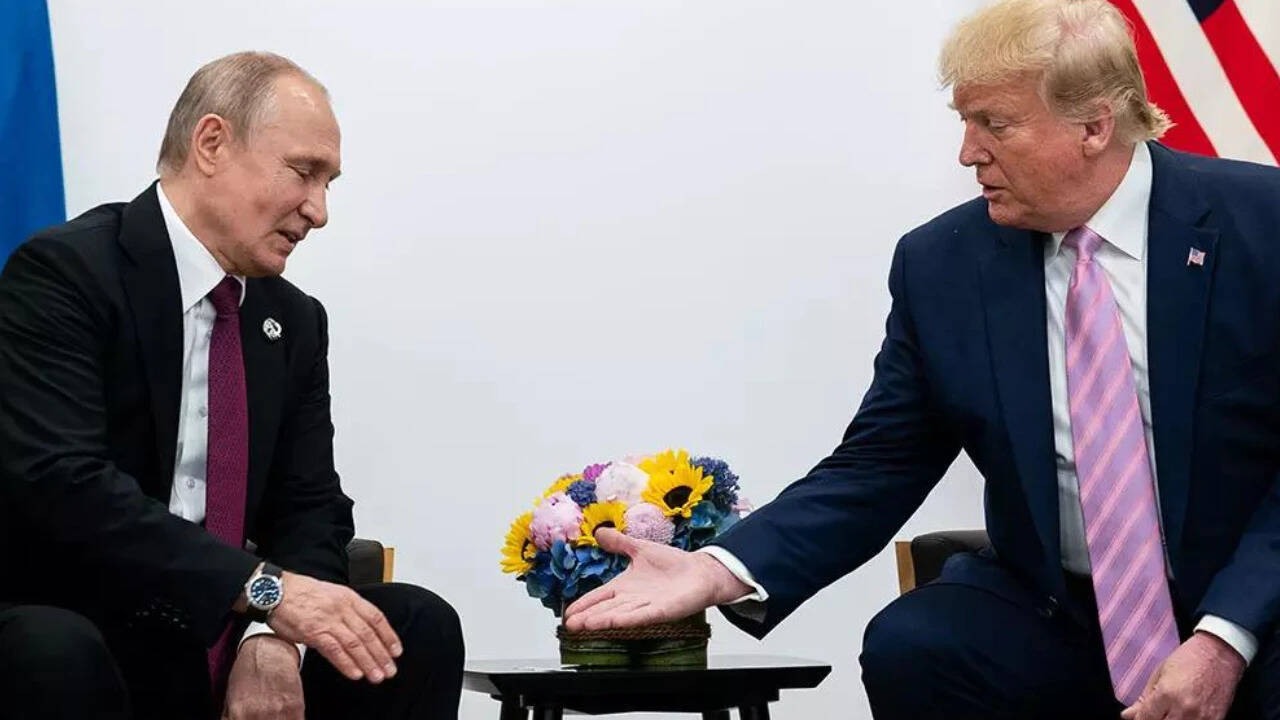
Waiving new sanctions on Russian energy and goods days before enforcement is not a diplomatic breakthrough—it is an arbitrage maneuver that trades long-term coercive leverage for short-term domestic fuel relief. When President Donald Trump signed an executive order suspending restrictions under the September 2026 sanctions legislation championed by the late Senator Lindsey Graham, Russian presidential envoy Kirill Dmitriev called the move a "historic moment". Standard wire coverage treats that label as the story itself, reporting the waiver and the envoy's praise side by side with ongoing strikes in Ukraine. That framing misses the real mechanics: how statutory waiver authority converts congressionally mandated pressure into presidential bargaining capital, how energy price sensitivity constrains secondary tariffs on major buyers, and how parallel moves like diesel supply arrangements alter the war's economic balance sheet.
To understand what actually changed when the White House paused those curbs in mid-October 2026, readers need a clear analytical blueprint. First comes the Statutory Loophole Mechanism, explaining how executive waiver clauses hollow out bipartisan sanctions laws. Second comes the Energy Price Constraint, showing why imposing steep penalties on Russian oil importers collides with global fuel inflation and domestic political calendars. Third comes Signaling Asymmetry, contrasting Moscow's strategic narrative of "historic" cooperation against Washington's transactional focus on fuel costs and negotiation tracks. Fourth comes The Enforcement Bottleneck, detailing the legal, financial, and allied limits that shape whether sanctions relief ever sticks.
The Statutory Loophole Mechanism
Sanctions legislation routinely looks decisive on paper and conditional in practice. The law signed in September 2026—built around the framework backed by Senator Graham before his death in July—authorized steep tariffs, including duties reaching up to 100% on goods tied to major importers of Russian oil and gas, while giving the president authority to waive restrictions by certifying to Congress that a waiver serves the U.S. national interest. That single certification clause shifts control from the legislature back to the executive branch at the exact moment penalties would otherwise bite.
From a policy-design standpoint, this creates a predictable Credibility Discount. Adversaries and third-party buyers do not price sanctions solely by the statutory ceiling written into a bill; they discount those penalties by the probability of presidential suspension. When a waiver arrives before implementation, the threat loses its pre-emptive bite. Moscow gains immediate relief from looming trade friction without having to concede battlefield objectives.
Consider how an industrial procurement manager in a large oil-importing economy models that risk. If secondary tariffs are scheduled to take effect but carry an explicit executive off-ramp tied to "national interest" determinations, the rational move is to wait for clarity rather than abruptly severing supply contracts. The waiver itself confirms that the off-ramp is active in practice, not merely theoretical.
The Energy Price Constraint
The sharpest tension in sanctions statecraft lies between Economic Denial and Price Stability. Global oil and refined product markets are tightly interconnected. Restricting crude or petroleum flows from a major producer—or penalizing large buyers such as China and India—risks tightening global supply and pushing pump prices higher.
The timing of the October 2026 waiver underscores this trade-off. It arrived weeks before U.S. midterm elections, with congressional majorities narrow and energy costs already strained amid broader Middle East conflict affecting shipping and fuel markets. Administration officials pointed to bringing down fuel prices and ending the war, while analysts noted the risk that new duties on Russian energy trades could aggravate consumer energy costs right before voters headed to the polls.
This is a known Trilemma of Sanctions Policy: policymakers rarely get to maximize economic pressure on a sanctioned exporter, keep global energy prices low, and enforce uniform secondary penalties on major trading partners all at once. In public reporting, those three goals are often treated as compatible. In market reality, tightening supply via secondary sanctions tends to push prices up unless offset by rapid alternative supply—which rarely materializes instantaneously on the scale of millions of barrels per day.
Parallel reporting around a U.S.-Russia diesel arrangement and discussions over potential relief for the Russian Direct Investment Fund (RDIF), led by Dmitriev, illustrates how energy and finance intersect. Even when a deal is framed around easing refined fuel bottlenecks, it alters revenue channels and diplomatic leverage simultaneously. Known facts here include the executive order waiving the new curbs, reported discussions involving the RDIF, and congressional scrutiny over fuel arrangements. Any claim that energy relief alone will compel a durable settlement in Ukraine remains an educated hypothesis rather than a proven outcome.
Signaling Asymmetry and Negotiation Dynamics
Why does a sanctions pause look "historic" to a Kremlin envoy while reading as tactical caution in Washington? Because both sides are optimizing for different payoffs in the same move.
- Narrative Legitimacy: For Moscow, framing a U.S. sanctions waiver as a historic shift elevates bilateral engagement and portrays Western pressure as unsustainable. Even when a waiver is narrow or reversible, public praise turns a U.S. policy pause into a diplomatic trophy.
- Transactional Leverage: A suspension held by executive order is reversible in principle, meaning Washington can argue it retains leverage while seeking talks or fuel-market relief. Yet every waiver also lowers the perceived cost of future non-compliance if Moscow expects domestic U.S. price sensitivity to deter re-imposition.
- Allied Alignment Friction: Unilateral pauses complicate coordination with partners that maintain their own restrictions. Even if Washington lifts or suspends a measure, European or British restrictions on entities like the RDIF operate under separate legal regimes, creating a fragmented compliance map for banks, insurers, and shippers.
- Domestic Political Exposure: Waiving congressionally backed measures invites pushback from lawmakers across party lines who view sanctions as essential leverage to compel concessions. That friction raises political transaction costs inside Washington even as it opens a channel with Moscow.
Notice the cause-and-effect chain that superficial coverage often glosses over. Waiving sanctions does not merely remove a penalty; it changes Bargaining Expectations. If Moscow perceives that U.S. willingness to impose economic pain is constrained by domestic fuel prices and broader geopolitical distractions, its incentive to make major territorial or security concessions declines unless forced by facts on the ground or sustained pressure from other quarters.
The Enforcement Bottleneck and Limits of Relief
Even when policymakers pause or review sanctions, real-world execution hits structural bottlenecks. Sanctions enforcement is not a light switch; it runs through correspondent banking, maritime insurance, customs registries, and corporate compliance departments.
For example, even if U.S. authorities review requests to lift or ease restrictions on a state-linked investment vehicle such as the RDIF, delisting in one jurisdiction does not automatically restore frictionless global capital access. Financial institutions evaluate counterparty risk across multiple jurisdictions, regulatory regimes, and reputational liabilities. A bank that resumes business too quickly faces severe compliance risk if rules shift again or if allied restrictions remain intact.
Similarly, energy trade flows depend on tanker availability, insurance underwriting, port access, and refinery specifications. A legal waiver removes a statutory barrier, but commercial actors still weigh legal uncertainty, congressional investigations, and shifting market prices before committing capital.
There are real limitations to relying on sanctions—or sanctions waivers—as a standalone strategy:
- No silver bullet for war termination: Economic pressure works gradually by raising costs and constraining inputs, not by producing instant battlefield capitulation. Conversely, suspending sanctions does not guarantee diplomatic breakthroughs if core strategic goals remain irreconcilable.
- Secondary-sanctions blowback: Aggressive penalties on major buyers risk fracturing diplomatic coalitions and driving up global energy costs, while broad waivers risk eroding leverage and alienating allies.
- Information and compliance lag: Legal orders take effect immediately on paper, but financial and shipping networks adjust unevenly, leaving gray zones where enforcement is contested.
Strategic Play for Policymakers and Analysts
Anyone tracking U.S.-Russia policy or global energy markets should stop treating rhetoric from envoys or executive waivers at face value and instead audit the Leverage-to-Concession Ratio. A sanctions waiver only advances strategic goals if it extracts concrete, verifiable concessions—such as credible ceasefire mechanisms, humanitarian access, or binding stability commitments—in exchange for easing economic pressure. Granting relief upfront in hopes of reciprocal goodwill or temporary fuel calm surrenders leverage before the hardest bargaining is settled.
To execute that discipline in practice, decision-makers should tie any future sanctions relief to staged, reversible milestones rather than open-ended pauses, pair any energy-market measures with transparent supply and compliance rules to limit political and legal blowback, and align moves closely with key allies so unilateral waivers do not fracture collective economic pressure. The decisive test in the months ahead will not be who calls a policy shift "historic", but whether suspending curbs buys real strategic movement—or simply makes the next round of pressure harder to enforce.