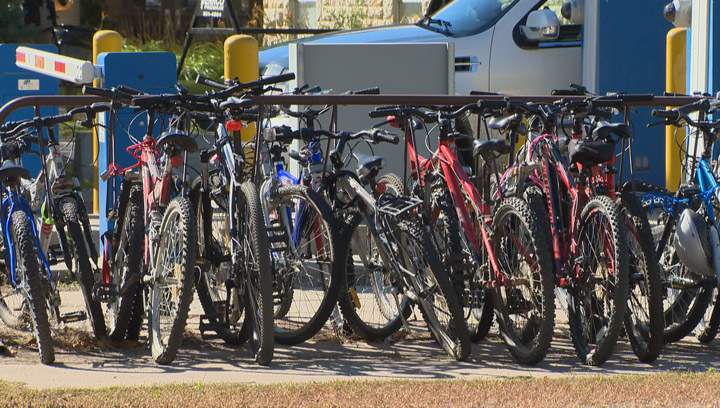
Saskatoon is currently patting itself on the back for BYXE Week. The city is filled with the usual suspects: local politicians in neon vests, advocacy groups handing out stickers, and a flurry of social media posts celebrating the "joy" of cycling. It is a curated, seven-day performance designed to convince you that Saskatoon is a bikeable city.
It isn't.
BYXE Week is not a victory for urban planning. It is a distraction. It is a seasonal PR stunt that treats cycling as a hobby rather than a critical component of transportation infrastructure. By focusing on a "week" of celebration, the city effectively admits that for the other 51 weeks of the year, cyclists are an afterthought. We are celebrating the bare minimum while ignoring the systemic failure of our asphalt-heavy grid.
The Myth of the Recreational Cyclist
The biggest mistake the "commuter challenge" makes is its target audience. BYXE Week is designed for people who already own a $2,000 gravel bike and a wardrobe of Lycra. It markets cycling as a lifestyle choice or a fitness goal.
True urban mobility isn't about fitness. It’s about utility.
When we frame cycling as a "challenge" or a "celebration," we reinforce the idea that getting on a bike is an extraordinary act. In world-class cities like Copenhagen or Utrecht, nobody "celebrates" bike week. They just go to work. They go to the grocery store. They do it in suits, dresses, and raincoats.
By treating the bicycle as a specialized tool for the brave and the fit, Saskatoon’s current strategy alienates the very people who need alternative transit the most: those who cannot afford a vehicle, those with limited mobility, and the working class who don't have the luxury of a shower at the office.
Paint is Not Infrastructure
The competitor's coverage of BYXE Week loves to mention "increased awareness." Awareness is the consolation prize of failed policy. You don’t need "awareness" when you have physical protection.
Saskatoon’s reliance on sharrows and painted lanes is a slap in the face to safety. A line of white paint on 25th Street does not stop a three-ton SUV from drifting into a cyclist. It is "placebo infrastructure." It provides a false sense of security for the novice cyclist while doing nothing to actually change the behavior of drivers.
If Saskatoon actually cared about the goals of BYXE Week, the city wouldn't be handing out prizes for logging trips. They would be installing:
- Concrete Curbs: Physical separation is the only metric that matters.
- Continuous Sidewalks: Priority at intersections should belong to the vulnerable, not the internal combustion engine.
- Secure Storage: You can’t build a cycling culture if your bike is guaranteed to be stolen from a flimsy rack outside a Midtown mall.
I have spent years watching municipal budgets prioritize "road widening" projects that cost tens of millions while the active transportation budget gets scrutinized down to the last penny. We are told there is no money for a connected bike network, yet we find the funds to repave suburban cul-de-sacs that serve fifty people.
The Winter Excuse is Dead
The most common retort to any criticism of Saskatoon’s cycling infrastructure is, "But it’s cold here."
This is a lazy, intellectually dishonest argument. Oulu, Finland, sits at a higher latitude than Saskatoon. It deals with more snow and darker winters. Yet, in Oulu, 20% of all trips are made by bicycle in the dead of winter. Why? Because they prioritize snow clearing for bike paths over car lanes. They treat their "cycle superhighways" as essential infrastructure, not seasonal amenities.
Saskatoon’s BYXE Week usually happens when the weather is turning "nice." This further cements the idea that cycling is a fair-weather activity. If we want to disrupt the status quo, we should hold BYXE Week in the middle of a February polar vortex.
We don't do that because it would expose the truth: the city does not maintain its "active" routes in the winter. They become dumping grounds for snow cleared from the car lanes. You cannot celebrate a "cycling city" that disappears for six months of the year.
The Economic Delusion
Business owners often lead the charge against bike lanes, fearing that losing a single parking spot will bankrupt their shop. This is statistically illiterate.
Multiple studies across North America have shown that cyclists and pedestrians spend more money at local businesses than drivers do. A driver in a rush to find a parking spot is focused on the destination; a cyclist is engaged with the street. They stop more often. They are more likely to make impulse purchases.
The "Business Improvement Districts" should be the loudest voices demanding permanent, year-round bike infrastructure. Instead, they settle for being "stops" on a BYXE scavenger hunt. It’s small-time thinking.
Stop Rewarding Participation
The BYXE Week "prizes" and "discounts" are a joke. If you want to incentivize cycling, you don't offer a free coffee at a local cafe. You make it the fastest, most convenient way to move through the downtown core.
Imagine a scenario where the University Bridge had a dedicated, protected lane that bypassed the 8:30 AM gridlock entirely. You wouldn't need a "week" to convince people to ride. The sheer frustration of sitting in traffic while cyclists breeze past would do the marketing for you.
We are currently stuck in a loop of incrementalism. We build one block of protected lane, wait three years to "study" its impact, and then wonder why it isn't being used. It isn't being used because it leads nowhere. Infrastructure must be a network, not a series of disconnected islands.
The Hierarchy of the Street
The fundamental problem is that Saskatoon still views the car as the "default" and everyone else as an "intruder."
BYXE Week asks drivers to "share the road." This phrase is part of the problem. It implies the road belongs to the car, and the car is being generous by allowing others to exist on it. We need to flip the script. The road is public space. It belongs to the citizens, not the machines.
Until we have the political courage to remove street parking on Idylwyld or 2nd Avenue to make room for high-capacity transit and cycling, BYXE Week is just theatre. It’s a way for the city to check a box on a "sustainability" report without actually challenging the car-centric hegemony that is strangling our urban core.
Your Commute Is Not a Celebration
If you are riding your bike this week because of the "challenge," ask yourself why you don't do it next week.
Is it because the route is terrifying? Is it because there is nowhere to lock your bike? Is it because you feel like a second-class citizen the moment you clip in?
Those are the questions the city should be answering. Instead, they are giving you a sticker and telling you "Great job!"
We don't need a week of celebration. We need a decade of aggressive, uncompromising construction. We need to stop asking permission to build a functional city. If the goal is truly to make Saskatoon a "hub for active transportation," then we need to stop treating the bicycle as a toy and start treating the car as the problem.
Put the neon vest away. Demand a concrete barrier.
The era of "awareness" is over. We need the asphalt.