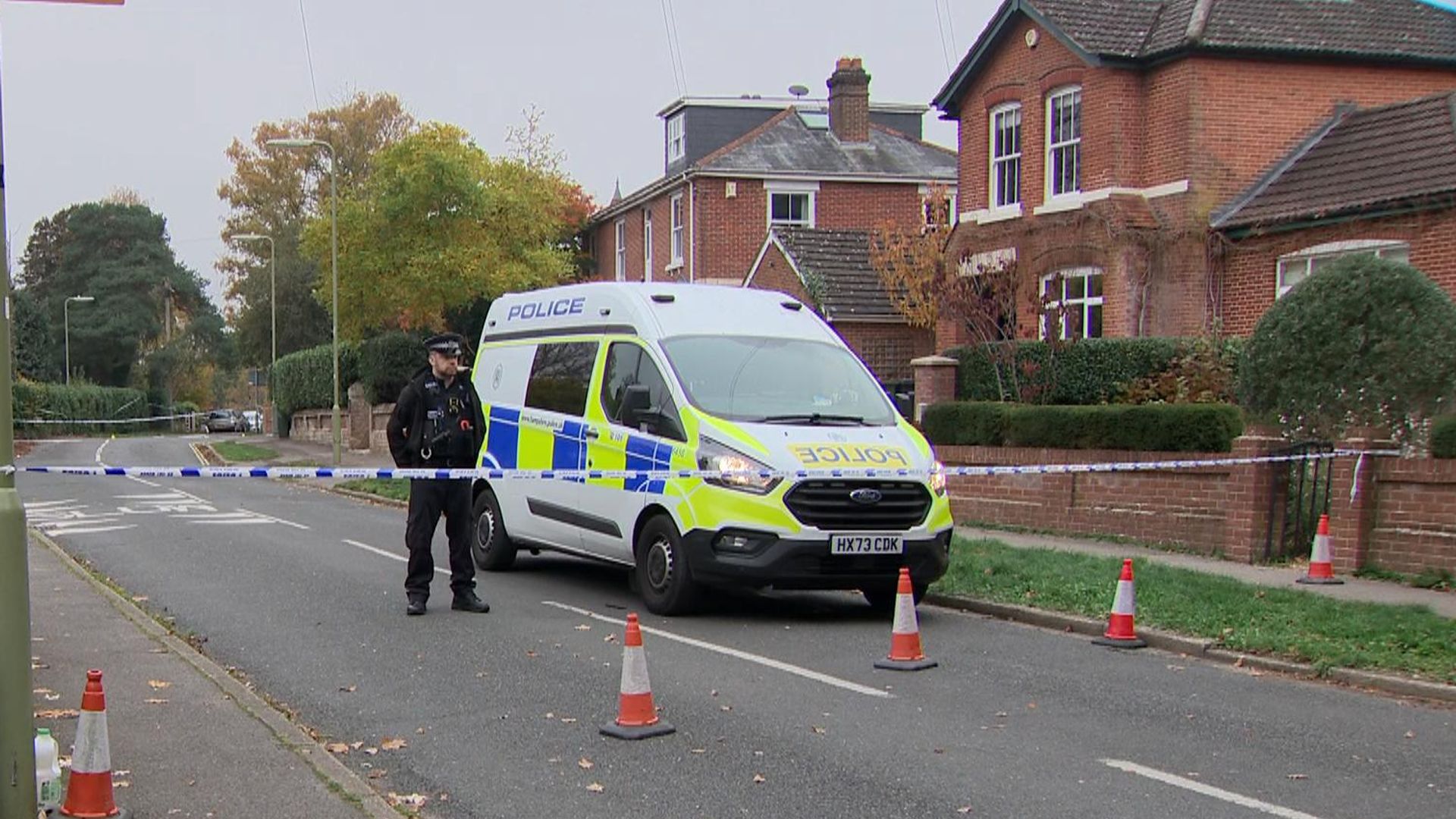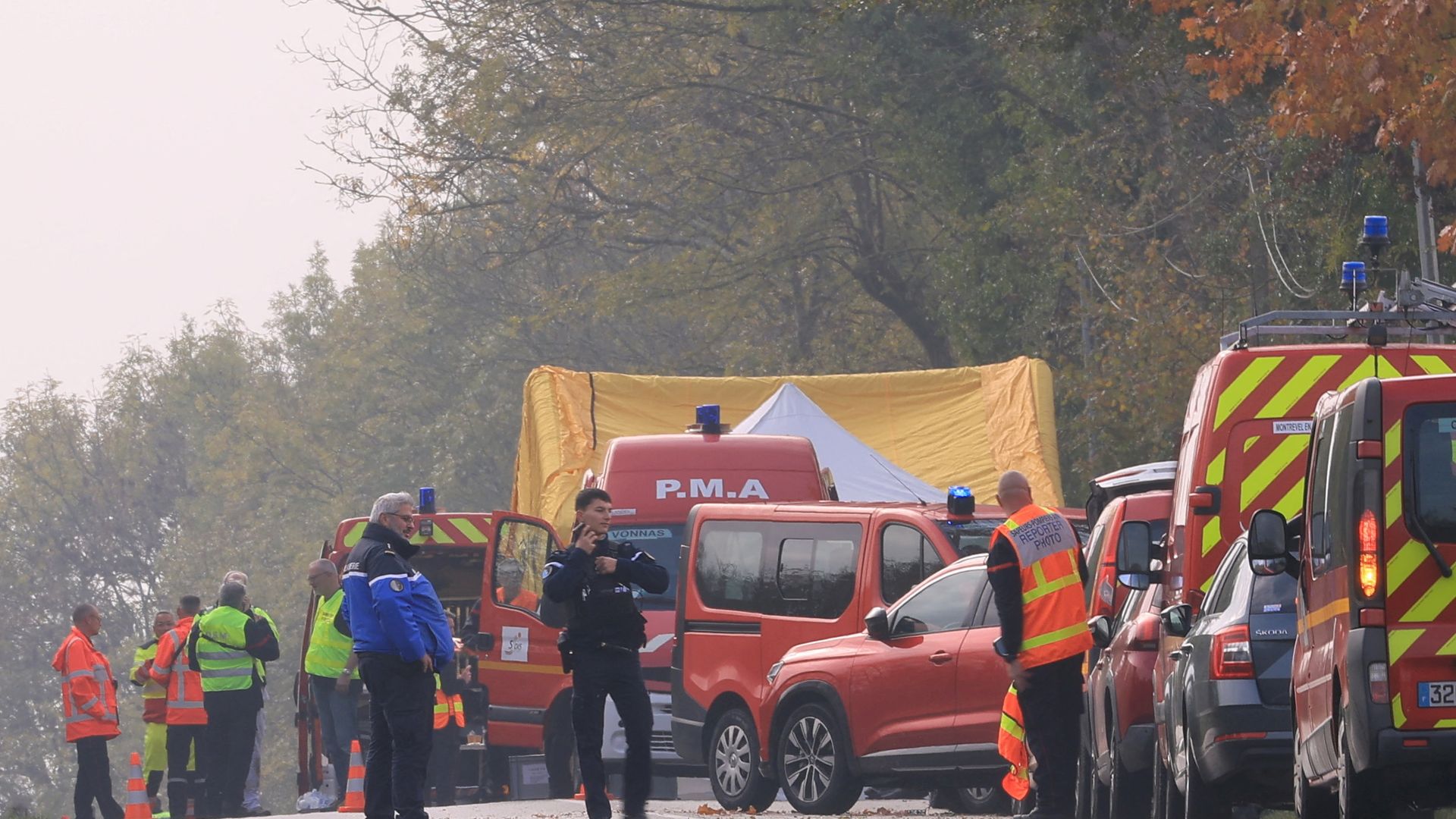
Every time a bus carrying schoolchildren crashes—whether on a wintry rural road in France or a suburban highway in the United States—the news cycle follows a predictable, lazy script. First come the grim casualty counts. Next come the tearful interviews with stunned officials. Finally, the armchair safety experts emerge from the woodwork to demand the exact same knee-jerk solution: put three-point seatbelts on every school bus immediately.
It is an emotionally satisfying reaction. It makes politicians look decisive and parents feel proactive. For another perspective, consider: this related article.
It is also dangerously simplistic, engineers know it, and our refusal to look at the actual physics of commercial passenger transport is costing lives.
When you treat a fatal school bus crash as an isolated tragedy solvable by a strip of nylon webbing, you ignore the systemic failures that actually cause mass-casualty transit events. You ignore driver fatigue, rural infrastructure neglect, the structural vulnerability of high-center-of-gravity vehicles, and the brutal reality of kinetic energy. Worse, you let municipal governments and transport contractors off the hook with a cheap hardware upgrade while leaving the deadliest operational flaws completely untouched. Similar insight on this trend has been shared by NBC News.
I have spent years analyzing commercial fleet safety audits and post-crash forensic reports across North America and Europe. I have sat in rooms where transport executives celebrate hitting arbitrary compliance metrics while their drivers are quietly pushed past safe cognitive limits on poorly maintained secondary roads. If we actually want to stop burying children after bus accidents, we have to dismantle the comfortable myths surrounding school transport safety.
The Seatbelt Illusion and the Physics of Compartmentalization
Ask the average person how to make a school bus safer, and they will point to their own car. We have been conditioned since childhood to believe that a seatbelt is the singular, indisputable barrier between life and death in a vehicle collision.
Applying passenger-car logic to a 30,000-pound commercial coach is a fundamental failure to understand vehicle dynamics.
Modern school buses in both North America and the European Union are built around a passive safety principle called compartmentalization. Instead of relying on a child to properly buckle a belt—and relying on a lone driver to police fifty squirming kids while navigating traffic—the interior of the bus is engineered as a protective egg carton. The seats are spaced closely together, constructed with energy-absorbing steel frames, and padded with high-density foam designed to deform upon impact. In a frontal or rear collision, the passenger is thrown forward into the cushioned seatback directly in front of them, dissipating kinetic energy across a broad surface area rather than concentrating it across a collarbone or abdomen.
Organizations like the National Highway Traffic Safety Administration (NHTSA) and the European Transport Safety Council (ETSC) have studied this extensively. Their data consistently shows that buses are already, by an order of magnitude, the safest mode of ground transportation per passenger-mile. Children are vastly more likely to die in a parent’s SUV on the way to school than on a municipal bus.
Here is the uncomfortable truth the seatbelt lobby hates admitting: lap-only belts actively increase the risk of severe abdominal and spinal injuries in children, a phenomenon trauma surgeons refer to as "seatbelt syndrome." Even three-point lap-and-shoulder belts—which are mandatory on new coaches in France and several US states—come with massive trade-offs that rarely make the evening news.
- Evacuation Bottlenecks: In post-crash fires or water submersions, every second counts. Fifty panicked children struggling to unlatch jammed or unfamiliar buckles—or tangled in webbing when a bus rolls onto its side—creates a lethal bottleneck. A single driver cannot unbuckle fifty trapped kids in ninety seconds.
- The Capacity Penalty: Retrofitting or building buses with high-back, three-point belted seats reduces passenger capacity by roughly 15 to 20 percent. Fewer kids per bus means school districts and municipalities must put more buses on the road to move the same number of students. More buses on the road directly increases total exposure to traffic collisions, particularly during the hazardous boarding and alighting phases outside the vehicle.
- The Illusion of Compliance: Installing a belt does not mean a child wears it properly. Putting a shoulder strap behind the back or wearing it loose across the neck turns a safety device into a strangulation or internal-organ hazard during a side-impact or rollover event.
Does this mean three-point belts are useless? No. In rollover crashes and severe side impacts—the exact scenarios where compartmentalization fails—properly worn three-point belts keep passengers inside the survival space and prevent ejection. France mandated seatbelts on intercity coaches precisely because high-speed rural highway travel carries a much higher rollover risk than slow urban stop-and-go routes.
The mistake is treating the belt as the primary solution. A seatbelt only mitigates damage after the system has already failed to prevent the crash. Focusing exclusively on interior restraints while ignoring why a professional driver lost control of a multi-ton vehicle is like arguing about the brand of parachute while ignoring why the plane’s wings fell off.
The Real Killers: Rural Geometry, Fleet Economics, and Cognitive Fatigue
When officials report that a bus carrying schoolchildren crashed on a regional road, look past the press conference and look at the map. Fatal school bus crashes overwhelmingly share three structural preconditions that have nothing to do with passenger restraints.
1. The High-Center-of-Gravity Trap on Secondary Roads
Unlike passenger cars, coaches and school buses have a high center of gravity combined with massive lateral sail area. On modern divided highways with wide shoulders, clear sightlines, and engineered guardrails, a bus is remarkably stable.
School buses, however, do not stay on pristine highways. Their entire operational purpose is to penetrate deep into rural, mountainous, and residential networks. These secondary roads are frequently narrow, lack paved shoulders, feature soft drainage ditches, and have abrupt drop-offs. When a bus’s right-side tires slip just six inches off the asphalt onto a soft or icy verge, the weight transfer is immediate and unforgiving. The soft earth grabs the tires, the high center of gravity takes over, and the vehicle rolls. Guardrails designed to deflect a 3,500-pound sedan are easily vaulted or crushed by a 15-ton coach.
2. The Broken Economics of Split-Shift Driving
If you want to know why a professional driver drifted out of a lane or misjudged a corner, look at their paycheck, not their driving record.
Across both Europe and North America, school bus driving is structurally designed as one of the worst jobs in commercial logistics. Drivers work a split shift: three hours in the brutal early morning darkness, a four-to-five-hour unpaid gap in the middle of the day, and three hours in the afternoon rush.
Nobody can raise a family on twenty-five hours of fragmented, low-wage work a week. As a result, the industry suffers from chronic, catastrophic driver shortages. To survive financially, drivers frequently work second jobs during their midday "break," resulting in fragmented sleep cycles and chronic circadian disruption. Meanwhile, desperate school districts and private contractors lower hiring standards, rush training programs, and pressure borderline-fatigued drivers to cover double routes when colleagues call in sick.
Imagine a scenario where an airline told its pilots they would only be paid while the wheels were off the ground, forced them to sleep in their cars between morning and evening flights, and allowed them to drive delivery vans during their layovers. There would be congressional hearings by Tuesday. Yet we accept this exact labor model for the people transporting our children every single morning.
3. The "Outside the Bus" Blind Spot
If we look strictly at fatality statistics, the interior of the bus is rarely the murder scene. According to decades of NHTSA Fatality Analysis Reporting System (FARS) data, roughly two-thirds of school-bus-related child fatalities occur outside the bus—in what safety engineers call the "Danger Zone," the ten-foot perimeter surrounding the vehicle.
Children are killed by motorists illegally passing stopped buses, or they are struck by their own bus because the driver could not see a small child crouched near the front bumper or rear dual wheels. Every dollar spent retrofitting a fleet with expensive seatbelts is a dollar stolen from external 360-degree radar detection, automated stop-arm enforcement cameras, and pedestrian-sensing emergency braking systems.
Dismantling the Lazy Consensus on Crash Prevention
When a tragedy hits the headlines, the public asks predictable questions rooted in flawed assumptions. If we want real answers, we have to dismantle the questions themselves.
Are school buses actually safe without seatbelts?
This question assumes that safety is binary—either a vehicle has belts and is safe, or it lacks belts and is a death trap. In reality, structural integrity matters infinitely more than restraints. A bus built with a rollover-compliant cage (such as UNECE Regulation 66 in Europe or FMVSS 220 in the US) protects occupants by preventing the roof from collapsing inward during a rollover. If the survival space collapses, a seatbelt simply holds the passenger in place while the roof crushes them. Structural roof strength and side-impact steel reinforcement are the true unsung heroes of bus safety.
Should school bus drivers face stricter drug and alcohol testing?
Whenever a crash occurs in France or the US, officials immediately announce whether the driver tested positive for narcotics or alcohol. While zero-tolerance substance testing is non-negotiable, obsessing over intoxication misses the far more pervasive impairment: micro-sleeps and cognitive overload. A driver operating on five hours of broken sleep while trying to monitor fifty screaming children in a rearview mirror and navigate black ice exhibits the exact same reaction-time degradation as a driver with a blood alcohol concentration of 0.08%. Breathalyzers catch drunk drivers; they do nothing to catch exhausted, distracted, or undertrained drivers.
Why don't we just use smaller vans instead of massive buses?
Some districts try to bypass driver shortages by putting kids in 12-to-15-passenger vans. This is absolute madness. High-capacity passenger vans have notoriously terrible rollover stability when fully loaded, lack the structural roll-cage requirements of full-size school buses, and are frequently driven by uncertified staff rather than commercial license holders. Moving kids from a heavy bus into a passenger van increases fatality risk exponentially.
What Actually Saves Lives: The Unsexy Engineering Fix
If you put me in charge of a national transport ministry tomorrow with a mandate to cut school bus fatalities to zero, I wouldn't spend a single cent on seatbelt PR campaigns. I would force through four mandatory, deeply unglamorous operational overhauls that the industry has resisted for decades.
- Mandate Electronic Stability Control (ESC) and Automatic Emergency Braking (AEB) Across Every Fleet: ESC detects when a heavy vehicle is beginning to skid or tip and selectively applies brakes to individual wheels to keep the chassis upright. In heavy commercial vehicles, ESC reduces rollover and loss-of-control crashes by up to 40 percent. Combined with forward-collision AEB, these systems intervene in milliseconds—long before a fatigued human brain registers black ice or a stopped car ahead. Yet thousands of older school buses still operate on exemptions without either technology.
- Abolish the Split-Shift Poverty Model: Pay bus drivers a full-time, salaried living wage with benefits. During the midday gap between morning and afternoon routes, keep drivers on the clock performing paid fleet inspections, route hazard audits, simulator training, and administrative logistics. When driving a school bus becomes a respected, well-compensated career rather than a minimum-wage gig, turnover plummets, experience stays behind the wheel, and fatigue disappears.
- Install Active External Detection and Speed Governors: Equip every bus with 360-degree ultrasonic and radar pedestrian sensors that automatically lock the brakes if a child enters the blind spot while the bus is stationary. Pair this with GPS-linked intelligent speed adaptation (ISA) that physically prevents a bus from exceeding safe speeds on narrow, rural, or weather-compromised roads, regardless of how far behind schedule the route is running.
- Harden Rural Infrastructure Before Buying New Interiors: Audit every rural school route for shoulder drop-offs, unguarded water hazards, and blind intersections. Paving a three-foot stabilized shoulder and installing heavy-vehicle-rated guardrails on known school routes prevents the initial tire-drop that triggers 80 percent of rural bus rollovers.
The Hard Truth About Our Priorities
There is an obvious downside to my approach: it is expensive, slow, and politically invisible.
You cannot hold a ribbon-cutting ceremony for a stabilized road shoulder. A politician cannot pose for a photo-op next to an Electronic Stability Control module hidden underneath a chassis, and taxpayers routinely balk at paying school bus drivers the same salary as municipal administrators.
Putting a seatbelt on a seat, by contrast, is visible. Parents can touch it. Politicians can pass a law requiring it, pat themselves on the back, and move on to the next news cycle while the underlying rot in driver compensation, rural road maintenance, and active collision-avoidance technology continues unchecked.
Stop demanding plastic buckles to solve a physics and labor problem. Fix the roads, pay the drivers, and let active stabilization technology keep the wheels on the asphalt—or get used to reading the exact same headline every winter.