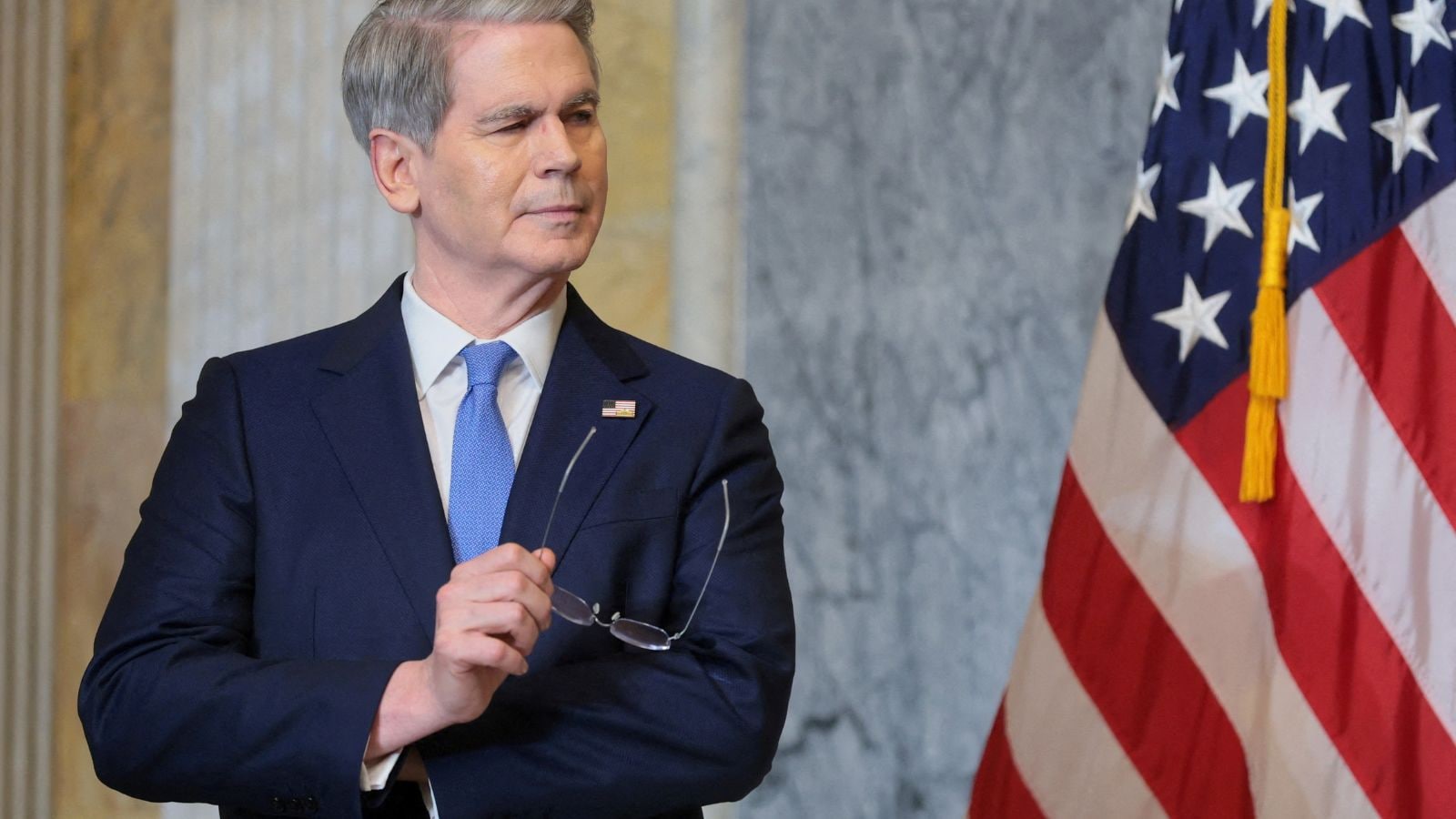
The headlines scream that Washington is ready to redraw global trade maps overnight. Scott Bessent stands up at the G20, waves a red flag about China, and promises weekly Iranian sanctions as if economic isolation is a subscription service you can cancel at whim. Wall Street gasps. Pundits nod along to the tired choreography of geopolitical posturing.
Everyone is looking at the wrong dial.
I have spent twenty years watching policymakers treat supply chains like a game of Risk, moving colored plastic blocks across a board from the comfort of an air-conditioned boardroom. They believe that if you slap enough tariffs on Beijing or choke off Tehran's oil tankers with fresh red tape, the global machine will simply pause, reverse, and rebuild itself on domestic soil. It is a comforting fairy tale for protectionists. It is also an expensive delusion.
The lazy consensus says that decoupling from China and tightening the economic noose around Iran will protect Western capital. The reality is far uglier. You cannot unring a bell that has been chiming for four decades. Modern trade is not a series of bilateral agreements you can shred with an executive order; it is a hyper-complex web of chemical precursors, rare earth processing nodes, and financial workarounds that laugh at the Department of Treasury's alphabet soup of enforcement agencies.
The China Trap Nobody Wants to Talk About
Let us look at the arithmetic of supply chain nationalism. When officials demand that manufacturers pull out of China, they talk as if a factory is a tent you can fold up and pitch in Ohio next Tuesday.
I sat across from a manufacturing executive last year who tried to do exactly what Washington wanted. He spent twelve million dollars moving a critical sub-assembly line out of Guangdong to a friendly emerging market. Within six months, his defect rate tripled because the tier-three suppliers—the guys making the specific polymer seals and the precision springs—did not exist locally. They were three time zones away, clustered in an industrial park outside Shenzhen where thirty companies shared a specialized testing lab.
You do not legislate an industrial ecosystem into existence with a trade policy speech.
When Bessent urges the G20 to rethink trade ties, he assumes other nations share America's appetite for economic self-harm. Europe is tethered to Chinese industrial demand whether Berlin admits it on television or not. Southeast Asia thrives precisely because it acts as the middleman routing Chinese goods through friendly ports with new paperwork.
The strategy relies on a fundamental misunderstanding of how capital actually flows. Money does not care about national security rhetoric; it cares about friction. Every time you add a sanction, a tariff, or a compliance hurdle, you simply increase the cost of doing business. That cost is not absorbed by Beijing or Tehran. It is paid by the retail consumer in Topeka and the small business owner in Manchester who has to retool their entire inventory spreadsheet to survive the quarter.
The Sanctions Treadmill
Then we have the fascination with weekly sanctions. The policy community has fallen in love with the financial equivalent of whack-a-mole. Every few days, a new batch of names hits the Office of Foreign Assets Control ledger.
Imagine a scenario where you lock a door in a burning building every time smoke billows out of it. That is modern sanctions policy.
Iran has spent forty years perfecting the art of economic guerrilla warfare. They use shell companies registered in jurisdictions that treat compliance letters as toilet paper. They route crude through shadowy tanker fleets that turn off their transponders in the middle of the Arabian Sea. Every time Washington announces a fresh wave of penalties, it does not cripple the regime; it professionalizes the black market. It creates a lucrative rent-seeking class of middlemen who charge a premium to bypass the blockade.
The people getting rich off Iranian sanctions are not Western taxpayers. They are the compliance consultants charging two thousand dollars an hour to help Fortune 500 companies figure out if their third-tier supplier uses a shipping container that once brushed past an Iranian port, and the clever operators running dark-water transshipments off the coast of Malaysia.
The Cost of Pretending
The danger of this rhetoric is not that it fails completely. The danger is that it creates a false sense of security while bleeding capital from productive investments.
When capital is forced into compliance theater instead of efficiency, productivity stalls. We are spending billions of dollars policing trade routes and auditing supply chains to satisfy political optics, while our actual infrastructure rots and our educational systems fail to produce the engineers needed to build a real domestic industrial base.
Stop pretending that a trade war is a substitute for an industrial strategy. Stop acting as if you can decree a new global economy by sheer force of executive willpower.
The next time you hear a politician promise to rewrite the rules of global trade with a wave of sanctions, ask them who pays for the wreckage when the machinery jams. They won't have an answer, because they are too busy reading the applause lines off their teleprompters.