The commercial lifecycle of the Times Square New Year’s Eve Ball does not terminate at 12:01 AM on January 1; rather, the annual replacement of its triangular crystal panels initiates a high-margin secondary market operation governed by artificial scarcity, provenance verification, and artisanal value-add. When the event organizers decommission the previous year's Waterford Crystal triangles and route them to a master carver for bespoke engraving, they are executing a textbook asset-monetization strategy. Instead of absorbing storage or disposal liabilities for obsolete architectural components, the rights holders convert depreciated event infrastructure into luxury collectibles. This transformation relies on three distinct economic mechanisms: the capture of temporal provenance, the application of specialized labor to overcome commodity-grade glass pricing, and the alignment of fixed supply with inelastic collector demand.
The Structural Anatomy of Event-Driven Scarcity
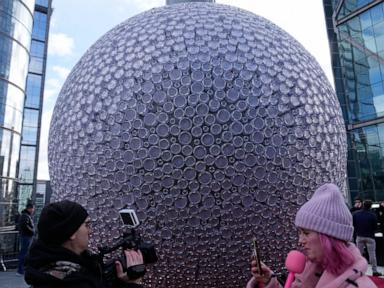
In standard luxury manufacturing, scarcity is often manufactured through arbitrary production caps—a practice that sophisticated buyers recognize as artificial. Decommissioned architectural artifacts bypass this skepticism because the supply ceiling is physically dictated by the geometry of the installation itself. The Times Square Ball is a geodesic sphere covered in precisely 2,688 Waterford Crystal triangles. When a specific thematic design is retired to make way for the subsequent year's motif, the total addressable inventory of authentic, event-used panels is permanently locked at that exact unit count.
This fixed supply creates an immediate structural advantage over standard commemorative merchandise. Standard souvenirs are produced on demand, meaning their marginal cost approaches zero and their secondary market value decays rapidly post-event. By contrast, a crystal triangle that physically hung above One Times Square during a globally broadcast milestone possesses non-reproducible provenance. The asset's value is anchored in two verifiable states:
- Temporal Specificity: The crystal is tied to a singular, unrepeatable historical timestamp. A panel from a specific year cannot be replicated without committing fraud, as the mold designs and mounting hardware configurations are retired annually.
- Environmental Exposure: Unlike pristine retail crystal kept in climate-controlled warehousing, these panels endured winter weather conditions in Manhattan while suspended hundreds of feet above street level. In the collectibles market, micro-abrasions or exposure to the elements paradoxically increase valuation by serving as physical proof of authenticity.
However, raw provenance alone is insufficient to command ultra-premium pricing. A bare, unmounted crystal triangle removed from a steel frame is an awkward, sharp-edged industrial component. Without further processing, its appeal is restricted to hardcore memorabilia collectors willing to manage custom framing or display engineering. To expand the total addressable market to affluent retail buyers, the asset requires physical transformation.
The Value-Add Mechanics of Master Engraving
Routing the decommissioned triangles to a master carver solves the usability problem while simultaneously introducing a second layer of scarcity: human skill. Crystal engraving—specifically traditional intaglio or copper-wheel engraving—is a subtractive manufacturing process that carries an extreme risk of catastrophic failure. Unlike casting or molding, where mistakes can be melted down and re-formed, engraving a finished, event-used crystal panel leaves zero margin for error. A single slip of the wheel or thermal stress fracture destroys an irreplaceable historical artifact.
This operational risk profile fundamentally alters the unit economics of the finished memento. The pricing model is no longer based on the cost of raw silica, potash, and lead oxide, nor is it tied to standard retail markups for mass-produced glassware. Instead, the price reflects:
- Irreplaceable Inventory Risk: The master carver is working on a non-renewable substrate. The cost of ruined inventory cannot be hedged by ordering more raw materials from a supplier; every damaged triangle permanently shrinks the total revenue pool.
- Labor Bottlenecks: True master engravers require decades of apprenticeship to achieve proficiency in subsurface light refraction and depth control. Because this labor cannot be scaled through automation without stripping the product of its artisanal prestige, production throughput is strictly bottlenecked by the physical hours a single artisan can spend at the wheel.
- Bespoke Personalization: By allowing buyers to commission custom monograms, dates, or corporate insignias onto the decommissioned crystal, the seller shifts the transaction from a passive retail purchase to an active commissioning process. Customization eliminates price transparency, making it impossible for the consumer to comparison-shop against standard luxury goods.
The physical interaction between the carved grooves and ambient light is also a critical functional factor. The Times Square triangles are engineered with deep bevels and intricate geometric cuts designed to maximize brilliance under high-intensity LED arrays at a distance of several hundred feet. When a master carver introduces fine, matte-finished engraving onto the surface, it creates optical contrast. The frosted texture of the carved areas diffuses light, while the surrounding polished facets refract it. This dual-surface optical behavior ensures the memento functions effectively in domestic lighting environments, transitioning an object built for stadium-scale visibility into an intimate desktop or display piece.
Provenance Engineering and Counterfeit Mitigation
Whenever an asset class combines fixed supply, high emotional resonance, and substantial price points, counterfeit risk escalates proportionally. In the secondary memorabilia sector, the primary point of failure is rarely the physical replication of the object; it is the degradation of the chain of custody. If the market doubts that a crystal triangle actually hung on the ball, its valuation collapses to the intrinsic value of a decorative paperweight.
To defend the price floor, the commercialization pipeline must integrate rigorous provenance engineering alongside the physical carving. This requires a closed-loop custody chain from the moment riggers unbolt the panels from the geodesic frame in Times Square to the moment the engraved piece is sealed in presentation packaging.
A robust verification architecture relies on three sequential controls:
- Serialized Tracking at Decommissioning: Each triangle must be cataloged and assigned a unique identifier upon removal from the structure, preventing unauthorized gray-market leakage from contractors or rigging crews.
- Artisan Sign-Off: The master carver's physical signature or studio mark, etched discreetly into the crystal alongside the Waterford hallmark, acts as a secondary cryptographic key. Forging both the proprietary crystal geometry and the specific hand-engraving style of a recognized master requires a level of capital and skill that renders counterfeiting economically irrational.
- Immutable Documentation: Numbered certificates of authenticity, cross-referenced against a central registry maintained by the event organizers or the crystal manufacturer, allow secondary-market buyers to verify the asset's lineage decades after the initial sale.
Without these controls, information asymmetry sets in. In economics, when buyers cannot reliably distinguish between authentic artifacts and high-grade replicas, they discount the price they are willing to pay across the entire category, driving genuine sellers out of the market.
Limitations and Structural Vulnerabilities of the Model
While monetizing decommissioned event infrastructure generates exceptional gross margins, the strategy is subject to strict operational ceilings and market vulnerabilities that prevent indefinite scaling.
First, the model suffers from severe inventory inelasticity. If global demand for a specific year's crystal spikes—due to a historic cultural milestone, a major corporate anniversary, or heightened media coverage—the organizers cannot legally or ethically expand the supply beyond the 2,688 panels installed on the sphere. Revenue is hard-capped by the physical surface area of the ball. Attempting to circumvent this by selling "reproductions" alongside the genuine artifacts dilutes the brand equity of the authentic pieces and alienates high-net-worth collectors.
Second, key-person dependency introduces acute operational fragility. Relying on a master carver to execute intricate, high-risk handwork means that illness, injury, or retirement can halt the entire fulfillment pipeline. Training a successor takes years, and collectors often attach premium value to the specific name of the reigning master artisan. If the transition to a new carver is poorly managed, perceived value can drop precipitously.
Third, the secondary market value of commemorative collectibles is highly sensitive to macroeconomic liquidity and generational nostalgia. While an artifact from a specific year holds intense emotional currency for individuals who experienced a major life event during that period, that emotional premium decays over a 30-to-50-year horizon unless the specific year holds broader historical significance. Once the original cohort of buyers ages out of the market, resale values often regress toward the intrinsic value of the crystal and the artistic merit of the engraving, stripping away the event-provenance premium.
Strategic Execution for Asset Holders
Organizations managing high-visibility cultural events or iconic physical infrastructure routinely leave millions of dollars in residual equity on the table by treating retired components as scrap or low-tier promotional giveaways. To replicate the unit economics of the Times Square crystal program, rights holders must treat decommissioning as a product launch rather than a demolition phase.
The optimal execution framework requires integrating the secondary market strategy into the initial engineering phase of the event. Materials must be selected not only for their structural performance during the broadcast, but for their durability, aesthetic appeal, and capacity to accept post-event artisanal modification. Partnering with legacy craft studios early ensures that the physical dimensions of the components align with established luxury packaging and display standards. Finally, rather than releasing all decommissioned inventory simultaneously—which depresses initial pricing and exhausts marketing momentum—organizers should execute a multi-year tiered release, holding back a percentage of the rarest, most heavily engraved pieces to anchor future milestone anniversaries.