The morning coffee in Caracas is usually a sacred ritual. It is the quiet moment before the capital city wakes up to its characteristic roar of traffic, shouting street vendors, and the heavy humidity rolling off the Avila mountain. On an otherwise ordinary Tuesday, that coffee never reached the lips of thousands.
Instead, the earth groaned.
It started not as a sound, but as a vibration in the soles of the feet—a deep, low bass frequency that seemed to rise from the center of the planet. Within seconds, the vibration became a violent heave. Concrete, a material we treat as the absolute definition of solidity, suddenly behaved like liquid.
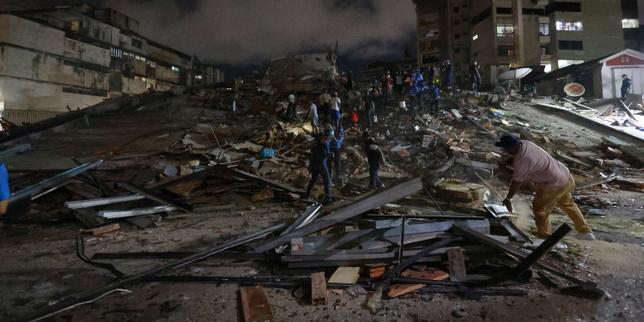
When the dust finally settled over the valley, a grim new reality emerged. At least 32 people were dead. More than 700 others were nursing injuries in overwhelmed, under-resourced hospitals. In a matter of moments, the fragile veneer of urban stability had cracked wide open, leaving a nation to reckon with the terrifying unpredictability of the ground beneath its feet.
The Sound of Concrete Giving Up
To understand a major earthquake in a densely populated metropolis, you have to look past the sterile numbers on a seismograph. You have to look at the joints where walls meet ceilings.
Imagine a hypothetical resident—let’s call her Maria—standing on the fourth floor of an apartment building in the Chacao district. She isn't a statistic; she is anyone who has ever trusted a roof to stay above their head. When the fault line slipped, Maria didn’t think about tectonic plates or the Caribbean and South American boundaries. She thought about her daughter’s school. She thought about the strange, high-pitched scream that buildings make when the steel rebar inside them begins to twist and snap under immense torque.
That scream is the sound of structural failure.
Caracas is a city built on contrasts, where gleaming glass towers sit mere blocks away from the sprawling, precarious brick communities known as barrios that cling to the hillsides. During this seismic shift, both worlds felt the same terrifying equalizer. In the center of the city, several multi-story buildings simply pancaked, their floors collapsing neatly onto one another, trapping everything and everyone inside a sandwich of pulverized mortar and twisted metal.
The immediate aftermath was defined by an eerie, suffocating silence, followed instantly by a chorus of car alarms and human voices crying out into the dust.
A System Stretched Past the Breaking Point
The true catastrophe of a natural disaster rarely ends when the shaking stops. That is just the prologue. The real crisis begins when the fragile infrastructure of a city is forced to bear the weight of hundreds of simultaneous emergencies.
Consider the logistics of a rescue operation in a city already battling economic headwinds.
First responders arrived at collapse sites facing a logistical nightmare. Heavy machinery was needed to lift chunks of fallen facades, but gridlocked streets and damaged roadways blocked the path. Ambulances, hampered by a chronic shortage of spare parts and fuel, had to prioritize the critically wounded.
At the central hospitals, the scene was one of controlled chaos. Doctors and nurses, accustomed to working under difficult constraints, found themselves treating hundreds of lacerations, fractures, and crush injuries by flashlight as localized power grid failures plunged entire wards into darkness.
Medical triage in these circumstances is a brutal math. Who can wait? Who cannot? With over 700 wounded flooding the system, the pressure on healthcare workers wasn't just physical; it was deeply psychological. They were forced to make split-second decisions that would dictate whether a name ended up on the casualty list or the discharge registry.
The Legacy of the Fault Lines
Why does Caracas shake like this? The answer lies in a geological reality that the city frequently forgets during the decades of quiet between major events.
Venezuela’s northern coast sits directly atop a complex transform fault system. It is a zone where two massive pieces of the Earth's crust are locked in a slow-motion wrestling match, moving past each other at a rate of just a few millimeters a year. But those millimeters build up friction. Stress accumulates in the rock, stored like a tightly wound coil spring.
Eventually, the rock reaches its limit. It breaks.
The energy released by this sudden rupture travels through the ground in seismic waves, shaking the alluvial soil of the Caracas valley like jelly in a bowl. Historical records show that this is not an isolated anomaly. The city was devastated in 1641, again in 1812, and most recently in 1967, when a magnitude 6.6 quake claimed over 200 lives and collapsed several modern high-rises.
The recent disaster is a stark reminder that history is cyclical. The earth has a long memory, far longer than human political cycles or architectural trends.
The Unseen Scars
Long after the rubble is cleared from the avenues and the damaged structures are either demolished or patched up, the invisible consequences of the earthquake will linger in the collective psyche of the population.
An earthquake destroys more than physical property; it obliterates the fundamental human illusion of safety. Home is supposed to be the sanctuary. When home becomes a potential trap, the psychological toll is profound. For weeks to come, every passing heavy truck that rattles a windowpane will cause hearts to race and conversations to stop mid-sentence.
Neighbors who spent years passing each other with a polite nod are now bonded by the shared trauma of digging through debris with their bare hands to find a missing pet, a cherished heirloom, or a loved one. Community spaces have transformed into makeshift distribution centers for clean water, non-perishable food, and basic medical supplies.
The response to the tragedy has highlighted a profound truth about the city: when institutional systems falter, human solidarity tends to fill the void. Strangers formed human chains to move heavy stones. Local bakeries handed out bread to those afraid to return to their apartments.
As night falls over Caracas, many residents choose to sleep in public parks, squares, or inside their vehicles, staring up at the dark sky rather than risking the concrete canopy of their homes. The Avila mountain stands dark and silent against the stars, a permanent witness to a city that is once again learning how to rebuild itself from the ground up.