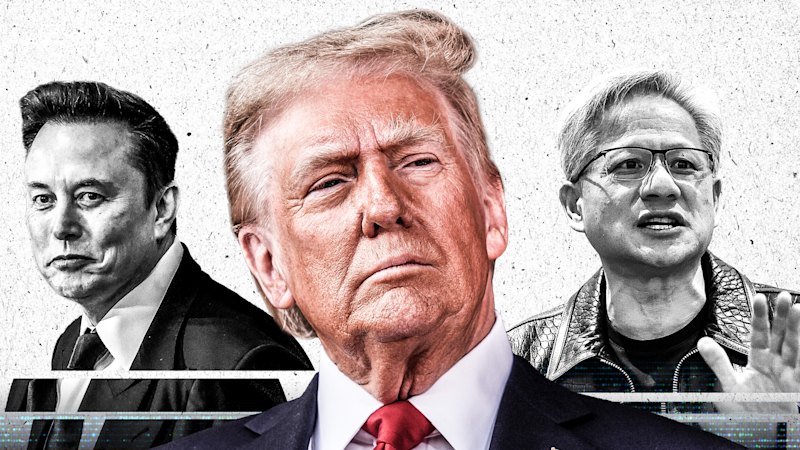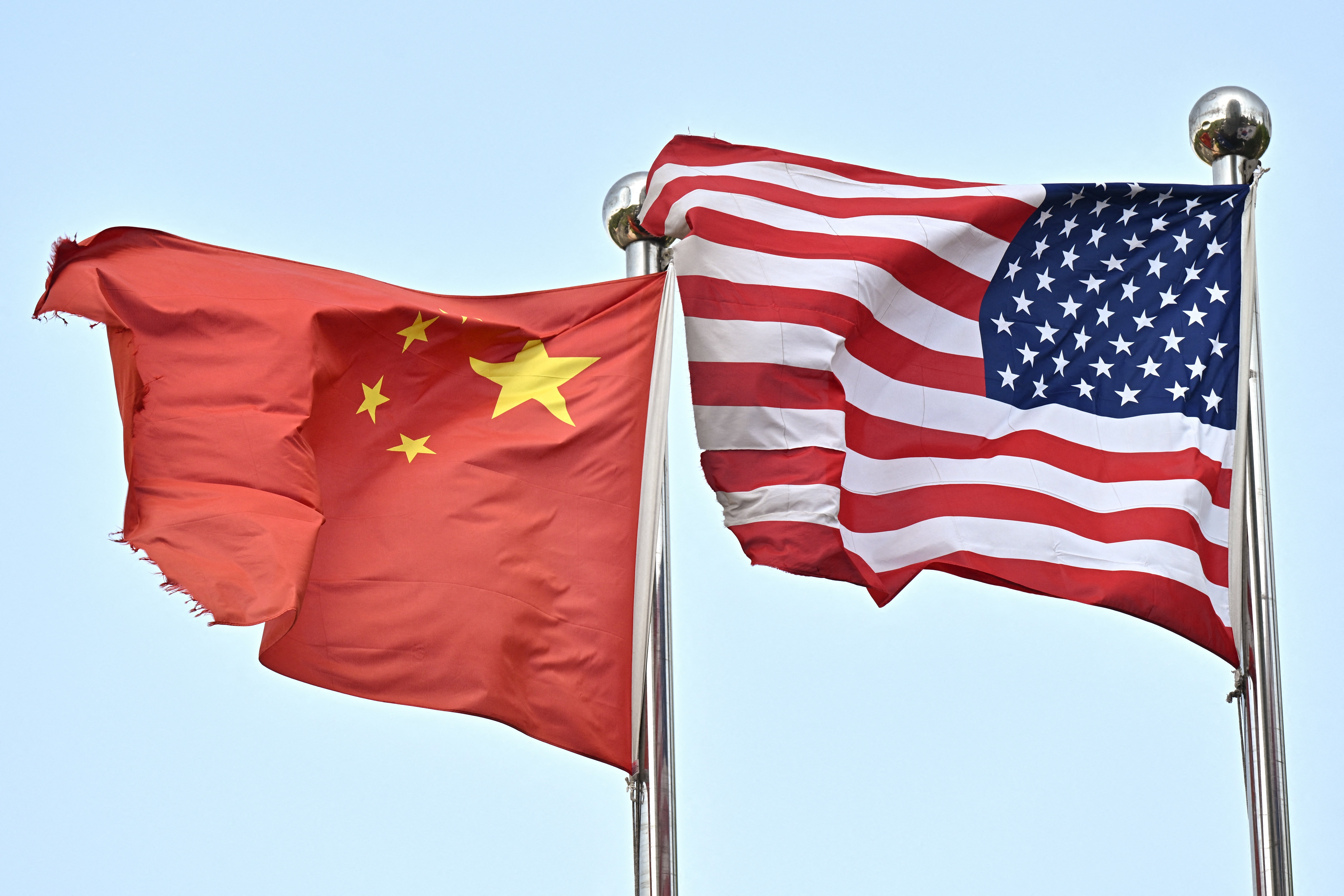
When heads of state sit across from each other in high-security summits, the public narrative usually focuses on trade tariffs, territorial disputes, and traditional military posturing. Beneath those visible friction points, however, a quieter and far more critical negotiation happens through unofficial channels. Track Two diplomacy involving artificial intelligence has quietly accelerated, operating away from the cameras and legislative glare. This backchannel diplomacy attempts to establish safety boundaries for machine intelligence before algorithmic systems outpace human control entirely.
Decades of nuclear arms control history show that formal treaties take years to ratify, by which point the technology has already mutated into something entirely unmanageable. Artificial intelligence moves at a velocity that makes traditional bilateral treaties obsolete before the ink dries. Consequently, former government officials, computer scientists from both nations, and specialized think tanks are doing the heavy lifting. These unofficial dialogues represent the only functional mechanism preventing an uncontrolled escalation in automated military systems and autonomous cyber weapons. You might also find this related coverage insightful: The Silicon Paradox That Defines Modern Power.
The Architecture of Track Two Diplomacy
Official government representatives are constrained by public posturing, domestic political optics, and the immediate need to project strength. Track Two forums bypass these theatrical limitations. When a retired American defense official meets a Beijing-affiliated computer scientist over closed doors in a neutral venue, the conversation shifts from political theater to engineering reality. They discuss what happens when autonomous combat algorithms encounter unexpected variables in contested airspace. They debate the thresholds where automated decision-making systems might misinterpret routine communications as an incoming offensive maneuver.
The primary objective of these private sessions is simple and terrifying. Both Washington and Beijing recognize that machine learning models deployed in national security contexts lack human intuition. When a high-speed trading algorithm crashes a stock market in milliseconds due to an unforeseen software loop, the damage is financial. When an autonomous defense grid miscalculates an adversary's posture, the result is kinetic. Track Two participants attempt to map out these failure modes and establish tacit red lines that neither government can publicly acknowledge without looking weak to domestic constituents. As reported in latest coverage by The Next Web, the effects are widespread.
Silicon Valley executives and major research laboratories in Shenzhen watch these developments with intense anxiety. The commercial stakes are inextricably linked to national security policy. Export controls on advanced semiconductors, restrictions on specialized computing clusters, and limitations on talent mobility have created a fractured technological ecosystem. Without parallel communication channels, engineers on both sides operate in an informational vacuum. They build more capable models without knowing what specific capability thresholds will trigger severe economic retaliation or military escalation from the other superpower.
Structural Asymmetries in the Tech Cold War
The United States maintains an advantage in fundamental algorithm design, elite foundational model training, and advanced semiconductor manufacturing equipment. American firms dominate the frontier of generative models and large-scale reasoning systems. China counters this advantage through unmatched state-directed capital allocation, massive infrastructural integration across smart cities, and an abundance of engineering graduates combined with vast streams of domestic data. This asymmetry creates distinct paranoia on both sides of the Pacific.
American policymakers fear that authoritarian deployment of facial recognition, predictive policing, and automated surveillance creates an unbeatable totalitarian efficiency model. Meanwhile, Chinese strategists worry that American export controls are designed not just to protect commercial interests, but to permanently lock out their industrial base from participating in the next epoch of computing power.
This mutual insecurity drives aggressive domestic consolidation. Neither nation wants to rely on foreign hardware or open-source components managed by geopolitical rivals. The consequence is a painful decoupling process. Supply chains that took thirty years to integrate are being ripped apart and duplicated at enormous financial cost. Software stacks are fragmenting. Even basic research papers, once freely shared across international academic journals, face strict security reviews and increasing self-censorship.
The Danger of Autonomous Escalation
Military applications of machine learning present the most acute danger. Traditional deterrence theory relies on predictable escalation ladders. Leaders communicate threats, calculate risks, and make rational decisions based on available intelligence. Modern algorithmic warfare shatters this paradigm. Automated command and control systems operate at speeds that render human intervention impossible during a crisis. If an automated air defense network detects an anomaly, it reacts in microseconds.
Track Two discussions focus heavily on these high-speed operational dynamics. Participants attempt to define what constitutes a destabilizing deployment of autonomous systems. For instance, putting autonomous lethal authority into low-latency edge computing devices deployed near contested maritime borders introduces unacceptable systemic risk. If a software bug or corrupted training dataset triggers a localized kinetic engagement, political leaders might find themselves dragged into a major conflict by a machine error they neither initiated nor anticipated.
Yet, translating these private insights into binding state policy remains an immense hurdle. Hardliners in both capitals view any form of cooperative dialogue as a sign of appeasement. When a prominent researcher advocates for joint safety standards or shared testing protocols for advanced models, they are often accused of aiding a strategic competitor. Domestic political survival routinely overrides long-term risk mitigation.
Economic Realities and the Semiconductor Chokepoint
Hardware remains the ultimate chokepoint. Advanced extreme ultraviolet lithography machines, required to print sub-nanometer microchips, are controlled by a very small group of Western-aligned nations. By restricting access to these fabrication tools, Washington aims to maintain a generational lead in computational capacity.
However, technology embargoes historically accelerate indigenous innovation rather than halting it permanently. Faced with severe hardware restrictions, domestic research labs in Beijing have pivoted toward architectural efficiency. They develop training methodologies that require fewer high-end chips, optimize existing hardware through novel software configurations, and invest heavily in domestic semiconductor fabrication alternatives. While these domestic efforts face massive hurdles, the sheer scale of capital deployed ensures that total technological isolation is an illusion.
The economic fallout extends far beyond microchips. Multinational corporations that built their supply chains around globalized efficiency are forced to split their operations. Companies maintain separate software repositories, distinct data centers, and isolated supply chains for Western and Asian markets. This duplication destroys profit margins and slows down innovation, but corporate boards view it as an unavoidable insurance policy against sudden regulatory shifts.
Looking Beyond the Summit Table
When political leaders stage their high-profile summits and pose for photographs, the agreements they sign are usually the product of months of grinding preliminary work done by unheralded negotiators. Track Two diplomacy provides the necessary intellectual cover for governments to eventually adopt sensible guardrails. It allows both sides to test ideas without political commitment, to explore compromise positions, and to understand the absolute boundaries of what the opposing superpower will tolerate.
The future of global stability depends less on formal disarmament treaties and more on whether these fragile communication channels can survive political crosswinds. As computational capability scales upward and algorithms become more autonomous, the margin for human error shrinks toward zero. The real battle is not about who reaches artificial general intelligence first, but whether humanity retains the wisdom to govern the systems it creates before those systems begin governing us.