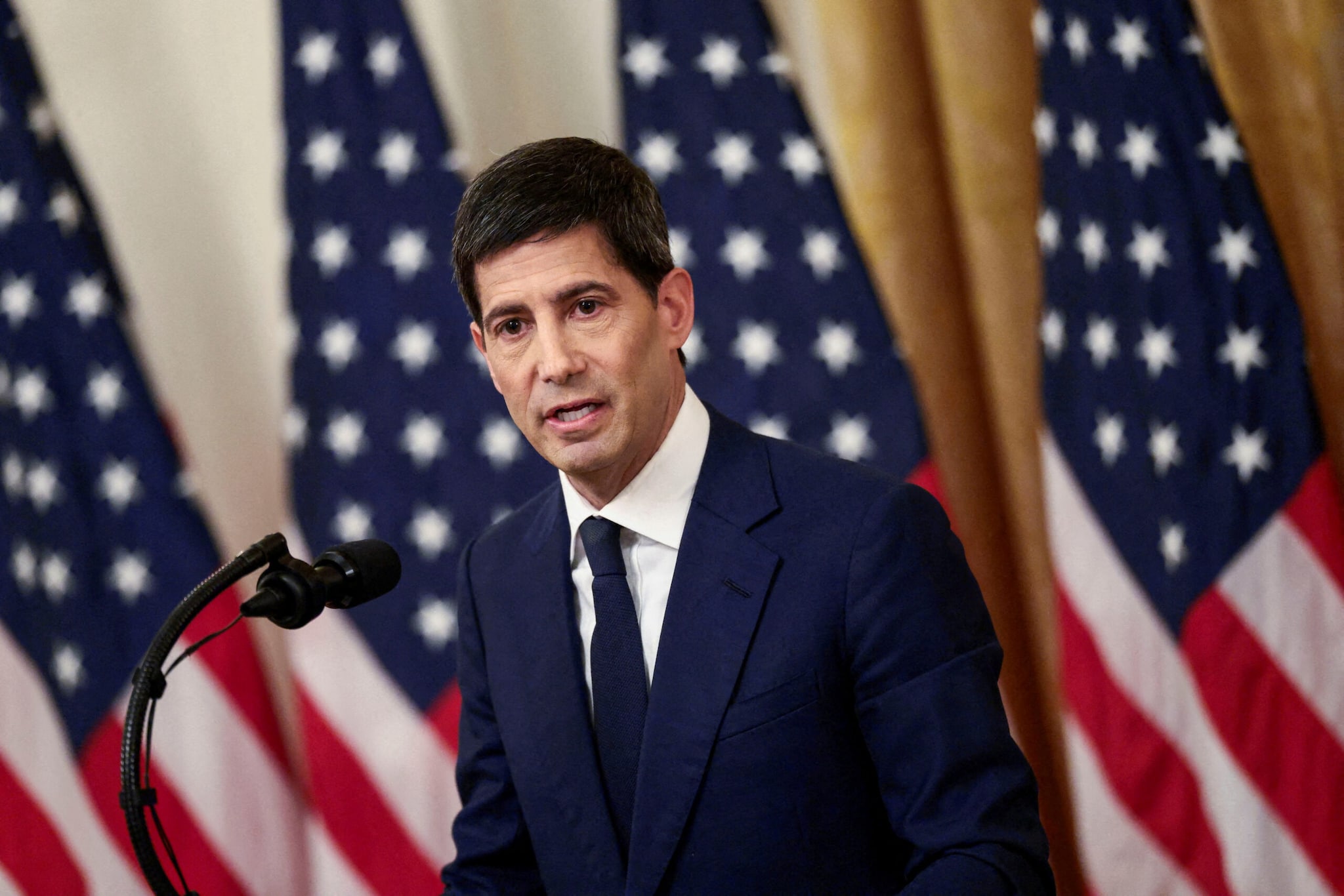
The Federal Reserve chose stability over shock therapy at Kevin Warsh’s debut meeting as chair, holding interest rates steady despite intense market pressure for a decisive move. Investors expected immediate drama. They wanted a clear signal of where the new leadership plans to steer the American economy. Instead, the central bank issued a cautious, tightly managed statement that left benchmark borrowing costs exactly where they were. This pause is not a sign of consensus. Behind the public display of unity lies a deeply fractured committee struggling to balance sticky services inflation against a cooling labor market. Warsh inherited a divided house, and his first act was simply keeping the roof from cave-ins.
Central bank watchers knew the transition would be bumpy. For months, Wall Street speculated that a change at the top of the Fed would trigger an immediate shift in monetary philosophy. It did not happen. Discover more on a similar issue: this related article.
The Myth of the Monolithic Committee
The public views the Federal Open Market Committee as a unified bloc of technocrats who look at the same data and reach the same inevitable conclusion. That view is wrong.
The current voting members are split into three distinct camps. On one side stand the traditional inflation hawks, who worry that cutting rates too quickly will cause price growth to become permanently entrenched. On the other side are the labor-market doves, who point to rising corporate bankruptcies and ticking unemployment rates as proof that monetary policy is too restrictive. In the middle sits the new chairman, attempting to forge a third path. Further reporting by Financial Times explores similar views on this issue.
The Cost of Delaying a Choice
Holding rates steady carries severe real-world consequences for ordinary citizens and massive corporations alike.
Every month that borrowing costs remain at these levels puts additional pressure on regional banks. These institutions are holding billions of dollars in commercial real estate loans that need to be refinanced at significantly higher rates than when they were issued.
Consider a hypothetical commercial real estate developer who took out a five-year loan in 2021 at a three percent interest rate. If that loan comes due today, the developer faces a refinancing rate closer to seven or eight percent. The cash flow from the building cannot support those interest payments. When these developers default, the losses land directly on the balance sheets of local and regional banks.
By refusing to cut rates, the Fed is betting that the banking system can absorb these rolling defaults without triggering a broader credit crunch. It is a high-stakes gamble.
Why Inflation is Proving Stickier Than Expected
The central bank's official goal remains a return to two percent inflation. Achieving that target is proving incredibly difficult because the nature of price growth has shifted.
The early wave of post-pandemic inflation was driven by supply chain snarls and expensive goods. Computer chips, used cars, and lumber spiked in price, then normalized. Today's inflation is structural. It is driven by rents, insurance premiums, and medical costs. These service-sector expenses do not respond quickly to high interest rates.
- Property insurance premiums have soared due to increased climate risks and higher rebuilding costs.
- Aviation and transport fares remain elevated because of chronic pilot shortages and aircraft delivery delays.
- Healthcare labor costs continue to climb as hospitals compete for a limited pool of specialized nurses and technicians.
A consumer cannot easily boycott a medical procedure or skip an auto insurance payment just because the Fed raised rates. This reality limits the effectiveness of traditional monetary policy. The central bank is using a blunt macroeconomic tool to fight precise, structural microeconomic problems.
The Quiet Crisis in Corporate Debt
While the stock market has cheered the stability of the tech sector, a different story is playing out in the leveraged finance markets.
Hundreds of mid-sized American companies rely on floating-rate debt to fund their daily operations. Unlike fixed-rate corporate bonds, these loans get more expensive every time the Fed holds rates high while inflation persists. The interest expense for these businesses has doubled over the past twenty-four months.
Money that should be spent on research, capital upgrades, or hiring is instead being diverted to pay Wall Street lenders.
This drain on corporate cash flow explains why manufacturing data has softened across the Midwest. Executives are freezing hiring plans and delaying factory expansions because their debt servicing costs are eating up their capital budgets. The Fed knows this. The committee is watching corporate debt maturities carefully, aware that a wall of refinancing is scheduled to hit the market over the next twelve months.
Decoding the New Chairman's Silence
Kevin Warsh did not speak extensively during the post-meeting press conference. He stuck to a prepared script, refusing to offer the kind of forward guidance that his predecessors favored.
This silence was intentional.
By refusing to promise future rate cuts or threaten future hikes, the new chair is clawing back flexibility for the institution. The era of the Fed explicitly telling the market what it will do three months in advance is over. This shift creates short-term volatility in bond markets, but it protects the committee from being boxed in by its own words if economic data suddenly turns sour.
The Federal Government's Interest Bill
There is an elephant in the room that no central banker wants to discuss publicly. The federal deficit.
The United States government is currently adding more than one trillion dollars to its national debt every several months. As older Treasury bonds mature, the government must issue new debt at current, higher yields. The annualized interest payment on the national debt has crossed the one trillion dollar mark, eclipsing the budget for many core federal agencies.
$$\text{Annualized Interest Expense} = \text{Total Outstanding Debt} \times \text{Average Weighted Yield}$$
If the Fed keeps rates elevated to fight sticky inflation, it simultaneously increases the borrowing costs for the Treasury. This dynamic creates an uncomfortable tension between fiscal policy and monetary policy. The central bank is independent, but it does not operate in a vacuum. A government spending money at this pace counteracts the Fed's efforts to cool down the economy.
The Global Consequences of the Hold
The decision to keep American rates unchanged reverberates far beyond New York and Washington.
Because the dollar remains the world's primary reserve currency, high American interest rates act as a magnet for global capital. Investors pull money out of emerging markets in Asia and Latin America to chase safe, high-yielding Treasury bills. This capital flight weakens foreign currencies against the dollar.
A stronger dollar makes it more expensive for foreign nations to import food and energy, which are typically priced in greenbacks. The Fed's domestic battle against inflation is effectively exporting inflation to developing economies around the world.
Central banks in Europe and Japan are forced to keep their own interest rates higher than their domestic economies warrant simply to protect their currencies from collapsing against the dollar.
The Emerging Labor Market Fractures
Mainstream economic commentary emphasizes the low headline unemployment rate. That figure hides underlying weakness.
The number of full-time jobs in the United States has flattened, while part-time employment has risen significantly. Companies are hesitant to lay off staff because of how hard it was to hire workers during the pandemic recovery, a phenomenon economists call labor hoarding. Instead of firing people, companies are cutting hours, reducing bonuses, and letting natural attrition shrink their headcount.
This subtle cooling of the labor market suggests that consumer spending could slow down dramatically later this year.
If hours are cut, workers have less disposable income. Retail sales data is already showing signs of fatigue, particularly among lower-income demographics who have exhausted their savings and maximized their credit card limits. Credit card delinquency rates have surpassed pre-pandemic averages, signaling that the consumer engine of the American economy is running out of fuel.
The Illusion of a Soft Landing
The prevailing narrative on Wall Street is that the Fed will achieve a soft landing, curbing inflation without causing a recession. Historical precedent suggests this outcome is rare.
More often, the long and variable lags of monetary policy mean that the damage of high rates hits the economy all at once. The central bank's decision to pause at this meeting reflects a desire to wait and see how much damage has already been done.
The committee is flying an airplane through a dense fog with instruments that tell them where the plane was ten minutes ago, not where it is right now. Economic data is backward-looking. By the time payroll numbers or inflation reports confirm a severe slowdown, the recession is already underway. Warsh’s first meeting proved he understands the danger of moving too fast, but it also exposed the limits of his ability to fix structural imbalances through interest rates alone. The gridlock inside the committee is a reflection of the gridlock in the wider economy, where old solutions no longer yield predictable results.