The dew on the grass at six o’clock in the morning looks the same whether you are in the Basque Country or the rolling foothills of East Tennessee. But the air is different. It smells of hickory and damp limestone, not the salty brine of the Bay of Biscay.
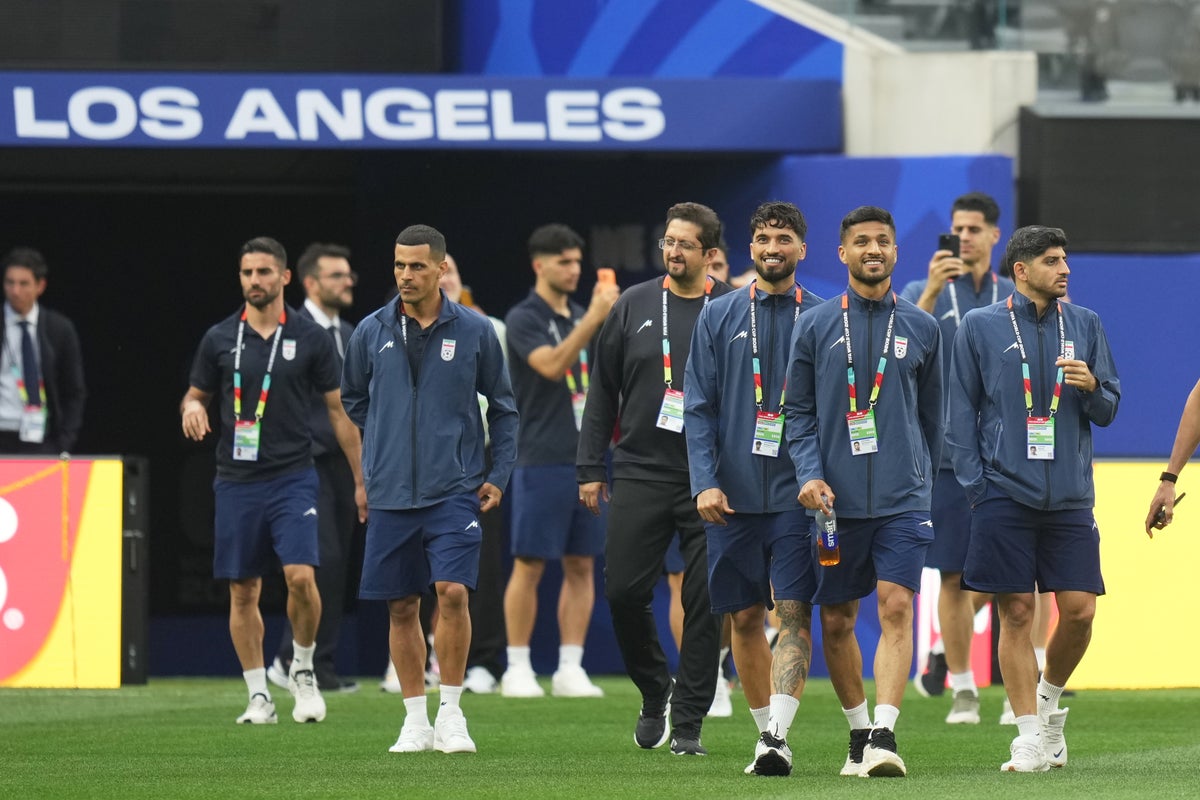
A young man stands on the manicured pitch of a boarding school campus, wrapped in a tracksuit that bears a crest recognized by millions. He draws in a sharp breath. His lungs burn slightly from the unfamiliar humidity. In three days, he will walk out into a stadium roaring with eighty thousand voices, his every touch analyzed by supercomputers and debated by pundits across six continents. Today, however, his world is bounded by a chain-link fence, a row of brick dormitories, and a security detail stationed near a gravel driveway. Recently making headlines in related news: Stop Praising Yasin Ayari for Not Celebrating Against Tunisia.
This is the strange, high-stakes reality of the modern World Cup base camp.
When a national team qualifies for the greatest sporting event on earth, the spotlight focuses entirely on the stadiums—those multi-billion-dollar coliseums of glass and steel where destiny is forged. We see the neon lights, the flags, the dramatic tears during the national anthems. What we do not see are the quiet sanctuaries tucked away in the American heartland, where these modern gladiators actually live, eat, and try to escape the crushing weight of a nation’s expectations. More details on this are covered by ESPN.
The geography of football has shifted. The global game has found a temporary home in the most unlikely corners of rural America.
The Monks of the Beautiful Game
To understand why a powerhouse like Spain would choose to lock itself away in a secluded Tennessee boarding school, or why Iraq would set up its tactical headquarters in a quiet West Virginia town, you have to understand the psychological fragility of elite athletes.
Football at this level is no longer just a game of boots and ball. It is a psychological war of attrition.
For a month, twenty-six young men are cohabitated like monks in a monastery. The pressure is a physical entity, pressing down on their shoulders from the moment they wake up until they drift into fitful sleep. If they stay in a luxury hotel in downtown Miami or Los Angeles, the pressure mutates. It becomes a circus of paparazzi, autograph seekers, corporate sponsors, and the constant, distracting hum of the metropolis.
Isolation is the ultimate luxury.
Consider a hypothetical player—let us call him Mateo. He is twenty-four, earns a king’s ransom playing in Madrid, but right now, he is desperately homesick. He is sitting in a dorm room that usually houses a sixteen-year-old prep school student from Nashville. The twin bed is slightly too short for him. The walls are a neutral, institutional beige.
Yet, this absolute lack of glamour is precisely the point. By stripping away the noise of celebrity, the team management creates a vacuum. In that vacuum, brotherhood forms. The players are forced to look at one another, to play cards in common rooms that smell of floor wax, and to find solace in the shared absurdity of their situation.
Cultivating the Familiar in Unfamiliar Soil
The logistical operation behind these base camps is nothing short of a military invasion disguised as hospitality. National federations do not merely rent out facilities; they completely colonize them.
When a team arrives at a rural site, they bring tones of cargo. It is not just training cones and medical equipment. It is culture, shipped across the ocean in steel containers.
- The Food: Elite nutritionists arrive weeks in advance, taking over the school cafeterias. The institutional industrial kitchens are scrubbed down to make way for imported olive oils, specific grains, and traditional spices that taste like home. A chef from Baghdad or Seville becomes the most important person in the compound, tasked with curing nostalgia through a single plate of rice or a perfectly seasoned broth.
- The Turf: The pitches are curated with obsessive devotion. Groundskeepers measure the blade height down to the millimeter, ensuring the grass matches the exact specifications of the tournament stadiums. The dirt of West Virginia is tilled and pampered until it behaves exactly like the pitches of the Persian Gulf or Western Europe.
- The Sanctum: Every public space is re-engineered. Game rooms are set up with gaming consoles, recovery pods are installed in biology classrooms, and tactical video boards replace whiteboards meant for algebra.
This juxtaposition creates a surreal twilight zone. Walk past the gymnasium, and you might hear the heavy bass of reggaeton or the intricate rhythms of Middle Eastern music echoing off walls decorated with banners celebrating an American high school's 2012 state championship.
The Whispering Town
But what of the locals? The human story of these base camps belongs equally to the people who live just beyond the security perimeter.
Imagine a small town in West Virginia, a place where the economy moves slowly and the most pressing weekend topic is usually the high school football game or the weather's impact on the summer crops. Suddenly, a convoy of blacked-out SUVs rolls through the single main street. Men in matching tracksuits, whose names are chanted by fan clubs in Asia and Europe, are spotted buying espresso at the local diner or browsing the aisles of a provincial supermarket.
The initial reaction is always a mix of bewilderment and quiet pride.
There is an invisible bridge built during these weeks. It is found in the eyes of the local teenager working the register at a gas station when a world-famous midfielder walks in to buy a bottle of water. They do not share a language. They do not share a destiny. But for thirty seconds, their worlds collide. The player offers a tired, grateful smile; the teenager nods with wide-eyed respect.
The town becomes the fierce, protective guardian of its guests. In an era where privacy is a dead concept, these rural communities offer a rare shield of indifference. They do not swarm. They do not stalk. They allow these global icons to simply be human beings walking down a country road.
The stakes are invisible, but they are immense. A bad base camp can ruin a tournament before the first whistle blows. Infighting, boredom, bad food, or a lack of privacy can create fissures in a squad that no tactical genius can fix. Conversely, a peaceful sanctuary can forge an unbreakable spirit.
As the sun begins to set over the Appalachian ridges, casting long, dramatic shadows across the pristine training pitch, the players head inside for dinner. The local residents drive past the gates, catching a glimpse of the floodlights turning on. For a few more weeks, this strange arrangement will endure. Two completely different worlds, bound together by a patch of green grass and the shared pursuit of a golden trophy, finding peace in the most unexpected place on earth.