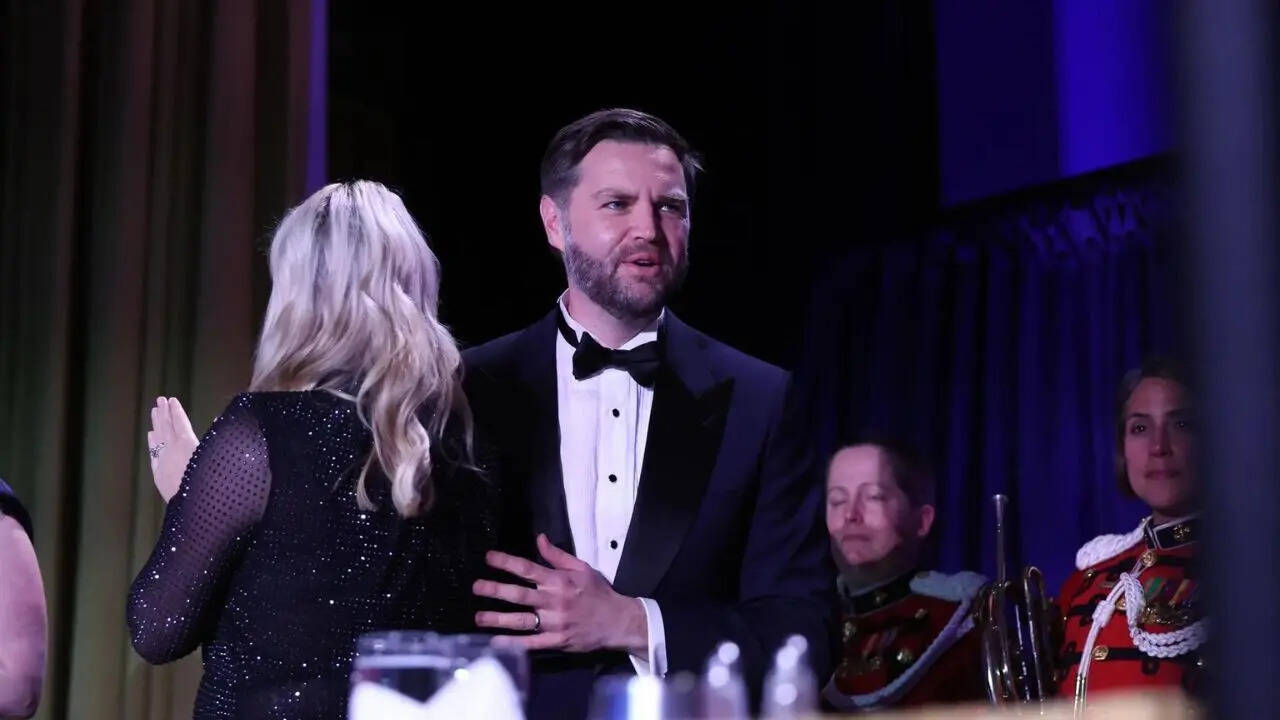
The Theatre of the Unimaginable
The headlines are predictable. They focus on the shock, the confusion, and the "I didn't know what was going on" narrative surrounding high-profile security lapses at White House events. JD Vance’s recollection of a dinner breach is being treated as a cautionary tale about systemic failure.
It isn't.
What we are witnessing is the inevitable friction between the optics of accessibility and the reality of modern risk management. The mainstream media wants to paint these incidents as a breakdown of a perfect wall. They assume that "security" is a static state—a binary switch that is either on or off. This is a fundamental misunderstanding of how high-stakes protection actually functions in the 2020s.
Security is not a wall. It is a series of trade-offs.
When a breach occurs at a televised dinner or a political gala, it isn't usually because a gate was left unlocked. It’s because the stakeholders involved—the politicians, the PR teams, and the donors—demanded a level of "normality" that is fundamentally incompatible with absolute safety. We live in an era where the performance of power requires being seen among the people. That performance has a price.
The Flaw in the "Total Protection" Narrative
Most people look at a Secret Service failure and ask, "How did they miss that?" They are asking the wrong question. In a world of ubiquitous surveillance and decentralized threats, the right question is: "Why do we still pretend these events can be both open and secure?"
The industry standard for years has been "defense in depth." This involves concentric circles of protection: background checks, magnetometers, physical barriers, and tactical teams. But here is the dirty secret the insiders won't tell you: the human element is a permanent vulnerability that no amount of technology can solve.
If you invite 500 people to a room, you have 500 points of failure. If you add staff, catering, and press, you double it. The "breach" isn't a glitch; it is a statistical certainty over a long enough timeline. Vance’s confusion during the event is the natural byproduct of a system that prioritizes the appearance of control over the actual elimination of risk.
The Professionalism of Chaos
I have spent years watching organizations pour capital into "fail-safe" systems only to see them dismantled by a single person with a clipboard and a confident stride. Social engineering remains the most effective weapon against the most expensive security apparatuses on earth.
The competitor's focus on the "security breach" misses the nuance of how these failures actually happen. It wasn't a failure of "knowing what was going on." It was a failure of the protocols to adapt to the reality of the social environment.
In high-threat environments, there is a concept called the OODA loop: Observe, Orient, Decide, Act. When a breach happens, the OODA loop of the security detail is often hamstrung by the political need to avoid a scene. They aren't just fighting a potential intruder; they are fighting the optics of their own response.
- The Optic Trap: If security is too visible, the event feels like a bunker.
- The Accessibility Trap: If the event feels "normal," the security is spread too thin.
- The Information Gap: Guests like Vance are often kept in the dark to prevent panic, which ironically creates the very confusion that makes the breach more dangerous.
Stop Trying to "Fix" the System
The calls for "better training" or "more funding" are a waste of breath. You cannot train your way out of the fundamental physics of a crowded room.
The fix isn't more guards. The fix is a radical departure from the way we conceptualize public leadership. If we want total security, we have to accept total isolation. You cannot have a "man of the people" who is also encased in a bulletproof bubble 24/7.
We need to stop being surprised when the curtain slips. The breach Vance describes is a reminder that the systems we trust are held together by social contracts, not just steel and sensors. When someone breaks that contract, the hardware is often secondary to the human hesitation that follows.
The Cost of the "Normalcy" Delusion
The industry is obsessed with "frictionless" security. They want the scanners to be invisible and the guards to look like waiters. This is a dangerous fantasy.
Real security is inconvenient. It is loud. It is annoying. It involves saying "no" to powerful people who want to bring their "unvetted" friends into the inner circle.
When you read about these breaches, don't look at the intruder. Look at the organizers. Look at the people who decided that the "vibe" of the dinner was more important than the integrity of the perimeter. They are the ones who created the opening. The intruder just walked through it.
The Data of Human Error
Let’s look at the actual mechanics of modern protection. According to standard risk assessment models, human error accounts for over 80% of security failures in "hardened" environments.
Imagine a scenario where every person entering a room is scanned by the latest AI-driven facial recognition and thermal imaging. Even then, a person with the right credentials can simply hold a door open for the wrong person. This is not a tech problem. It is a behavioral one.
The industry keeps trying to sell technical solutions to a psychological problem. We buy more cameras when we should be changing the culture of the room. We focus on the "what" instead of the "why."
Vance’s experience is a symptom of a broader malaise: the belief that we can engineer our way out of risk without changing our behavior. It’s a lie sold by vendors and bought by politicians who are too afraid to tell the public that the world is inherently messy.
The Brutal Reality of the Perimeter
A perimeter is only as strong as its most distracted guard or its most entitled guest.
In any high-level security operation, the "insider threat" or the "accidental bypass" is the primary concern. The guy jumping the fence is easy to handle. The guy who belongs there but brings a "plus one" who wasn't on the list is the real nightmare.
The mainstream coverage wants to turn this into a story about a specific failure at a specific time. They are missing the forest for the trees. The "security breach" is the feature, not the bug. It is the inevitable result of trying to maintain a 20th-century model of public interaction in a 21st-century threat environment.
The End of the Invitation
We are moving toward a world where the "open" event is a relic.
If you want to protect a high-value target, you don't invite 500 people to dinner. You do it via a secure stream from a remote location. But politicians hate that. It robs them of the retail politics they need to survive.
So, we continue the charade. We set up the metal detectors, we check the IDs, and we act shocked when someone finds a way around it. We pretend that "knowing what is going on" is the same thing as being safe.
It isn't.
True security is a cold, calculated reduction of variables. A dinner with hundreds of people is a variables factory. You can't manage it; you can only hope to survive it.
Stop asking for "better security" at these events. If you’re truly worried about a breach, stop having the events. Anything else is just theater.
The confusion Vance felt wasn't a failure of the system. It was the system finally showing its true face. The "secret" in Secret Service doesn't mean they have all the answers; it means they’re the only ones who know exactly how close to the edge everyone is actually standing.
Accept the mess or hide in the bunker. There is no middle ground.