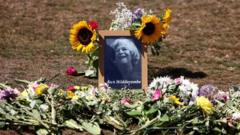
The violent death of former minister and Reform UK spokesperson Ann Widdecombe at her Dartmoor home has exposed deep systemic vulnerabilities in the protection of prominent public figures. Found with severe injuries at her bungalow in Haytor Vale on Thursday, the 78-year-old political veteran became the latest casualty in a country increasingly unable to guarantee the safety of its political class. Devon and Cornwall Police initially arrested a 26-year-old man on suspicion of murder, only to release him less than 24 hours later, clearing him entirely from the inquiry. The hunt for a white male suspect continues at pace.
This catastrophic breakdown in security forces a painful conversation that Westminster has tried to avoid. While initial assessments by counter-terrorism officers indicate the attack may not have been politically motivated, the broader implications are impossible to ignore. Public figures who remain highly visible and accessible in rural communities are facing an unprecedented operational threat environment.
The Flawed Premise of Politician Security
Protecting high-profile individuals in the United Kingdom has traditionally relied on a reactive model. Following the assassinations of Jo Cox in 2016 and David Amess in 2021, funding for member of parliament security surged. Panic buttons were installed, social media monitoring was upgraded, and local police forces were ordered to conduct regular threat assessments.
But these measures suffer from a fundamental geographical blind spot. They are designed for urban offices and Westminster corridors, not isolated rural properties.
Widdecombe chose to spend her retirement in a modest bungalow named Widdecombe's Rest on the edge of Dartmoor National Park. The property was well known locally, marked by a prominent plaque at the end of the driveway. For an individual who routinely courted controversy on national television and maintained an active role as an immigration spokesperson, this level of openness proved fatal.
The state failed to provide a realistic threat assessment for a retired public servant who remained, for all practical purposes, a lightning rod for public emotion.
A Stalled Investigation and the Pressure on Regional Police
Devon and Cornwall Police are under immense national scrutiny. The swift arrest and subsequent release of the initial 26-year-old suspect suggests an investigation operating under extreme political pressure to deliver immediate results. When a public figure is killed, the rush to secure a suspect can sometimes lead to investigative blind alleys.
The major crime investigation team has deployed significant forensic resources to the scene, establishing extensive road closures around Haytor. Forensic teams are searching for a white male suspect who was reportedly seen in the vicinity around the estimated time of the attack on Wednesday afternoon.
The delay in discovering the body, which was found by a carer the following morning, gave the perpetrator a massive head start.
Regional police forces are rarely equipped to handle high-profile homicides with international media attention without draining resources from local policing. The reliance on house-to-house inquiries and CCTV footage in a sparsely populated rural village presents distinct operational challenges. Unlike city centers blanketed by cameras, rural villages offer numerous escape routes through unmonitored back roads and public footpaths, complicating the tracking of a suspect.
The Illusion of the Low Threat Profile
The government frequently categorizes retired politicians or those outside of active parliamentary seats as lower priority targets. This is a dangerous bureaucratic error. Widdecombe had transitioned from a traditional Conservative ministerial career to a highly polarizing media personality and a key figure in Reform UK.
Her public profile did not diminish when she left parliament; it evolved.
UK Political Fatalities and Status (Past Decade)
===================================================
Year   Name               Status at Time of Attack
---------------------------------------------------
2016   Jo Cox             Serving Member of Parliament
2021   David Amess        Serving Member of Parliament
2026   Ann Widdecombe     Retired MP / Party Spokesperson
As the data shows, the threat vector has expanded beyond active legislators. Political violence and targeted attacks do not respect the administrative boundaries drawn by security committees. The poison present in contemporary political discourse affects anyone with a high media profile, regardless of whether they hold official state office.
Beyond the Political Divide
In the immediate aftermath of the tragedy, political leaders from Prime Minister Keir Starmer to Reform UK leader Nigel Farage issued statements calling for national unity and a cessation of political rancor. These statements are a standard fixture of modern political mourning, yet they achieve very little in terms of concrete protection.
The reality is that public figures cannot be entirely insulated from the public without destroying the accessible nature of British democracy. If every prominent commentator, party spokesperson, and retired minister requires around-the-clock armed protection, the financial and logistical burden would be unsustainable.
The alternative is a significant cultural shift in how public figures manage their personal visibility. Living in an easily identifiable home with minimal physical security is no longer viable for anyone who engages in high-stakes public debate.
The investigation into the events at Haytor Vale will eventually provide answers about the specific motive and identity of the attacker. What it has already provided is a stark reminder that the current security framework for public figures is broken, leaving those outside the immediate umbrella of active government dangerously exposed.

.webp)