The financial press loves a desperate pivot. For months, headlines have tracked a supposedly brilliant trend: ailing Chinese property developers, suffocated by debt and a frozen housing market, are pouring money into semiconductor startups. Analysts look at the retail frenzy surrounding these stock moves and whisper about a tech-driven rebirth.
They are dead wrong.
What the mainstream narrative calls a strategic diversification is actually an expensive exercise in corporate theater. Having spent fifteen years tracking distressed capital allocations and restructuring schemes, I can tell you that buying a minority stake in a silicon packaging plant does not turn a brick-and-mortar speculator into Taiwan Semiconductor Manufacturing Company. It turns them into a bankrupt company with a more complex balance sheet.
The crowd cheering this retail frenzy is asking the wrong question. They want to know which developer will successfully transition to high tech. The real question is how much retail capital will be vaporized before investors realize that real estate DNA is fundamentally incompatible with the laws of Moore’s Law.
The Illusion of Capital Liquid Transfer
The lazy consensus rests on a simple, flawed premise: money is money. The theory goes that developers have land, government connections, and leftover cash, so they can easily fund chip fabrication labs (fabs).
This ignores the structural reality of how these two industries operate. Real estate is a low-velocity, high-leverage, rent-seeking business. You buy land, build a concrete shell, borrow against it, sell it, and collect cash. It relies on local political relationships and stable, predictable physical assets.
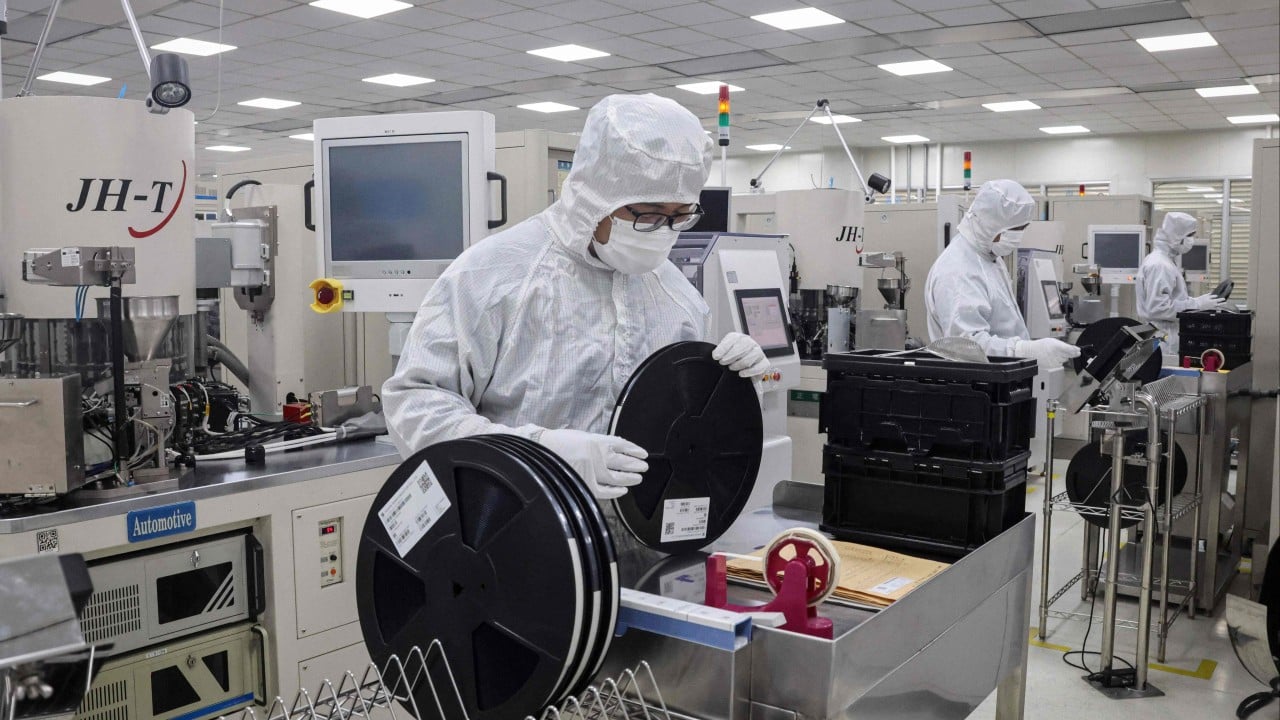
Semiconductors operate on the exact opposite spectrum. They require immense up-front research and development, hyper-specialized talent, and a global supply chain. A modern fab requires extreme precision, cleanrooms that filter out particles smaller than a strand of DNA, and constant reinvestment just to avoid becoming obsolete in three years.
When a distressed developer shifts cash into a chip startup, they are not investing in innovation. They are buying an expensive public relations campaign to distract creditors.
Dismantling the Cleanroom Real Estate Play
Let us address the most common justification used by defenders of these deals: the land angle. Proponents argue that developers understand local zoning, industrial parks, and construction, making them perfect partners to build new semiconductor facilities.
This is a profound misunderstanding of specialized infrastructure. Building an apartment complex or a shopping mall requires standard civil engineering. Building a semiconductor fabrication facility requires an entirely different universe of technical execution:
- Vibration Isolation: Fabs require massive concrete monoliths poured directly into bedrock to prevent microscopic ground tremors from ruining the photolithography process.
- Ultrapure Water Systems: A chip facility consumes millions of gallons of water daily, purified to a level where standard mineral testing cannot detect a single foreign ion.
- Chemical Logistics: Managing volatile gases and specialized acids requires hazardous material infrastructure that standard commercial builders have zero experience handling.
If a developer tries to apply residential construction timelines or cost-cutting measures to a fab, the project fails before the first wafer is polished. I have watched real estate firms attempt to manage industrial tech build-outs; they consistently underestimate the technical specifications, leading to structural delays that cost millions per day in idling equipment.
The Talent Trap and the Sovereign Funding Illusion
Money cannot buy a culture of precision engineering overnight. The tech sector thrives on a specific type of human capital. Top-tier semiconductor engineers do not want to work for a company whose core competency is selling pre-construction condos in tier-three cities. They want to work in ecosystems backed by established tech giants, research universities, and deep-tech venture funds.
When property firms acquire these tech side-hustles, they usually buy into low-margin, lagging-edge segments like basic power management chips or rudimentary sensor packaging. They are not competing at the bleeding edge of artificial intelligence acceleration or 3-nanometer logic nodes. They are entering a saturated, highly cyclical market at the absolute bottom of the value chain.
Furthermore, relying on local government subsidies to bridge the gap is a dangerous strategy. While municipal governments are eager to support domestic chip production, their patience is not infinite. State funds follow milestones. When a converted property developer misses their third consecutive chip yield target because their management team does not know the difference between chemical vapor deposition and plasma etching, the local subsidies dry up.
The Cost of the Distraction
Every dollar a distressed developer spends on a semiconductor side-hustle is a dollar stolen from their core responsibility: restructuring debt and finishing uncompleted housing units.
Imagine a scenario where a company owes $10 billion to offshore bondholders and has 50,000 unfinished apartments waiting for delivery. Instead of using their remaining liquidity to settle contractor disputes and deliver homes to buyers, management allocates $200 million to a speculative silicon carbide venture.
The stock market might react with a brief, retail-driven pump, pushing the share price up for a few weeks. But the fundamental reality remains unchanged. The core business is bleeding, the debt is compounding, and the new tech venture will not generate meaningful free cash flow for five to seven years, if ever.
This is not a pivot. It is a shell game designed to keep equity prices inflated long enough for insiders to adjust their positions.
Look at the Unit Economics
To understand the sheer mismatch of this trend, look at the capital intensity comparison between the two sectors.
| Metric | Typical Tier-1 Property Developer | Mid-Tier Semiconductor Fab |
|---|---|---|
| Gross Margins | 15% - 20% (Declining) | 45% - 60% (High-End) |
| Annual R&D Spending | Minimal (<1% of revenue) | 15% - 20% of revenue |
| Asset Obsolescence Cycle | Decades | 3 - 5 Years |
| Capital Expenditure Focus | Land acquisition & raw materials | Advanced lithography & cleanroom tech |
A property developer is optimized to manage thin margins across massive physical volumes. A semiconductor firm must manage massive margins across microscopic volumes while constantly burning cash to reinvent its own product line. A management team trained in the former cannot survive the volatility of the latter.
Stop treating these retail-fueled stock surges as a sign of economic transformation. They are the final, frantic gasps of an asset class trying to rebrand itself in a desperate bid for survival. The retail investors buying into these semiconductor side-hustles are not funding the future of technology; they are subsidizing the slow-motion collapse of the past.