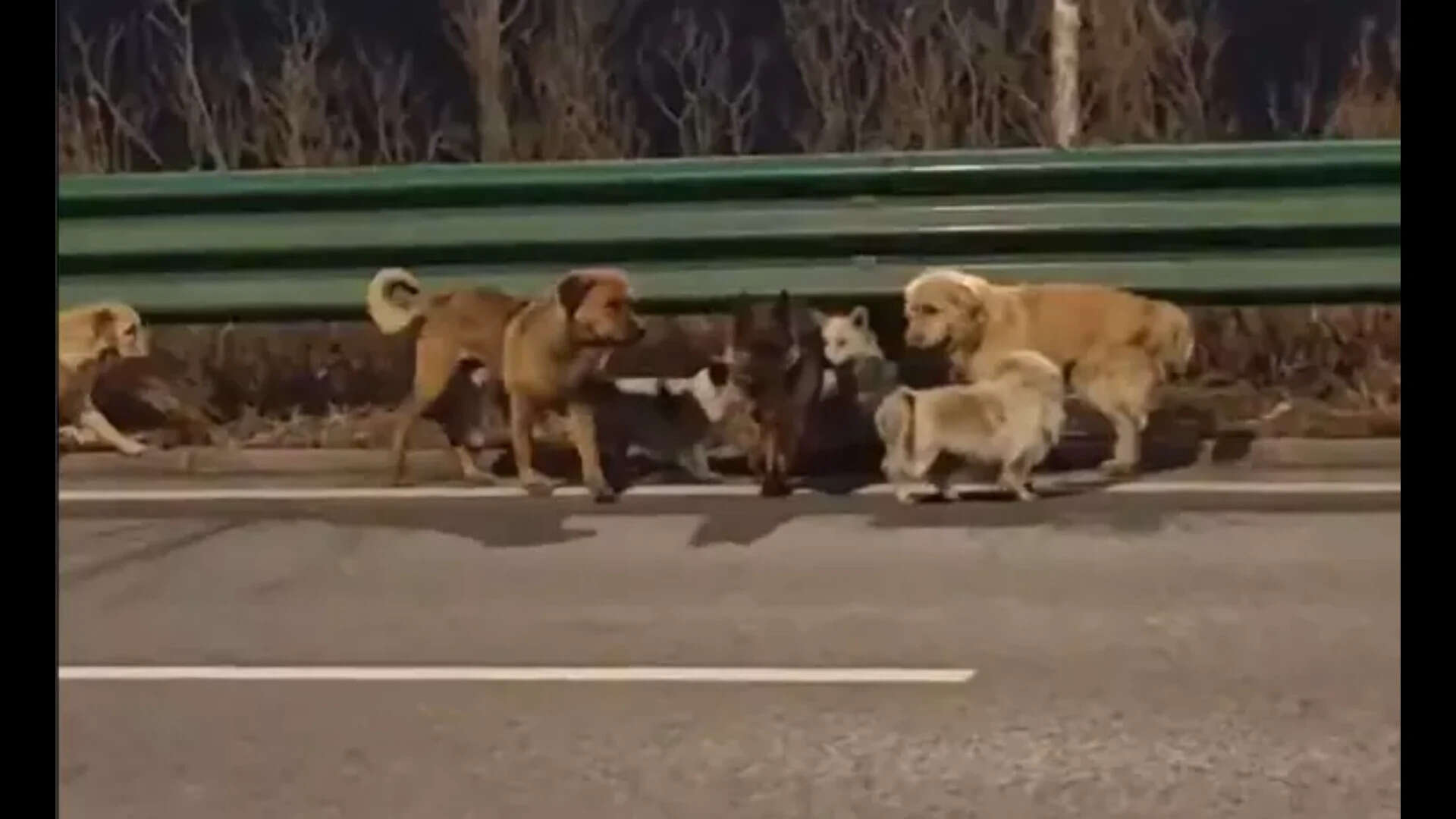
The internet loves a miracle. When news broke that seven dogs allegedly escaped a moving truck in China and trekked 17 kilometers back to their owners, the collective "aww" could be heard from space. It is the perfect viral cocktail: canine loyalty, a daring escape, and a middle finger to the illegal meat trade.
But if you believe the headlines, you are missing the most important lesson in biological navigation and urban displacement. We are prioritizing the "Lassie" narrative over the cold, hard reality of animal behavior and the systemic failure of pet security. This wasn't just a heartwarming stroll home. It was a statistical anomaly that highlights how little we actually understand about the sensory mechanics of the animals we claim to love.
The Myth of the Navigational Compass
The lazy consensus suggests these dogs shared a collective "homing instinct" that functioned like a biological GPS. This is a comforting thought. It implies a spiritual connection between pet and home.
The science is far grittier.
Canine navigation relies on a hierarchy of sensory inputs: olfactory (scent), visual (landmarks), and magnetoreception. While researchers like Hynek Burda have demonstrated that dogs can align themselves with the Earth's magnetic field, that field doesn't give you a turn-by-turn map of a 17-kilometer stretch of Chinese highway.
When an animal is thrown into a moving truck, its sensory map is shattered. It experiences "vestibular noise." The inner ear registers movement, but the eyes see a static cage. The nose is overwhelmed by the scent of road grime and the fear hormones of other animals.
To believe seven dogs escaped a moving vehicle—an act requiring significant physical coordination and luck—and then maintained a cohesive pack structure for 10 miles without getting distracted, hit by cars, or separated by territorial strays is to ignore the basic laws of probability.
Pack Mentality is Not a Democracy
We love the idea of the "Seven Escaped." It sounds like a canine version of The Great Escape. But in nature, packs are hierarchies built on survival, not sentimental agreements.
In a high-stress environment, domestic dogs typically revert to individual survivalist behaviors. If these seven dogs actually stayed together, it wasn't because of friendship. It was a trauma bond triggered by extreme environmental stress.
- The Lead Dog: One dog likely possessed a higher "homing" aptitude or a more resilient nervous system.
- The Followers: The other six weren't "returning home" so much as they were following the only familiar entity in a hostile environment.
If that lead dog had turned left instead of right, seven families would still be grieving. We are celebrating a fluke of leadership, not a universal trait of the species.
The Logistics of the Escape
Let's talk about the truck. The original reporting glosses over the mechanics of the escape. Dogs do not have opposable thumbs. They do not pick locks.
If seven dogs fell or jumped out of a moving vehicle, we are looking at a massive failure of the captors' equipment or a deliberate act of negligence. More importantly, jumping from a truck at speed is a recipe for broken limbs and internal hemorrhaging.
I’ve spent years looking at recovery data for pets lost during transport. The survival rate for animals jumping from moving vehicles is abysmal. The fact that these seven were physically capable of a 17-km hike immediately afterward suggests the truck was either stationary or moving at a crawl—a detail the "action movie" version of this story conveniently ignores to keep the stakes high.
The Truth About the 17 Kilometer Trek
To a human, 17 kilometers is a long walk. To a medium-sized dog in a state of high arousal (adrenaline), it’s a standard afternoon.
The "miracle" isn't the distance. The miracle is the navigation through the urban gauntlet.
Modern cities are sensory minefields. You have:
- Acoustic shadows: Buildings that bounce sound, making it impossible to pinpoint direction.
- Chemical interference: Exhaust fumes and industrial cleaners that mask the "scent trail" of home.
- Physical barriers: Six-lane highways, fences, and gated communities.
When we frame this as a story of "love finding a way," we ignore the terrifying reality: these dogs survived a lethal obstacle course. By focusing on the happy ending, we stop asking why the security of these pets was so easily breached in the first place.
Your Pet Is Not a Superhero
Here is the bitter pill: your dog probably couldn't do this.
The danger of these viral stories is that they build a false sense of security in pet owners. We start to believe our animals have a supernatural ability to find us. This leads to laxity in microchipping, GPS tagging, and physical containment.
"Oh, Max knows his way home," is the famous last words of an owner whose dog just got hit by a delivery van three blocks away.
These seven dogs are the 0.01%. For every "miracle return," there are ten thousand dogs that get 200 meters away from a transport truck and vanish into the machinery of a city forever.
The Industry of Outrage
The competitor articles focus heavily on the "stolen" aspect to drive engagement through anger. It works. We hate the thieves. We cheer for the dogs.
But notice what’s missing: a critique of the lack of traceability in the regional pet industry. If we spent half as much time advocating for mandatory, high-frequency RFID chips as we do sharing "miracle dog" videos, the "stolen dog" industry would collapse.
Thieves rely on the anonymity of the animal. They rely on the fact that once a dog is in a truck, it is just "meat" or "merchandise."
The Reality Check
If you want to actually protect your animal, stop reading the feel-good fluff.
- Magnetoreception is fragile: Don't rely on "instinct." A dog's internal compass can be thrown off by something as simple as a heavy electrical storm or high-voltage power lines.
- Adrenaline masks injury: If your dog ever escapes a vehicle, do not assume they are fine because they are running. The "escapee" dogs likely suffered micro-traumas that would require veterinary oversight.
- The "Pack" is a myth: If you have multiple dogs, do not assume they will stick together if lost. Panic is an individualist emotion.
We need to stop viewing these events as "signs" of canine divinity. They are failures of human systems. The dogs didn't "choose" to be heroes; they were forced into a survival situation by human incompetence and cruelty.
The story isn't that they traveled 17 kilometers to find their owners. The story is that we live in a world where seven living beings can be tossed into a truck and driven halfway across a province before anyone notices the door is open.
Stop cheering for the escape. Start demanding a world where the escape isn't necessary.
The next seven won't be so lucky.
Lock your gates. Tag your dogs. Stop believing in fairytales.