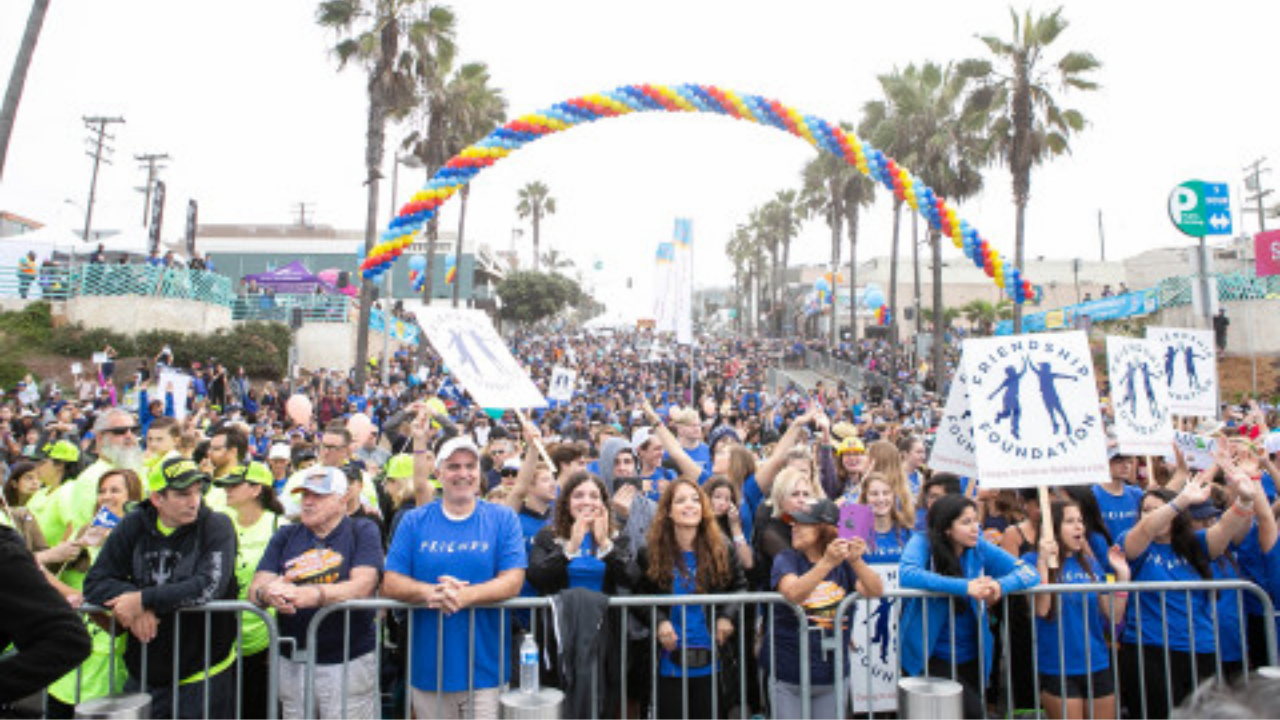
Salt spray stings the corners of your eyes before the sun clears the horizon. Cold. That is the first thing you notice when your sneakers hit weathered timber pilings above the Pacific surf, where fog clings to the railings and three thousand strangers are breathing in unison.
Most people reading a headline about a seventeen-year-old California pier walk that raised a record $3.3 million in 2026 with familiar Hollywood faces in the crowd will skim the number and move on. Three point three million dollars sounds clean. It looks neat on a press release. It reads like a triumph wrapped in a bow.
Having stood on coastal benefit routes myself, watching supporters trade weekend sleep for blistered heels and quiet grief, I know how misleading neat numbers can be. A dollar figure is a receipt at the end of a long ledger. It does not show the quiet dread of year four, when donations plateaued and organizers wondered whether people only show up when a cause is shiny and new. It does not show the Tuesday afternoon when a family learns that treatment travel, missed paychecks, and care coordination eat away at savings faster than any bake sale can repair.
To make the invisible stakes concrete, consider a hypothetical character named Clara, a school nurse from Ventura County whose sister spent eighteen months navigating serious illness and out-of-state specialist visits. Clara is not a celebrity with a publicist and a camera crew. She is the person packing electrolyte packets at 5:30 a.m., texting updates to cousins, and calculating how many shifts she can pick up without burning out. Clara's story is a composite built from real patterns families face when care stretches across months and miles, though the name and specific scene are invented to illustrate the emotional weight behind the headline.
Why does a walk along a California pier endure for seventeen years when so many charity events burn bright for two springs and vanish by the third?
Why Seventeen Years Matters More Than One Big Check
Anyone can throw a splashy gala once. Famous actors will pose for photographs on a red carpet or step onto a coastal boardwalk for a morning mile when the lighting is good and the cameras are rolling. Getting people to come back in year eight, year twelve, and year seventeen requires something stubbornly unglamorous. It requires trust.
Think of a community fundraiser like a bridge over a tidal inlet rather than a firework display. A firework lights up the sky for thirty seconds and leaves the air thicker with smoke. A bridge carries weight every single day, season after season, whether the weather is clear or gray. When a California pier walk hits a record $3.3 million in 2026 after seventeen years, that milestone is not born overnight. It is compounded out of thousands of smaller promises kept across nearly two decades—a local hardware store donating water year after year, neighbors walking in memory of someone they lost, and high-profile supporters lending their visibility without turning the morning into a vanity project.
Consider what happens next: a crowd gathers along the planks, some wearing matching shirts, others wearing faded hoodies from five walks ago. Celebrity supporters draw extra eyes to the event, no doubt about that. Fame acts like a magnifying glass. When a recognizable face walks beside everyday residents above breaking waves, local news crews linger a little longer and distant followers click a link they might otherwise scroll past.
Yet celebrity presence carries a double edge. Used carelessly, a famous name can eclipse the very people carrying the heaviest load. Used well, it pulls outsiders into the room so they hear real voices instead of abstract statistics. Watching supporters line up near the pier approach, you can tell within ten minutes who came for a photo and who came because someone they love is fighting a battle that does not end at noon.
The Quiet Ledger Behind Every Mile
A walk feels simple on the surface. Put one foot in front of the other. Listen to the gulls and the low rumble of swells hitting concrete and wood below. Keep moving until the turnaround marker.
In reality, every mile on a coastal charity route sits on top of logistical friction and personal sacrifice. Event coordinators wake before dawn to check tides, wind chill, crowd flow, and safety barriers. Volunteers haul crates of water and tape blister pads onto strangers' heels with practiced tenderness. Meanwhile, participants carry private reasons for showing up—a diagnosis in the family, a friend in remission, a memory that still catches in the throat when ocean wind hits cold.
I have been on both sides of community walks—cheering from the sidelines with a hoarse voice and walking with aching calves while thinking of someone who could not make the trip. When you walk beside people who have lived through hard seasons, you notice how rarely they boast about endurance. Endurance is just what is left when quitting feels worse.
Let us use a clear metaphor here: picture a household budget during a prolonged health crisis as a boat taking on slow water through a seam near the keel. Each medical bill, parking fee, prescription copay, and unpaid day off work is another cup of water sloshing over the floorboards. Bailing with a coffee mug keeps the boat afloat for an afternoon, not a season. Large-scale community fundraising—reaching a record $3.3 million in its seventeenth year along a California pier—works like a heavy-duty bilge pump powered by thousands of hands at once. It does not erase the rough sea, yet it keeps families from going under while treatment and recovery unfold.
Doubt is natural here. Readers who have seen flashy charity headlines fizzle out have every right to ask tough questions. Where does the money actually go after the banners come down? How much of a $3.3 million record goes straight to direct support versus overhead? When celebrities show up at a California pier walk, does that energy translate into sustained help twelve months later, or does it fade by Monday morning?
Honesty demands admitting that no single event solves systemic strain on its own. Even a record haul in 2026 cannot magic away every hardship a family faces. Anyone who claims a walk fixes everything is selling comfort rather than candor. Still, dismissing seventeen years of consistent community effort because it is imperfect misses the real achievement: reliability over time. Families in crisis do not need a one-time burst of pity; they need dependable backing they can count on when the calendar keeps turning.
Fame, Footsteps, and the People Nobody Photographs
Suppose we return to Clara for a moment—again, a hypothetical figure drawn from lived realities—standing near the edge of the pier as morning fog begins to lift. Around her, high-profile guests chat with volunteers, laugh with kids holding handmade signs, and pose for snapshots against the blue-gray horizon. Clara smiles politely when someone asks how her morning is going, though her mind is half a state away on a clinic phone line that stays busy until late afternoon.
That contrast matters. It is not a flaw in the event; it is the whole point. A walk with celebrity supporters brings oxygen to the cause, attracting donors who might never have heard of the mission otherwise. When a public figure uses their platform to say, "Look at these people, pay attention to what they are doing," they bridge two worlds that rarely overlap.
At the same time, the quietest walkers often hold the deepest authority. They know what waiting rooms smell like at 7:00 a.m. They know how quickly a family's routine fractures when someone gets sick. When a veteran walker falls into step beside a first-timer or a visiting actor, the conversation shifts from slogans to human truth.
Consider what happens next when a cause sustains that human connection for seventeen years: momentum compounds. Younger walkers grow up seeing their parents show up every year. Local businesses treat the walk as part of the coastal calendar. By 2026, crossing the $3.3 million mark is not just a bigger number on a chart; it is proof that a community refused to walk away when the novelty wore off.
Why Showing Up Year After Year Changes the Room
Modern culture loves instant virality. We are conditioned to expect a campaign to explode on a screen, peak in forty-eight hours, and vanish into the next feed. Seventeen years moves at a different pulse. Seventeen years is patient, repetitive, sometimes tired, and deeply real.
Walkers. Donors. Volunteers. Survivors. Caregivers.
Every single one of those words represents a choice made on a morning when staying in bed would have been easier. Wind off the Pacific cuts right through thin jackets. Parking is tight. Legs get heavy somewhere past the halfway mark, right where the ocean stretches wide and empty and the finish line still looks small in the distance.
Yet people keep walking. They keep raising money. In 2026, on a California pier tested by seventeen years of salt air and shifting seasons, that stubborn commitment added up to $3.3 million—the highest mark yet—backed by supporters old and new, including famous faces willing to share the spotlight with everyday heroes.
The sea breeze keeps rolling in over the pilings long after the last cheering crowd clears the boardwalk, carrying the faint echo of thousands of footsteps that refused to fade when the cameras turned off.