The air inside the Pentagon briefing room always carries a specific, sterile weight. It smells of floor wax and expensive wool suits. For a journalist, that room represents the heartbeat of global transparency—or at least, the illusion of it. You sit there with a digital recorder and a notepad, waiting for the one sentence that might actually mean something.
But lately, the distance between the reporter’s chair and the podium feels like it’s stretching into an abyss. A new rule has quietly settled over the halls of the Department of Defense. It allows the Pentagon to require escorts for journalists. On the surface, it sounds like a logistical footnote. In practice, it is a chaperone for the truth.
Consider a hypothetical reporter named Elias. Elias has spent twenty years covering military procurement. He knows which hallways lead to the offices where the real decisions are made, far from the polished mahogany of the press room. Under the old status quo, Elias could wander. He could bump into a colonel near the vending machines and get a "no comment" that actually meant "keep digging." He could see who was meeting with whom.
Now, Elias has a shadow.
This shadow wears a uniform and a polite, impenetrable smile. The escort is there to "facilitate," but their presence acts as a physical mute button. No one speaks candidly when a handler is standing three feet away. The accidental encounter—the lifeblood of investigative journalism—has been engineered out of existence.
The Mechanism of Control
The Pentagon defends this shift by citing security and order. They argue that in a post-9/11 world, the unrestricted movement of civilians through a high-stakes military hub is a liability. This logic is difficult to argue against because it’s wrapped in the flag. Who wants to be the person demanding "less security" at the nerve center of national defense?
The court system recently weighed in on this, siding with the Pentagon’s right to enforce these "reasonable" restrictions. The legal reality is clear: the government has the authority to manage its own property. But the legal reality ignores the atmospheric reality.
When you require a journalist to be accompanied by a government official at all times, you aren't just protecting a building. You are curating the experience of the press. You are ensuring that every face a reporter sees is a face that was meant to be seen. You are making sure every word overheard was meant to be heard.
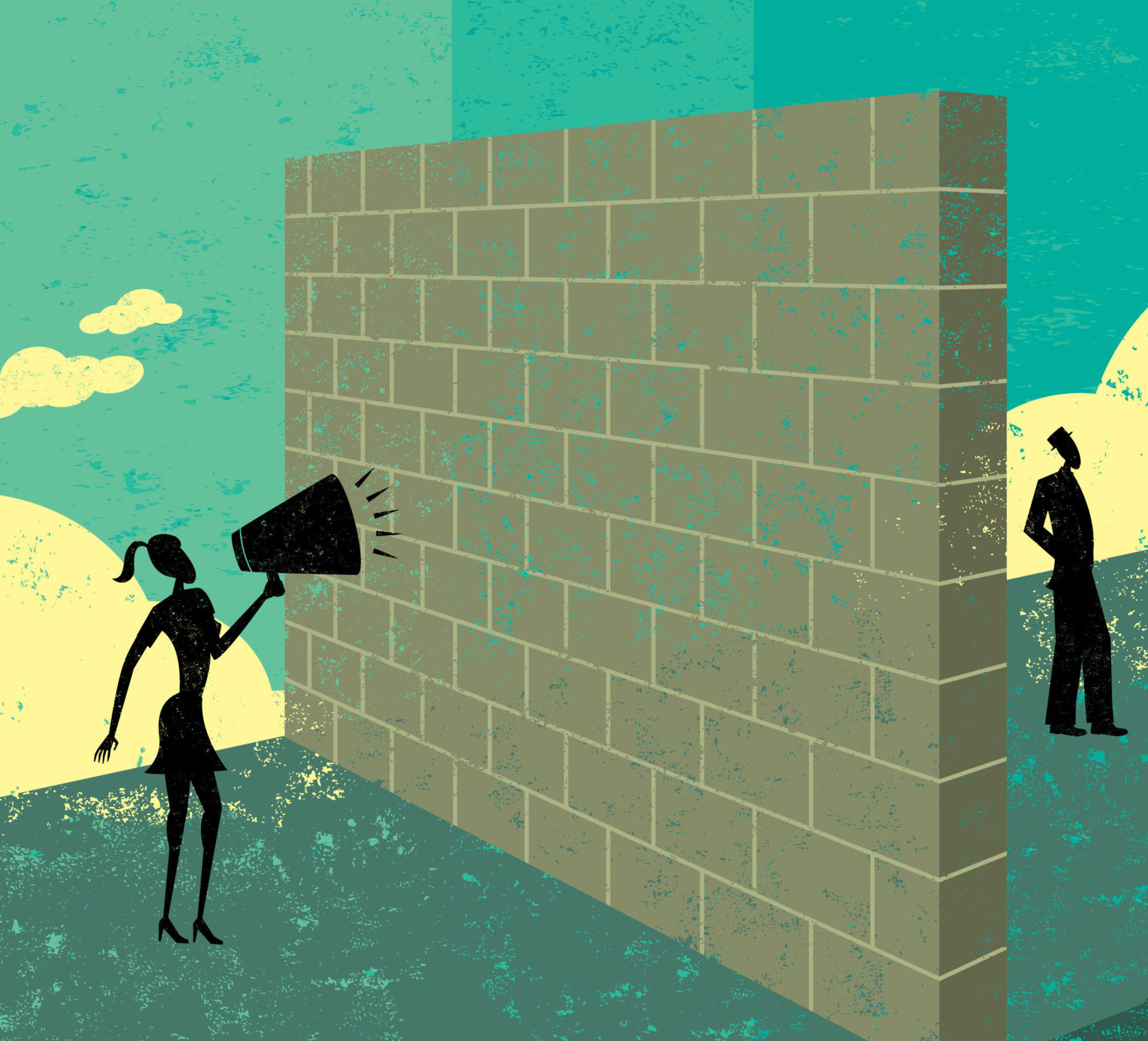
It is a slow-motion tightening of the throat.
Why the Escort Matters to You
It is easy to dismiss this as a "Beltway problem." You might think, I’m not a reporter. I don't care if Elias has to walk with a minder. But the information that survives the escort's presence is filtered information. When the press is handled, the public is handled. Think of it as a lens. If the lens is smudged, the image you see is distorted. If the lens is tinted, the color of the world changes. The escort is the tint.
Imagine a bridge in your hometown. If the local government decided that no one could inspect the underside of that bridge without a city official present to point out only the "sturdy" parts, would you feel safe driving over it? Probably not. You’d want the inspector to have the freedom to look at the rust, the cracks, and the crumbling concrete without someone nudging them toward the fresh coat of paint.
The Pentagon is our largest, most expensive "bridge." It manages a budget that defies human comprehension—over $800 billion. It makes decisions that send young men and women into harm's way. The rust and the cracks in that institution aren't just bureaucratic failures; they are matters of life and death.
The escort policy ensures that we only ever see the fresh coat of paint.
The Ghost of Transparency
There was a time when the tension between the press and the military was considered a healthy sign of a functioning democracy. It was a friction that generated light.
Reporters like Joseph Galloway or Neil Sheehan didn't wait for escorts. They went where the story was because they understood that the government’s first instinct is often to protect itself, not the truth. By formalizing the escort process, the Pentagon has effectively institutionalized the "gatekeeper" role.
The danger isn't that the escorts are bad people. Most of them are dedicated public servants following orders. The danger is the "chilling effect."
If Elias knows he’s being watched, he stops looking for the vending machine colonel. If the colonel knows Elias is being watched, he keeps his head down and his mouth shut. The silence becomes a habit. Over time, the very idea of an independent, roaming press corps within the halls of power begins to feel like a relic of a more naive age.
A Temporary Measure with Permanent Teeth
The Pentagon claims these measures are temporary or situational. In the lexicon of government, "temporary" is a word that often outlives the people who uttered it. We saw this with the PATRIOT Act. We saw it with the security cordons that went up around the Capitol. Once a liberty is traded for a perceived increase in security, the exchange is rarely reversed.
The courts have given the Pentagon a green light, citing "site-specific" needs. They’ve ruled that the First Amendment doesn’t grant a "roving commission" to journalists. And strictly speaking, they are right. There is no line in the Constitution that says a reporter can walk into Room 3E100 without a pass.
But the spirit of the law is being suffocated by the letter of the law.
The Fourth Estate was designed to be an external auditor of power. An auditor who can only see what the company wants them to see is not an auditor; they are a public relations assistant. By accepting the escort as a permanent fixture, we are accepting a version of the news that has been pre-cleared for our consumption.
The Invisible Stakes
What is lost in this transition?
It’s the small things. The overheard conversation about a failing satellite program. The sight of a lobbyist for a defense contractor slipping into a side door. The tone of voice of a general who just stepped out of a high-level briefing. These are the sensory data points that allow a journalist to tell a story that isn't just a rewrite of a press release.
Without those data points, we are left with a flat, two-dimensional version of the world. We are left with "the facts" as they have been curated by the people who control the facts.
We live in an era where "fake news" is a common cry. Yet, here we have a policy that makes it harder for reporters to find the real news. It creates a vacuum. And as we know, vacuums are quickly filled by speculation, conspiracy, and distrust. When the government hides the process, the public assumes the worst about the product.
The Long Walk to the Podium
Every time a reporter walks through the Pentagon doors now, they are engaging in a choreographed dance.
They sign in. They wait. Their shadow arrives. They walk.
It is a quiet, orderly process. There are no scenes of dramatic censorship. No one is being hauled off in handcuffs. It’s much more subtle than that. It’s just a hand on a shoulder, a polite "This way, please," and a door closing before you can see what’s on the other side.
The most effective way to hide something is not to lock it in a vault. It’s to make sure no one ever thinks to look for the vault in the first place. By controlling the movement of the press, the Pentagon is controlling the map of our curiosity.
We are being told where the boundaries are. We are being told which rooms are "ours" and which rooms belong to the state. And as the escorts lead the way, the hallway seems to get narrower, the ceilings lower, and the truth just a little bit harder to find.
The shadow remains.
The escort waits at the door.
The story stays in the dark.