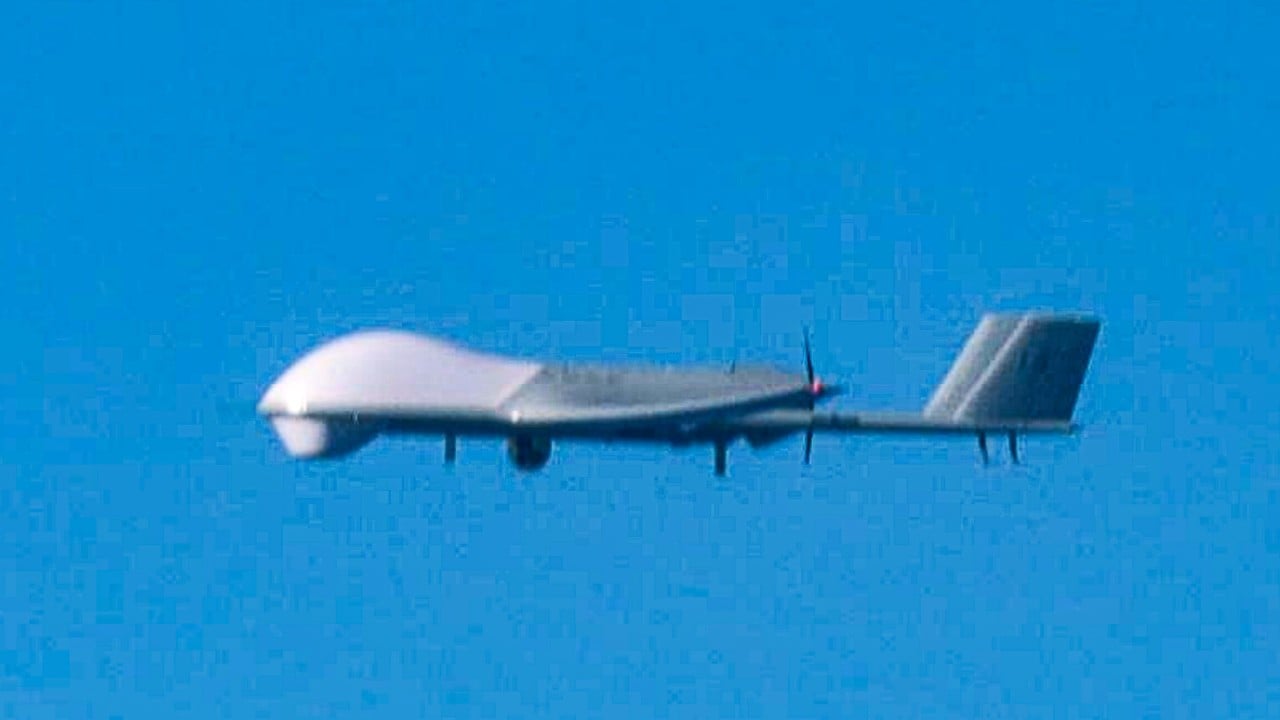
Military exercises between allies rarely occur in isolation, and the presence of Chinese surface combatants and unmanned aerial vehicles near Keen Sword drills around Japan illustrates a recurring dynamic of modern maritime competition. When a competing force shadows a major training event, the core strategic question is not merely what sensors are turned on, but how surveillance, signaling, and escalation risks interact without crossing into armed conflict. Analyzing these encounters requires separating observable operational behavior from unverified intentions, examining the mechanics of intelligence collection and deterrence, and tracing the feedback loops that shape crisis stability. This article provides a structured framework to evaluate shadowing operations around Keen Sword exercises: first by defining the surveillance and signaling mechanisms at play, second by mapping the cause-and-effect chains that link routine monitoring to escalation risk, and third by assessing how defensive planners manage uncertainty and its operational limits.
The Architecture of Maritime Shadowing
Tracking a bilateral or multinational exercise such as Keen Sword relies on layering different platforms that trade endurance, stealth, and payload capacity. Rather than treating every vessel or drone as doing the same job, analysts benefit from separating the operational roles into distinct functional tiers.
Surface Combatants and Persistent Presence
Naval vessels operating near exercise areas provide physical presence, radar and electronic emissions, and prolonged loiter time that short-range aircraft cannot match. A surface ship can remain on station across multiple days of maneuvering, observe logistics and replenishment patterns, and demonstrate resolve simply by holding position in international waters or adjacent maritime zones.
The operational trade-off is visibility and vulnerability. Surface ships are readily tracked by maritime patrol aircraft, satellites, and coastal radar, and their movements telegraph posture clearly to every participant in the theater. Because of that visibility, surface deployments carry higher signaling weight than covert sensors, yet they also face greater risk if a local miscalculation occurs at close quarters.
Long-Endurance Drones and Sensor Coverage
Unmanned aerial vehicles (UAVs) and high-altitude reconnaissance assets alter the economics of persistent observation. Where manned patrols face crew fatigue, airframe limits, and higher political sensitivity over manned intercepts, long-endurance drones can maintain steady orbits and feed electro-optical, infrared, or signals intelligence back to command centers.
Their primary limitation lies in resilience and ambiguity. Drones can suffer sensor blind spots in bad weather, face electronic warfare or airspace deconfliction challenges, and create diplomatic friction when their flight paths approach sensitive air defense identification zones or territorial margins.
Separating Collection From Signaling
In public reporting, shadowing is often described as if every pass were purely about gathering secrets or purely about sending a threat. In practice, most deployments mix both functions, though one usually dominates depending on platform choice and proximity.
- Intelligence collection focuses on recording radar frequencies, communications patterns, maneuver tempos, and command-and-control habits during realistic simulated operations.
- Operational signaling focuses on demonstrating reach, normalizing presence near key sea lanes or islands, and reminding exercising forces that their movements are being watched in real time.
- Routine patrol inertia reflects standing fleet schedules and regional transit routes that overlap with exercise windows without necessarily requiring a special surge.
Distinguishing these three drivers prevents over-interpreting standard maritime activity as a direct prelude to crisis, while still accounting for deliberate intelligence gathering.
Cause-and-Effect Chains in Exercise Shadowing
Surface-level accounts often treat shadowing as a simple action-reaction pair: one side holds drills, and another side sends ships and drones to watch. A tighter analytical model traces the downstream consequences that connect sensor exposure, doctrinal adaptation, and crisis dynamics.
The Intelligence and Counter-Intelligence Loop
When an observer tracks an exercise, the immediate effect is potential exposure of tactics, emissions signatures, or coordination timelines. Exercise planners respond by altering frequencies, practicing emission control, shifting staging areas, or masking certain high-value capabilities.
The second-order effect is a two-way learning loop. The shadowing force gathers baseline data on allied readiness and response speed, while the exercising force tests how well it can fight or maneuver under continuous observation. Neither side gains a permanent advantage from a single drill because both adjust procedures afterward.
Proximity, Misperception, and Escalation Risk
Close shadowing compresses decision times for ships and aircraft operating in crowded maritime and air corridors. A maneuver intended to maintain visual contact or test a reaction window can be read by the other side as an aggressive block, an unsafe approach, or an attempt to interfere with training safety zones.
When radar locks, tight intercepts, or ambiguous drone tracks enter the picture, the risk shifts from routine friction to accidental escalation. Even when political leaders want to avoid conflict, tactical friction can force rapid decisions under incomplete information.
Domestic and Alliance Audience Effects
External observers do not just watch military maneuvers; they also shape political narratives at home and among partners. For an exercising alliance, visible shadowing can underscore the urgency of joint readiness and justify continued investment and coordination.
For the shadowing power, sustained presence near neighboring waters can project capability and normalcy to domestic and regional audiences. The limitation of this signaling is diminishing returns: repeated shadowing can become predictable, prompting counter-measures that reduce the intelligence value of future passes.
Operational Trade-Offs and Analytical Limits
Evaluating maritime shadowing accurately requires discipline about what can be verified from open reporting versus what remains inferred. In complex security environments, precision about uncertainty is more valuable than confident speculation.
Known Facts Versus Educated Hypotheses
Open-source reporting and official statements typically establish observable facts: the general timeframe and area of Keen Sword activities, the broad categories of vessels or drones reported nearby, and high-level diplomatic or defense commentary. Exact sensor payloads, tasking orders, and real-time command intent are rarely public.
Treat specific tactical motives, classified intelligence gains, or hidden operational triggers as educated hypotheses rather than proven facts. Separating documented presence from inferred intent keeps assessments grounded when details are scarce.
Why Shadowing Rarely Equals Imminent Attack
A common analytical error is equating close surveillance with immediate offensive preparation. Forces routinely monitor rivals' exercises to understand capabilities and deter coercion without planning an immediate assault.
Conversely, assuming that shadowing is always benign is an equal mistake. Monitoring lowers information friction in peacetime, yet the same forward assets positioned to observe an exercise could also support rapid contingencies if a broader political crisis erupted.
Constraints on Counter-Shadowing
Defenders often ask how to prevent rival ships or drones from observing major drills. In international waters and airspace, freedom of navigation and overflight rules constrain how far forces can push outside observers without creating a major incident.
Chasing every drone or shadowing every ship also carries steep opportunity costs. Dedicating high-end fighters, destroyers, or command attention to tailing observers pulls resources away from core training objectives and fatigues crews.
Strategic Play for Defense Planners and Analysts
For defense planners, policy analysts, and security observers evaluating shadowing around Keen Sword, the most effective approach is to treat every observation event as a controlled test of readiness, signaling discipline, and information security rather than a standalone crisis. Build exercise designs around deliberate emission-control windows and decoy or baseline profiles so routine shadowing yields limited high-value intelligence while core warfighting objectives remain protected. Pair clear, disciplined deconfliction rules and transparent public communication with realistic assessments of what can actually be known from outside the chain of command, recognizing that managing proximity without losing training value is a persistent equilibrium rather than a problem with a permanent fix.