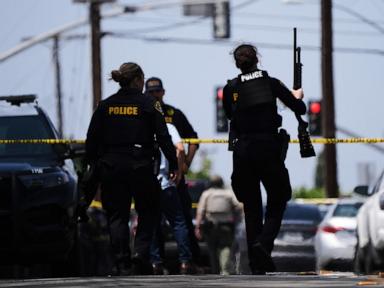
The coffee in the paper cup had gone entirely cold, but nobody was drinking it anyway.
When a crisis hits a community, time doesn’t just slow down; it fractures. On a Friday afternoon that should have been defined by the quiet hum of devotion, the air inside and around the Islamic Center of San Diego shattered. The immediate aftermath of a public tragedy is always loud—sirens, shouting, the frantic static of police scanners, and the relentless ping of smartphone notifications. But beneath that wall of sound lies a deeper, heavier silence. It is the silence of a community staring at a sudden, violent tear in the fabric of their everyday safety, wondering who held the shears.
We often treat the perpetrators of such violence as sudden anomalies, monsters that materialized out of thin air just to inflict pain. It is a comforting lie. If they are monsters, we don’t have to understand them. If they are anomalies, we don’t have to look at the cracks in our own neighborhoods that allowed them to fracture.
The truth is always far more unsettling. The individuals behind the San Diego Islamic Center shooting did not exist in a vacuum. They walked the same sun-bleached sidewalks, bought groceries at the same corner stores, and typed away on the same glowing screens as the rest of us. To understand the tragedy, we have to look past the smoke and the yellow police tape. We have to look at the digital and physical trails left by the suspects—not to give them a platform, but to understand how a human being curdles into an engine of hate.
The Architecture of Radicalization
Instinct drives us to look for a single, defining motive. We want a manifesto, a clear grievance, a neat explanation we can file away in a courtroom folder. But modern radicalization rarely operates with such textbook precision. It is closer to a slow, toxic drip.
Consider how a person changes over time. It rarely happens all at once. Instead, it begins with isolation. A young man sits in a room, the blinds drawn against the California sun, looking at a screen. He feels a profound sense of displacement, an aimless anger looking for a target. The internet, for all its capacity to connect us, is also the world's most efficient echo chamber. He finds a community that validates his worst impulses. They give his failures a name, and they give his anger a target.
Investigators tracking the suspects in the San Diego shooting quickly found themselves navigating a labyrinth of fringe online forums, encrypted chat logs, and digital breadcrumbs. This wasn't a plot hatched in a hidden underground bunker. It was cultivated in plain sight, buried beneath layers of ironic memes and coded language on platforms designed to evade mainstream scrutiny.
The transition from digital vitriol to physical violence requires a catalyst. It demands a moment where the abstract hatred of the internet hardens into a tangible plan. For the suspects, that bridge was built on a shared obsession with previous acts of mass violence. They weren't just consumers of hate; they were students of it. They studied past tragedies like textbooks, looking for logistics, tactics, and ways to maximize trauma.
The Shockwave in the Neighborhood
A mile away from the center, the neighborhood of Clairemont carries on, but the rhythm is off. You can see it in the way people cross the street, or how a driver lingers a second longer at a stop sign, scanning the sidewalks.
Tragedy has a way of rewriting local geography. A building is no longer just a place of worship or a community hub; it becomes a landmark of survival. For the families who gather at the Islamic Center, the building represents generations of resilience. It is a place where children learned Arabic, where neighbors celebrated marriages, and where the community gathered to support one another during moments of grief.
When the suspects targeted this specific space, they weren't just attacking individuals. They were attempting to assassinate a sense of belonging.
The legal system moves with a methodical, almost agonizing slowness that stands in sharp contrast to the suddenness of the crime. Arraignments, bail hearings, and evidentiary discoveries roll out over months and years. For the public, the suspects become names in a headline, faces captured in grainy mugshots, wearing jail-issued jumpsuits. We watch them sit at defense tables, whispering to attorneys, looking remarkably ordinary.
That ordinariness is the hardest part to swallow. There is a collective desire to see evil look recognizable—to see it wear a sneer or bear some outward mark of its internal rot. When a suspect looks like someone who could have grown up next door, it forces an uncomfortable realization. The threat isn't an invading force from somewhere else. It is a homegrown sickness.
Red Flags and the Heavy Burden of Hindsight
In the days following the arrests, the timeline inevitably fills in. Neighbors recall strange behavior. Family members remember arguments or sudden shifts in personality. School acquaintances mention disturbing social media posts that everyone noticed but no one quite knew how to report.
This hindsight is a heavy burden for a community to carry. It creates a phantom guilt, a recurring loop of questions that start with what if. What if someone had called the tip line a week earlier? What if the online platform had flagged the account sooner? What if we were better at recognizing the signs of someone slipping off the edge?
But identifying a threat before it manifests is a notoriously imperfect science. The line between an angry, alienated individual venting online and a subclass of attacker preparing to execute a mass shooting is terrifyingly thin. Law enforcement agencies face the massive logistical hurdle of sorting through millions of digital threats every day to find the handful that possess the means, the motive, and the immediate intent to strike.
In San Diego, the suspects managed to exploit those gaps. They acquired weapons through legal or semi-legal loopholes, avoided formal law enforcement intervention despite their radicalizing rhetoric, and coordinated their actions with a level of operational security that kept them under the radar until the first shots were fired.
Moving Beyond the Tape
Eventually, the news trucks pack up their satellite dishes. The reporters move on to the next breaking story, the next press conference, the next unfolding crisis. The yellow tape is cut down, rolled up, and thrown into a dumpster.
But the community remains.
The true measure of a city's strength isn't found in how it reacts in the first five minutes of a tragedy, but in how it rebuilds in the five years that follow. The Islamic Center of San Diego did not close its doors. The prayers did not stop. If anything, the parking lot filled with more cars, the doors opened wider to interfaith neighbors bringing flowers, and the community refused to let the narrative of their home be dictated by the actions of those who sought to destroy it.
The legal proceedings will run their course. The suspects will face juries, judges, and the cold machinery of federal and state justice systems. Sentences will be handed down, and steel doors will close behind them.
Yet, the real victory over hate doesn't happen in a courtroom. It happens on the sidewalks outside the center. It happens when a neighbor who doesn't share the faith walks up to the doors just to say, "We are glad you are here." It happens when fear loses its grip, and the quiet rhythm of daily life reclaims the space that violence tried to steal.
The sun still sets over the Pacific, casting long, golden shadows across the San Diego hills, illuminating a community that refused to break.


