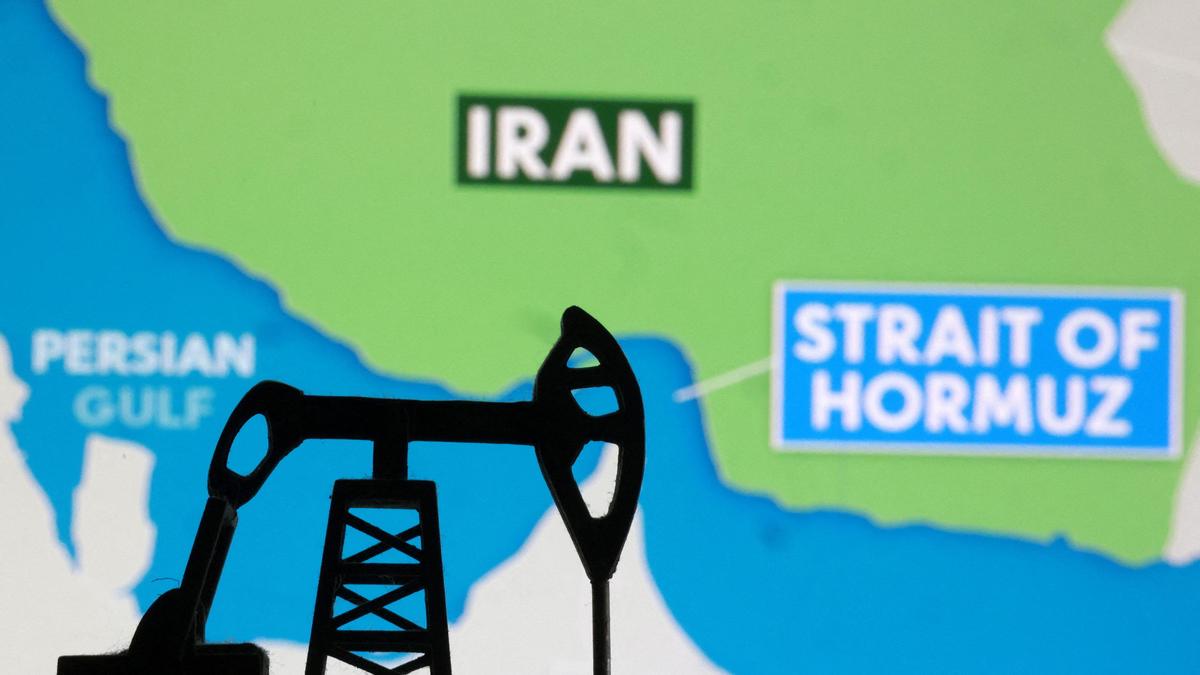
The water of the Persian Gulf at midnight is a thick, viscous black. It isn't the clear blue of a postcard; it is a heavy shroud that swallows light and sound. On the deck of an aging Aframax tanker, the air is a suffocating mix of salt spray and the sharp, metallic tang of unrefined crude. There are no lights on this ship. No navigation beacons, no deck lamps, not even the glow of a cigarette.
For months, these steel giants sat paralyzed. They were floating warehouses, heavy with millions of barrels of oil that the world—at least officially—had agreed not to touch. The U.S. blockade didn’t just freeze bank accounts; it froze the very heartbeat of the Iranian coastline. But according to recent data from Kpler, something has shifted. The silence has been broken.
The tankers are moving.
To understand why this matters, you have to look past the spreadsheets and the geopolitical posturing in Washington or Tehran. You have to look at the mechanics of a ghost. When a ship "goes dark," it disables its Automatic Identification System (AIS). It vanishes from the digital maps that regulators use to police the seas. One moment, a vessel is a blip on a monitor near Kharg Island; the next, it is a phantom, lost in a sea of gray-market maneuvers and ship-to-ship transfers.
The Weight of the Hold
Imagine you are a captain on one of these vessels. Your cargo is worth upwards of $80 million, yet you are effectively a pariah. You are carrying the lifeblood of an economy that is currently bleeding out.
The blockade was designed to be a vacuum, sucking the oxygen out of the Iranian state's ability to fund itself. For a long time, it worked. The tankers sat low in the water, their hulls gathering barnacles, as the global market looked the other way. But oil is a stubborn commodity. It finds the cracks. It flows toward the highest pressure, or in this case, the highest demand.
The recent exit of these loaded tankers signals more than just a logistical win for Iran. It indicates a fraying at the edges of international enforcement. When the first ship slipped past the invisible line of the blockade, it wasn't just carrying oil. It was carrying a message that the walls are not as thick as they used to be.
A Dance of Disguise
The process of moving this "forbidden" oil is a masterclass in deception. It involves what industry insiders call "The Great Masquerade."
A tanker leaves an Iranian port, its transponder silenced. It meets another vessel in the middle of the ocean—perhaps a ship flying a "flag of convenience" from a small island nation that lacks the resources to ask questions. In the dead of night, thick hoses are connected. Thousands of tons of crude are pumped from one belly to another.
By the time that oil reaches a refinery in Asia, its origin has been scrubbed clean. On paper, it might look like it came from Malaysia or an offshore terminal in the Emirates. The paperwork is a work of fiction, a necessary lie that allows the global economy to keep spinning while maintaining the appearance of compliance.
This isn't just business. It's a high-stakes game of hide-and-seek where the loser faces seized assets and the winner keeps a nation’s lights on.
The Human Toll of the Blockade
While diplomats argue in air-conditioned rooms, the reality on the ground in Iran is far more visceral. A blockade is a blunt instrument. It hits the currency first. Then it hits the pharmacies. Finally, it hits the dinner table.
I spoke with a merchant in Isfahan last year who described the "slow quiet" that settles over a city when the oil stops flowing. It’s the sound of construction sites going silent because the steel is too expensive. It’s the sight of elderly parents skipping doses of imported heart medication because the rial has plummeted against the dollar.
When those tankers finally exit the Gulf, the people in the streets don't see a "breach of international protocol." They see a chance for the price of bread to stop climbing for a single week. The stakes aren't abstract figures in a Kpler report; they are the literal survival of a middle class that is being squeezed into extinction.
The Invisible Buyers
Who is waiting on the other side of this dark voyage?
Demand doesn't vanish just because a politician signs a decree. China’s independent refineries—often called "teapots"—are the primary destination for this ghost crude. These refineries operate on the fringes of the global financial system. They don't need access to U.S. dollars. They deal in yuan, or barter, or complex credit swaps that bypass the Western banking net entirely.
For these buyers, the Iranian blockade is an opportunity. They get a steep discount on high-quality crude because they are willing to take the "risk" of being blacklisted. But as more tankers make the journey, that risk begins to look more like a calculated, and highly profitable, cost of doing business.
The Cracks in the Dam
If you pour water into a cracked vessel, it doesn't matter how hard you plug the top. The water will find the path of least resistance.
The U.S. blockade was intended to be a total seal. But the world of 2026 is not the world of 1996. Power is no longer a monolith. The rise of alternative payment systems and the sheer desperation of energy-hungry markets mean that "maximum pressure" eventually meets "maximum ingenuity."
The exit of these tankers proves that the blockade is no longer a wall; it is a sieve.
Consider the sheer scale of the operation. Kpler’s tracking suggests that this isn't a one-off fluke. It is a coordinated surge. It requires a network of insurers, shipping agents, and port authorities all willing to blink at the same time. This kind of synchronization doesn't happen by accident. It happens because the global appetite for energy has finally outweighed the fear of sanctions.
The Ghost Fleet’s Legacy
The tankers are older now. Many of them are "vintage" vessels that should have been sent to the scrap yards of Alang or Chittagong years ago. Instead, they form the backbone of the "Ghost Fleet."
These ships are the zombies of the sea. They are poorly maintained, often uninsured, and operated by crews who know that one mistake could lead to an environmental catastrophe or an international incident. They sail through the Strait of Hormuz, the world’s most sensitive chokepoint, carrying a volatile cargo and a heavy secret.
Risk.
That is the true currency of the Persian Gulf today. The risk of a spill. The risk of a seizure. The risk of a miscalculation that turns a trade dispute into a kinetic war.
As the sun rises over the Gulf, the tankers are gone. They have faded into the vastness of the Indian Ocean, their hulls low, their engines humming a steady, defiant rhythm. The blockade remains on paper, a fierce declaration of intent from a superpower across the globe. But on the water, the reality is different. The oil is moving, the shadows are shifting, and the world is learning, once again, that you cannot hold back the tide with a pen.
The sea doesn't care about sanctions. It only cares about the weight of the ship and the direction of the wind.



