The salt air of Al-Makha does not usually taste like copper.
For generations, this ancient Yemeni port town has smelled of roasted coffee beans, diesel exhaust from rusted fishing skiffs, and the dry, ancient dust of the Tihamah plain. It is a place that has survived centuries of empires rising and crumbling like dry mud bricks. But on a Tuesday that began like any other, the ordinary rhythm of maritime commerce fractured into a sharp, blinding crack.
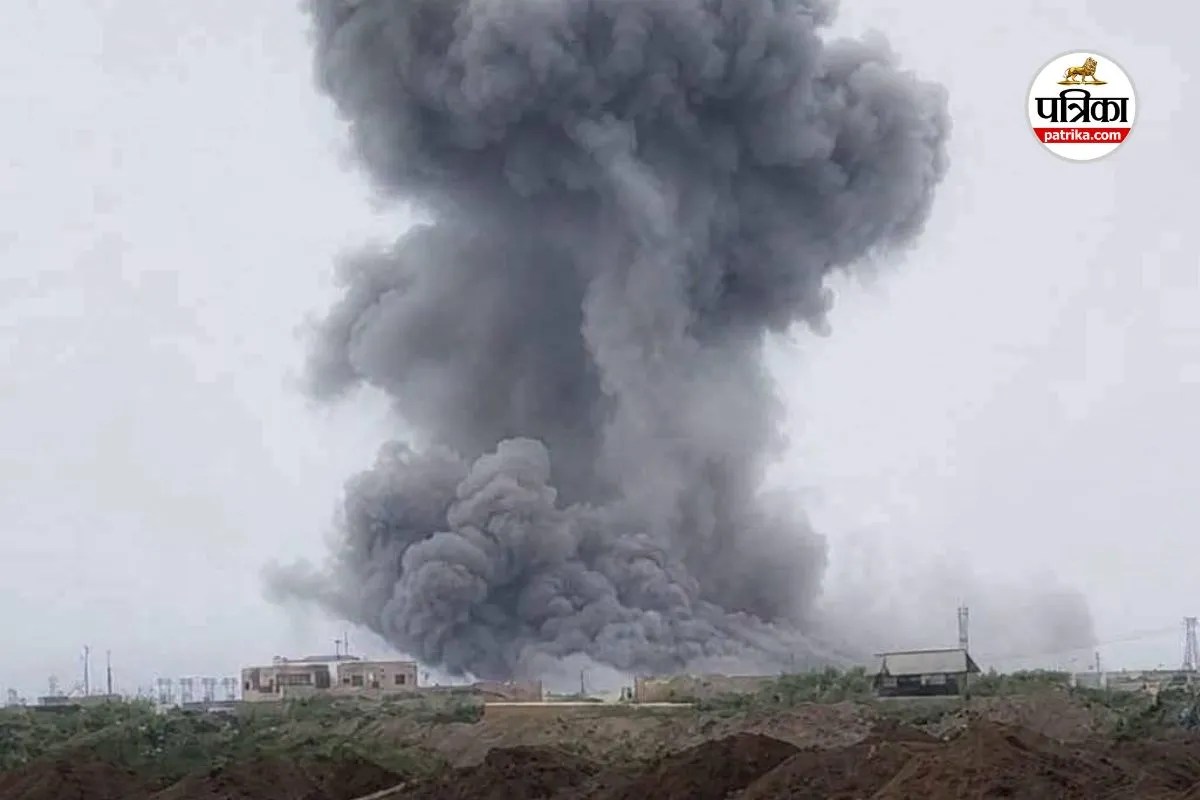
Seven lives extinguished in an instant. Smoke billowing over cranes that had only hours before been unloading sacks of grain and crates of medical supplies.
To read a standard news ticker is to see this as a cold statistic. A localized incident. A distant flash of geopolitical violence in a neglected corner of the Arabian Peninsula. But numbers printed on a screen fail to capture the heavy, suffocating silence that settles over a community when the harbor goes dark. They fail to capture the mothers clutching empty school bags, wondering why the maritime lanes that feed their families have suddenly become corridors of fire.
To understand why Al-Makha burned, we must pull back the lens. We must look far beyond the red-tiled rooftops of the port and into the labyrinth of modern alliances.
Consider the chessboard.
Weeks before the smoke cleared over the harbor, quiet diplomacy echoed through closed doors in Riyadh, Islamabad, and Ankara. A new defense pact was whispered into existence—a tripartite alignment between Saudi Arabia, Pakistan, and Turkey designed to stitch together a frayed security blanket across the Middle East and South Asia. To strategists in sterile headquarters, it was a logical architecture. A shield against escalating volatility. A mutual assurance pact meant to project stability across volatile shipping lanes.
But in the shadowed corridors of asymmetric warfare, grand pacts do not deter. They provoke.
Physics teaches us that pressure seeks the path of least resistance. Geopolitics operates on the exact same brutal law. When major powers lock shields and draw new lines in the sand, the shockwaves ripple outward until they strike the softest target available.
Al-Makha was that target.
The Houthi movement, operating from the rugged highlands of northern Yemen, viewed the emerging defense alignment not as a stabilizing force, but as an encirclement. Surrounded by adversaries and hardened by years of grueling conflict, their response was immediate, asymmetric, and merciless. They did not launch their missiles at the gleaming capitals negotiating the treaties. They struck the coast. They struck the vital arteries of trade. They turned a commercial port into a theater of retaliation.
Listen. Can you hear it?
That is the sound of global supply chains holding their collective breath.
Most people in New York, London, or Tokyo rarely think about Al-Makha, or the Bab-el-Mandeb strait that sits just a few miles away. It is a narrow bottleneck of water, barely twenty miles wide at its skinniest point, yet it carries a staggering percentage of the world's energy and consumer goods. When a missile arcs out of the Yemeni haze and detonates against a dockside crane, the economic tremor is felt instantly in the price of a shipping container, the cost of refined petroleum, and the delivery date of an imported electronic component.
We live in an illusion of distance. We believe that what happens behind a mountain range on the other side of the planet cannot touch the coffee on our kitchen table or the fuel in our tanks.
It is a comforting lie.
I remember standing on a coastline remarkably similar to this one years ago, watching the horizon with a knot in my stomach. When security agreements are signed in secret, the ordinary people living in the shadow of strategic choke points always pay the price in blood and instability. The statesmen sign their names with gold-plated pens. The fishermen push their boats into the surf, hoping the sky stays clear.
The tragedy of Al-Makha is not an isolated anomaly. It is a symptom of a deeper, more dangerous reality. It demonstrates the profound disconnect between high-level defense strategies and ground-level human vulnerability. When nations forge pacts to deter conflict, they must account for the collateral shockwaves that inevitably crash against civilian ports, local markets, and innocent families trying to make a living beneath the shadow of war.
The smoke has cleared from the docks now. The damaged cranes are being assessed, and the shattered glass swept from the pavement. But the tension in the air remains thick, heavy, and unresolved.
Another missile could be loaded onto a mobile launcher tonight. Another alliance could be tested tomorrow. And somewhere along the rugged coast of the Red Sea, a child will look up at the evening sky, wondering if the next flash of light is a falling star or the beginning of a storm.
:max_bytes(150000):strip_icc()/ar-American-Cheese-taste-test-horizon-4x3-54cc339550cd44b9a818c17bdfd5428d.jpg)