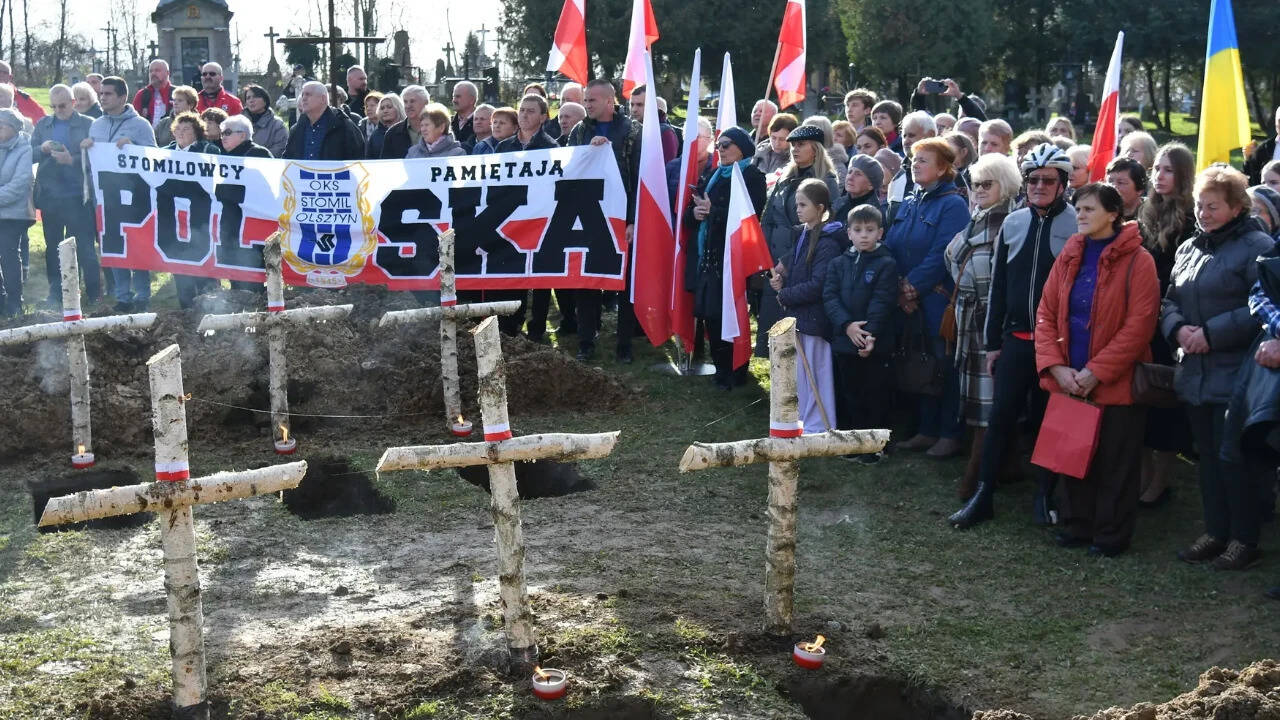
The modern geopolitical alliance between Poland and Ukraine faces a persistent, corrosive vulnerability that requires no invention from Moscow to exist, though foreign operatives eagerly amplify every fracture. Between 1943 and 1945, the mass murder of roughly 100,000 Polish civilians by the Ukrainian Insurgent Army (UPA) in Volhynia and Eastern Galicia created a generational wound that has never fully healed. Today, as Warsaw remains a primary logistical and military hub for Kyiv's defense against full-scale Russian aggression, this unresolved historical trauma has transformed into an active theater of psychological operations. Kremlin-backed influence networks do not need to invent the Volhynia massacres from scratch; they weaponize pre-existing domestic grievances, political missteps, and conflicting national memories to drive a wedge between two nations whose security is mutually dependent.
Understanding this dynamic requires looking past simple headlines about bot farms and examining the mechanics of historical memory in Eastern Europe. Poland views the atrocities through the lens of unambiguous ethnic cleansing and genocide, demanding institutional accountability, unrestricted exhumations, and moral clarity. Ukraine, conversely, has long struggled to reconcile its wartime anti-Soviet resistance with the darker reality of the UPA's ethnic purges, often elevating figures like Stepan Bandera as symbols of national liberation against Soviet domination. This fundamental asymmetry creates an environment where diplomatic friction is inevitable. When political figures in Kyiv honor insurgent legacies or Warsaw politicians push back with domestic electoral posturing, the structural fault lines tremble.
The Mechanics of Amplification
Foreign interference rarely looks like a clumsy, fabricated lie. Sophisticated state actors operating across digital platforms rely on amplification rather than invention. Research tracking Polish-language social media traffic reveals a systematic pattern: whenever a bilateral dispute flares over historical memory or state honors, online hostility surges exponentially. Networks of automated accounts and coordinated channels flood platforms like X, Facebook, and Telegram with incendiary content.
The strategy exploits natural emotional triggers. A genuine disagreement between Warsaw and Kyiv over archival access or the commemoration of victims is immediately stripped of nuance. It is repackaged to provoke maximum outrage among Polish citizens, frequently playing on fears of ungrateful refugees or national security vulnerabilities. Simultaneously, mirror operations target Ukrainian audiences, framing Polish historical demands as an imperialist encroachment or a betrayal of wartime solidarity. The facts are real. The weapon is the context.
This digital saturation achieves its primary objective by gradually eroding the baseline of public trust. When polling data indicates a measurable decline in public backing for Ukrainian refugees and military aid within Poland, analysts must dissect the contributing factors. Inflation, economic fatigue, and political fatigue all play a role. Yet the constant drumbeat of historical animosity, artificially inflated by external actors seeking to fracture European unity, accelerates this fatigue. It turns a manageable historical dispute into an active political liability for leaders on both sides of the border.
The Cost of Unresolved Graves
At the center of the diplomatic friction lies a profoundly human element: the right to mourn. Thousands of victims from the Volhynia massacres still lie in unmarked, unrecorded pits scattered across the western fields of Ukraine. For decades, families have sought closure through proper exhumations and dignified burials.
The politics surrounding these sites have frequently turned tragic history into a bargaining chip. Past moratoria on search and exhumation permits, enacted in response to the destruction or removal of nationalist monuments in Poland, created an institutional stalemate. While recent diplomatic efforts have occasionally signaled movement toward resolving these archaeological blockages, the delay itself provides fertile ground for radical voices. When governments bicker over bones, extremist factions on the fringes fill the vacuum with nationalist rhetoric, making compromise appear politically toxic.
A hypothetical example illustrates the systemic vulnerability: A local municipal council in western Ukraine denies a standard archaeological permit requested by Polish researchers, citing bureaucratic restructuring. Within hours, external influence networks amplify the denial across Polish social media, framing it as a malicious, state-sanctioned insult to every family that lost an ancestor in 1943. Sensationalized commentary drowns out institutional explanations. By the time diplomats issue a clarifying statement three days later, the narrative of betrayal has already hardened into conventional wisdom among thousands of voters.
Navigating the Psychological Battlefield
Countering this vulnerability demands a departure from standard diplomatic platitudes. Pretending that historical grievances do not matter, or dismissing them as mere Kremlin propaganda, insults the memory of the victims and alienates the public. The trauma of Volhynia is real, and the pain is intergenerational. True resilience requires structural transparency rather than sweeping uncomfortable truths under the rug.
Both Warsaw and Kyiv must establish permanent, depoliticized historical commissions empowered to manage exhumations, educational curricula, and memorial sites without interference from short-term electoral cycles. When historians lead the conversation rather than populist politicians, the space for external manipulation shrinks. Furthermore, digital platform accountability must evolve to target coordinated amplification networks that specialize in weaponizing collective memory.
The security architecture of Eastern Europe depends entirely on the durability of the Polish-Ukrainian relationship. Moscow understands that a strategic wedge driven through historical memory is cheaper than artillery and infinitely more corrosive to a defensive coalition. Recognizing how the ghost of Volhynia is deployed in the present is the first necessary step toward disarming it forever.
This investigative report provides an in-depth visual and historical look at the ongoing exhumation efforts and the human cost of the Volhynia tragedy.
http://googleusercontent.com/youtube_content/1