In a small, low-ceilinged union hall outside Akron, Ohio, the coffee was burnt, the metal chairs were freezing, and the silence was heavy enough to crush a man’s chest.
It was late on a Tuesday night. The television overhead flickered with blue and red maps, but nobody in the room was looking at the screen anymore. They were looking at their own hands. They were looking at bank statements on their phones. They were thinking about a war thousands of miles away across the Persian Gulf, and they were trying to calculate how a geopolitical crisis in the Middle East had managed to wipe out their retirement savings, jack up their gas prices, and turn a sure-fire political victory into a historic route.
For months, the prevailing wisdom in Washington promised a smooth horizon. The narrative was simple, clean, and repeatedly printed on glossy campaign leaflets: voters care about their pocketbooks, national pride, and local stability. But when the dust settled on the 2026 midterms, the electoral map looked like a disaster zone for the ruling party.
Then came the reckoning.
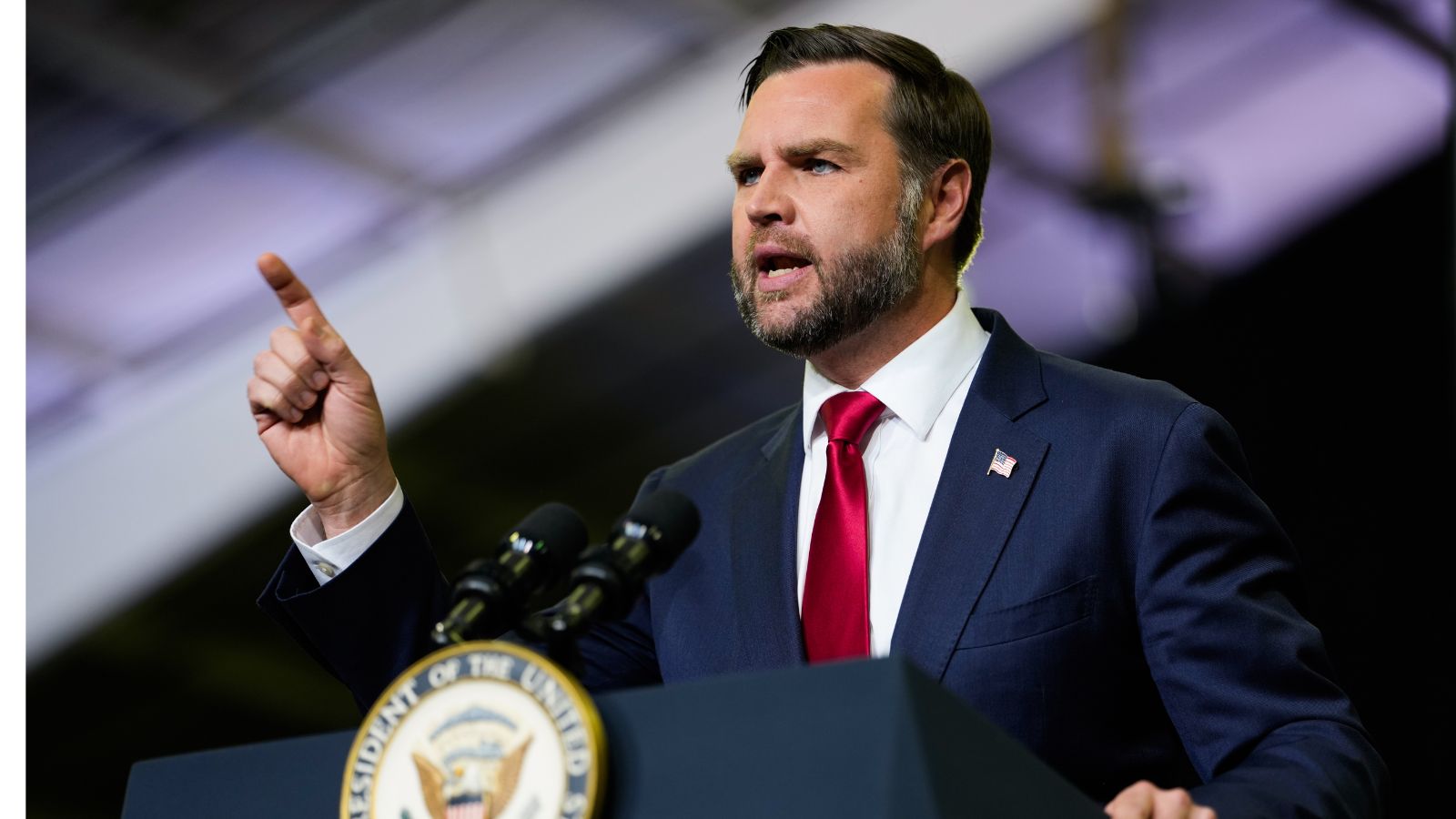
When JD Vance finally stepped up to a microphone to dissect why his party had lost control of the House and Senate, he didn’t blame campaign messaging or voter turnout operations. He pointed his finger straight at the elephant in the room that standard political analysts had tried to downplay for months: the sudden, catastrophic economic ripple effects of the war in Iran.
The Mirage of Control
To understand how a foreign conflict broke an election, you have to look past the cable news graphics and examine the kitchen table of an ordinary family.
Imagine a middle-class couple—let’s call them Marcus and Elena. Marcus works logistics for a regional supply distributor; Elena teaches middle school. They aren’t political zealots. They don't spend their evenings arguing on social media or reading white papers from foreign policy think tanks. What they do notice is the subtle, suffocating creep of cost.
Earlier that year, when international headlines broke with news of military escalation in Iran, the immediate response from high-level officials was reassurance. The conflict would be surgical. Strategic. Contained.
It was anything but.
Within weeks, the Strait of Hormuz—the vital maritime choke point through which a fifth of the world's petroleum flows—became a high-risk combat zone. Tankers stalled. Insurance premiums for maritime shipping exploded overnight. Crude oil prices shot up like a flare into the midnight sky.
Strait of Hormuz Freight Traffic Drop (Post-Escalation)
[========================================] 100% Normal Operations
[===============                         ]  38% Active Shipping
For Marcus, that foreign crisis wasn’t an abstract debate on a Sunday morning talk show. It was a immediate spike in diesel costs that forced his logistics firm to freeze hiring, cut overtime, and pass surcharges down the line. For Elena, it was watching their grocery bill jump another fifteen percent in a single month while energy companies sent notice of winter rate hikes.
Politics, at its core, is a contract of felt experience. When the world feels unstable, voters look for the hand on the steering wheel. If that hand appears to be steering the vehicle straight into a storm of global instability, the reaction isn't nuanced—it’s instinctual.
The Arithmetic of Frustration
The math was brutal.
Political strategists often treat foreign interventions and domestic economics as separate chapters in a textbook. Vance’s post-mortem forced a confrontation with the reality that they are the exact same story.
When a country enters a period of extended foreign engagement or geopolitical confrontation, three dominoes fall in rapid succession:
- Energy Shocks: Global supply chains react instantaneously to conflict in key energy-producing regions. Gasoline and home heating costs act as an immediate, regressive tax on every working family.
- Inflationary Compounding: High energy costs bleed into agriculture, manufacturing, and transport. Every loaf of bread carries the hidden cost of the fuel used to harvest and transport it.
- Loss of Focus: Voters begin to feel that their leaders are prioritizing global chess matches over domestic survival.
Consider the psychological weight of that third domino. When people are struggling to pay for basic healthcare, rent, and groceries, watching billions of dollars and endless legislative focus poured into an overseas conflict creates a profound sense of alienation.
It generates a single, toxic question in the mind of the voter: Who is looking out for us?
During the lead-up to the 2026 votes, that question went unanswered. The opposition party didn't even need a radical new vision to win over moderate voters; they simply needed to point at the chaos and offer a contrast of quiet stability.
When Wall Street and Main Street Desync
There is a terrifying moment in economic crises when official statistics say one thing, but lived reality says another.
Top-level economic reports in late 2026 still showed decent job numbers on paper. Macroeconomists bickered over technical definitions of inflation curves and GDP trajectory. But if you walked into any grocery store, garage, or coffee shop, the sentiment was unanimous: things felt broken.
The war in Iran broke the public's tolerance for economic uncertainty. It exposed the fragile nature of post-pandemic financial recoveries. Families who had managed to save a small buffer saw it eroded in real-time by soaring pump prices and volatile markets.
When Vance admitted that the Iran conflict was the primary driver of the midterm losses, he was acknowledging a hard truth that political operative classes routinely ignore: voters do not vote on grand strategic intentions. They vote on immediate personal friction.
If driving to work costs forty percent more than it did six months ago, no speech about geopolitical necessity will smooth over that anger.
The Silent Majority of the Undecided
We often picture elections as epic battles between ideological diehards. We imagine millions of people deeply committed to political doctrines, wave banners and arguing at rallies.
The reality is far quieter.
Elections are decided in the middle—by the millions of people who don't care about party loyalty, who hate the noise of political campaigns, and who simply want their lives to be predictable, affordable, and safe.
These voters watched the escalation in the Middle East with a growing sense of dread. They remembered previous decades of foreign entanglements—the endless expenditures, the tragic human toll, the promises of swift resolution that turned into decades of instability.
When the conflict in Iran flared, it triggered an old, deep-seated reflex in the American electorate: exhaustion.
That exhaustion manifested at the ballot box not as an endorsement of the opposition, but as a severe, punitive veto against the status quo.
The Unspoken Lesson of 2026
Standing in the wake of the loss, the political apparatus was forced to stare into the mirror.
Foreign policy is no longer something that happens "over there." In a hyper-connected, globalized economy, a drone strike or a naval blockade thousands of miles away instantly registers on the card reader at your local gas pump. The barrier between foreign intervention and domestic reality has dissolved entirely.
The 2026 midterms were not lost in the polished TV studios of Washington or the private fundraising dinners in New York. They were lost in the quiet, anxious moments at kitchen tables across the nation, where families sat under dim lights, looking at bills they couldn't balance, listening to the news of another escalation abroad, and deciding that enough was enough.
The metal chairs in that Akron union hall eventually emptied out. The maps on the TV screen turned off. But the signal sent by the voters remained clear, echoing far beyond the election night map: you cannot ask people to support a vision for the world when their own world feels like it's falling apart.