The sirens do not sound like music anymore. They sound like routine.
In south London, the air carries a specific kind of weight after dark. It is the weight of anticipation, of locked doors, of mothers listening too closely to the rattle of the letterbox. We have learned to read the city by its frequencies. A distant wail means a blue light slicing through the fog; a low-slung helicopter overhead means another family is about to have their future erased in a span of seconds. For an alternative perspective, see: this related article.
Six men. That is the statistic handed down through the cold filters of a police report. Six pairs of handcuffs clicking shut. Six individuals pulled from their routines, hauled into the fluorescent-lit sterility of a custody suite, accused of a fatal stabbing that tore another life out of the pavement.
Numbers are clean. Numbers are easy to digest. They fit neatly into a paragraph on a morning feed, scrolling past while the kettle boils. Further coverage on the subject has been published by USA Today.
The reality is messier.
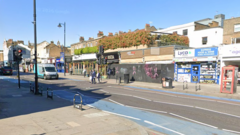
Consider what happens to a neighborhood when the yellow police tape flutters in the wind. The tape does not just cordon off a crime scene; it cordons off a community's sense of safety. It turns an ordinary pavement—where children skip rope and neighbors nod on their way to the bus—into an altar of grief. Flowers appear overnight. Cellophane crinkles in the damp air. Handwritten notes on cheap cards bleed ink into the morning drizzle.
I know this pavement. Or rather, I know its twin. I know the feeling of walking down a South London street with your keys clenched between your knuckles like makeshift armor, scanning the shadows, measuring the distance to safety. It is a hyper-vigilance born not of cowardice, but of exposure. You live long enough in the friction of the city, and you begin to realize how thin the veneer of civilization actually is. One argument. One flash of iron. One irreversible choice.
And then the silence rushes in.
The official narrative gives us the aftermath. Six men arrested. A murder investigation launched. Detectives appealing for dashcam footage. The machinery of justice grinds into motion, heavy and slow, weighed down by bureaucracy and the sheer volume of trauma it is expected to process.
Yet, the machine misses the architecture of how we got here.
Violence of this magnitude does not drop out of a clear sky. It is cultivated in the dark corners of neglect, fueled by a toxic cocktail of desperation, bravado, and a profound absence of a future. When young men pick up knives, they are usually acting out a tragic script written by poverty, lack of opportunity, and a pervasive, gnawing fear that they matter to no one. They build walls of armor out of posturing, mistaking intimidation for survival, until the night the logic collapses and someone bleeds out on the tarmac.
We talk about knife crime as if it were a weather event. A storm that rolls in from the coast, unavoidable and destructive. We shake our heads at the evening news. We debate police funding, stop-and-search quotas, and community intervention grants from the safety of our living rooms.
But policy papers do not stop the bleeding.
The invisible stakes are woven into every missed opportunity, every underfunded youth club shuttered due to budget cuts, every classroom where a kid who learns differently slips through the cracks until the streets look like his only viable option. We are losing a generation to a war that nobody declared, fought with blades bought online and fueled by an ambient rage that has nowhere else to go.
When the detectives finish their sweeps and the court dates are set, the television cameras will move on. The vans will leave the curb. The yellow tape will be torn down, rolled into a ball, and tossed into a bin.
The blood washes away from the concrete.
The people, however, do not wash away. The mother who taught that boy how to tie his shoes will wake up tomorrow in a world that has suddenly lost its axis. The friends who stood on the periphery will carry the static of that night in their heads for the rest of their days, replaying the argument, the shove, the flash of silver, wishing they had pulled him away.
We are left staring at the aftermath, counting the arrests like beads on a rosary, hoping against hope that the next siren isn't ours.