Night falls differently in the Sahel. It does not descend with a gentle, violet twilight; it drops like a heavy, leaden curtain, suffocating the lingering heat of the day. And then, the silence is broken.
Start. Stop. Echo.
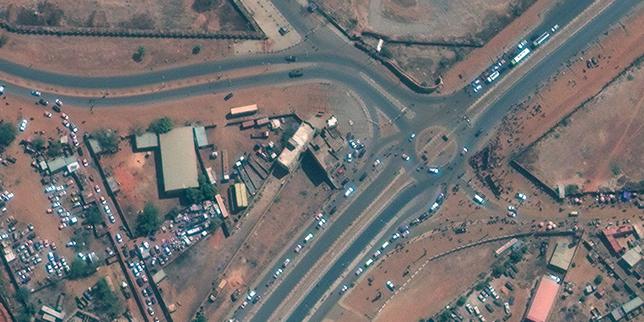
Heavy gunfire and sharp detonations shattered the stillness around the Diori Hamani International Airport in Niamey. To a distant observer reading a news ticker thousands of miles away, these are just cold coordinates on a map of West Africa, a fleeting headline about military movements and perimeter security. But to the families living in the dusty neighborhoods bordering the tarmac, every loud pop is a punch to the chest. It is the sound of an uncertain future rattling their corrugated tin roofs.
Consider what happens next when the sky over a capital city suddenly turns hostile. Flights are grounded. Streets empty in a heartbeat. Checkpoints multiply under the glare of halogen lamps and nervous flashlights.
I remember the distinct metallic taste of fear during nights like that. It lives in the back of your throat, dry and bitter, born from the realization that power struggles among men in uniform rarely spare the people walking the streets below. When shots ring out near an airport—the city’s vital artery to the outside world—panic spreads faster than any rumor on a smartphone screen.
The official reports will eventually follow. They will speak of security sweeps, unauthorized movements, or localized friction within the security apparatus of Niger's transitional military government. They will use sterile terms to describe a terrifying reality. But those bureaucratic summaries erase the human heartbeat behind the barricades.
Think of Amina, a hypothetical fruit vendor whose stall sits a mile from the airport perimeter. She does not care about geopolitical maneuvering or regional sanctions. Her universe shrinks to the safety of her children huddled under a wooden table, praying that stray rounds do not find their way through concrete block walls. Her livelihood depends on tomorrow morning’s market, and every detonation pushes tomorrow further out of reach.
The airport in Niamey is more than a runway of asphalt and concrete. It is a symbol of connection, a gateway holding together a nation navigating immense political turbulence since the July 2023 coup that ousted President Mohamed Bazoum. Every burst of gunfire near that runway sends shockwaves through an already fragile civilian population trying to survive under the weight of economic isolation, jihadist insurgencies in the wider region, and shifting international alliances.
Tension is a living organism here. It breathes in the dark corridors of power and exhales through the barrels of rifles.
When the smoke clears and the morning sun burns away the desert haze, the physical damage might be minimal. A few spent cartridges on the tarmac. A temporary suspension of air traffic. Yet the invisible damage cuts much deeper. Each incident erodes the thin veneer of normalcy that ordinary citizens rely on to keep moving forward. It reminds everyone that stability in this corner of the world remains precariously balanced on a knife-edge.
The last echo of the final detonation fades into the vast, indifferent desert wind, leaving behind only the heavy, watchful quiet of dawn.