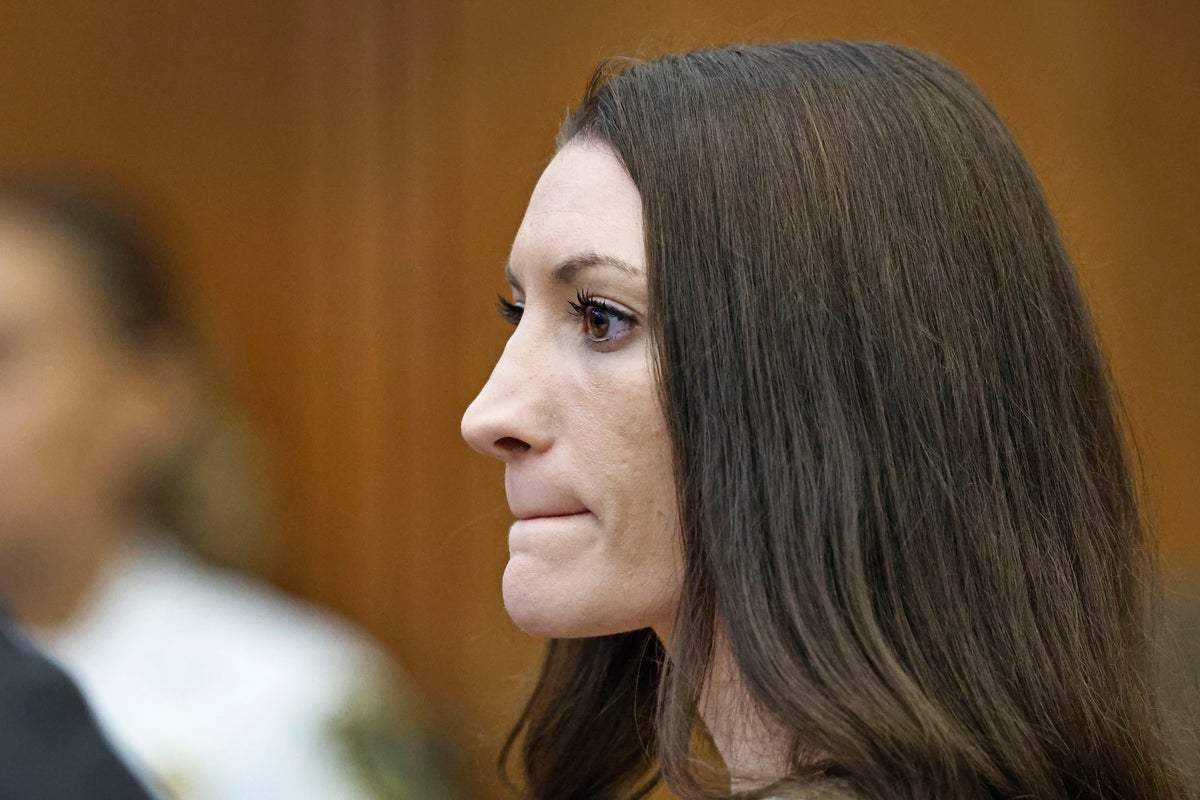
Five weeks. Eighty witnesses. A courtroom heavy with exhaustion, waiting for a single word that could never truly fix what was broken.
The trial of Lindsay Clancy arrived not with a roar, but with a suffocating quiet. Outside the courthouse, ordinary life moved in fast-forward—cars rushing down wet asphalt, coffee cups changing hands, commuters staring blindly at glowing screens. Inside, time bent backward. Jurors sat motionless, listening to medical experts parse the microscopic architecture of the human mind, trying to understand how a dedicated mother, a nurse who spent her days healing others, could cross an invisible line into a nightmare.
Trials like this force us to look directly into a dark mirror. We want neat categories. We want villains and heroes, clear motives and black-and-white choices. But the human brain is a fragile instrument. Sometimes, the machinery fails in ways that defy our oldest moral frameworks.
Consider what happens when a mind is hijacked by postpartum psychosis. (Note: This is a clinical description of a documented medical emergency, not a metaphor.) It is not simply sadness. It is a total dissolution of reality, a terrifying storm where delusions dictate survival, and the person you love vanishes behind a wall of pure terror.
For five weeks, the courtroom became an arena where two irreconcilable worlds collided. On one side stood the prosecution, tethered to the physical devastation left behind in a Duxbury home. That grief is absolute. It is permanent. No courtroom argument, no psychiatric testimony, can resurrect the children whose laughter once filled those hallways. The horror of that loss is an anchor that drags at the heart of the community.
On the other side stood the defense, armed with medical records, pharmaceutical timelines, and the harrowing accounts of psychiatric decline. They described a woman drowning in a cocktail of heavy medications, struggling against a system that failed to catch her as she fell.
Eighty witnesses took the stand. Each one added a brick to a towering monument of tragedy. Teachers, police officers, toxicologists, psychiatrists, family members—all of them circling that one agonizing question. How did we get here?
To understand the answer, we have to strip away the sensationalism that so often wraps around high-profile crimes and look at the quiet, grinding machinery of modern motherhood and healthcare.
We live in a culture that isolates the vulnerable. We hand new mothers a bundle of infinite responsibility, tell them to cherish every second, and then pull away the safety net. We expect resilience to be an endless well. When a mother confesses to feeling overwhelmed, we offer platitudes instead of protection. We tell her she is doing a great job, while her internal landscape crumbles beneath her feet.
During the trial, testimony revealed a dizzying descent into medication changes and invisible suffering. Doctors adjusted dosages. Families tried to help. But the system is built to treat symptoms in 15-minute intervals, blind to the slow-motion train wreck happening behind closed doors.
There is a terrifying vulnerability in being human. We like to think our thoughts belong exclusively to us, that our sanity is a permanent fortress. But neurology teaches us a humbling truth. Our perception of reality is a fragile chemical delicate dance. Alter the chemistry, and the fortress crumbles.
As the jury deliberated, the weight of that truth hung over the room.
A verdict in a criminal trial is a legal conclusion. It assigns liability, sets terms, and closes a docket. But it does not heal. It cannot bring back the bright futures of those three young children. It cannot undo the night that shattered a family.
What the verdict does is force a society to reckon with its own blind spots.
We are left staring at the wreckage, asking ourselves how we can build a world where mothers in crisis are truly seen before the breaking point arrives. We need a culture that drops the stigma surrounding mental illness, that treats postpartum psychiatric emergencies with the same urgency as a heart attack, and that admits when our institutions are failing the people who need them most.
The courtroom lights eventually flickered off. The reporters packed their bags. The cameras turned away toward the next breaking news cycle.
But in the quiet corners of our collective conscience, the question remains, echoing long after the gavel has fallen.