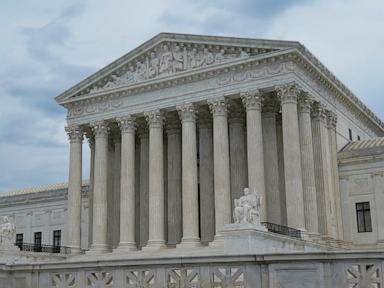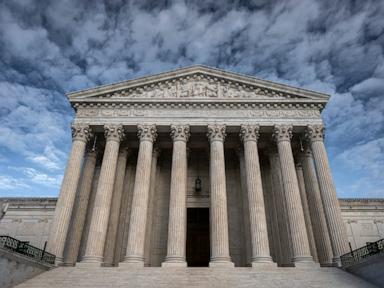
Autumn arrives in Washington not with a gentle whisper of falling leaves, but with the heavy, calculated thud of leather-bound briefs hitting polished mahogany tables. Outside the grand marble pillars of the Supreme Court, tourists snap photos against the gray stone. Inside, a quiet storm gathers. The justices take their seats. Black robes rustle. Nine minds, carrying the weight of three hundred million lives, look out over a chamber that smells faintly of old paper and history.
We talk about the law as if it were a machine. We imagine gears turning, precedents locking into place like clockwork, impartial steel grinding down raw human chaos into neat little legal rules. It is a comforting fiction. We need it to sleep at night. We want to believe that when the highest court in the land opens its doors for a new term, it is merely adjusting the dials of a vast, unfeeling engine of justice.
Step closer. Look past the mahogany and the Latin phrases.
Consider a mother living along a eroding coastline in Louisiana, watching the high tide lap closer to her porch each month while she calculates whether she can afford flood insurance or dinner. Consider a young immigrant working a graveyard shift in a Chicago kitchen, whispering prayers that his paperwork won't become a casualty of shifting political winds. Consider a father walking down a quiet suburban sidewalk, clutching his licensed firearm, wondering how a piece of metal in his holster became the epicenter of a national war over liberty and safety.
These are not abstract legal questions. They are human heartbeats. And this term, the Supreme Court has invited them all inside.
The Invisible Weight of the Air We Breathe
Climate change has a way of hiding in plain sight until it breaks your front door down. For years, the debate played out in conference rooms, in shouted protests, in glossy reports filled with melting glaciers and carbon parts-per-million that blur the mind. But numbers do not bleed. Numbers do not lose their homes in the middle of a dark, rising flood.
When the justices hear environmental disputes this term, they are not just parsing administrative law or statutory boundaries. They are refereeing a slow-motion collision between planetary survival and human livelihood. Imagine standing on a dry Texas ranch where the well has sputtered and died, staring out at cracked earth that used to yield green gold. The rancher does not care about jurisdictional nuances or agency deference. He cares about water. He cares about whether the law can protect the soil beneath his boots, or if the courts are merely rearranging deck chairs on a sinking ship.
The legal arguments will sound dry. Lawyers will stand at the podium and debate the scope of regulatory authority, throwing around acronyms like confetti. Do not let the vocabulary fool you. At stake is whether our institutions possess the imagination and the muscle to confront a changing world, or whether they will remain tethered to an era of industrial expansion that no longer exists.
The Paper Lives of Millions
Walk through any major American city at midnight, and you will find a city beneath the city. It is built of quiet sacrifices, of hurried steps, of people who keep the lights on, the dishes clean, and the streets safe while the rest of the nation sleeps. Many of them carry a profound, silent fear.
Immigration is often framed as a border crisis, a matter of lines drawn on a map. But once those lines are crossed, immigration becomes an intimate domestic reality. It lives in school hallways where children learn English with trembling accents. It lives in living rooms where families leave an empty chair at Thanksgiving, wondering if a sudden policy shift will tear them apart before the turkey is carved.
The cases arriving at the steps of the high court this term touch the raw nerve of sovereignty and humanity. How much power does the executive branch have to reshape lives with the stroke of a pen? What happens to families caught in the gears of a bureaucracy that grinds ever so finely?
Let us be honest. The law here is messy. It is tangled in competing political desires, economic anxieties, and a deep, national identity crisis over who belongs and who does not. When the court weighs these questions, it is drawing the boundaries of our national empathy. Every ruling sends a shockwave through thousands of hidden kitchens, deciding whether hope or dread will greet the dawn for families who call this country home.
The Iron and the Oath
Then there is the metal. Cold, heavy, and charged with centuries of American mythology.
The Second Amendment occupies a unique space in the national psyche. To some, it is the ultimate guarantor of freedom, a bulwark against tyranny written by men who distrusted power. To others, it is a haunting reminder of carnage, a symbol of a uniquely American grief that echoes in school hallways and crowded malls.
When the justices take up gun rights cases, they are walking through a minefield of absolute convictions. There is no middle ground where everyone leaves happy. Imagine a gun store owner in a quiet rural town, trying to run a lawful business while navigating an ever-shifting maze of restrictions. Imagine a teacher locking a classroom door from the inside, listening for footsteps in the hallway, clutching a key and a prayer.
Both visions of America are real. Both are terrified of the other.
The court's task is to find a constitutional tether in a society that has never felt more culturally fractured. But parchment cannot heal a divided culture. When the justices issue their opinions later this year, the ink will dry, the pundits will shout on television, and the rest of us will wake up and walk the same streets, carrying the exact same fears we had the day before.
The Human Verdict
We look to the Supreme Court because we are searching for a final authority. In a world of shifting truths, partisan rage, and bewildering complexity, we want someone in a black robe to bang a gavel and tell us who we are, what we can do, and where we are going.
We ask too much of them.
The nine justices sitting behind that elevated mahogany bench are not secular saints. They are human beings, shaped by their own histories, blind spots, and ambitions, attempting to interpret words written by eighteenth-century men who could not have imagined a world of digital screens, global warming, or automatic weapons.
As this new term unfolds, the real drama will not happen in the oral arguments. It will happen in the quiet moments between neighbors who disagree on everything. It will happen in the way we treat the stranger down the street, the migrant working in the fields, the family rebuilding after a flood, the citizen defending their rights.
The court can issue rulings. It can settle dockets. But the true character of this nation is never decided by a 5-4 vote in Washington. It is decided in the silence between the heartbeats, in how we choose to live together when the law itself runs out of answers.