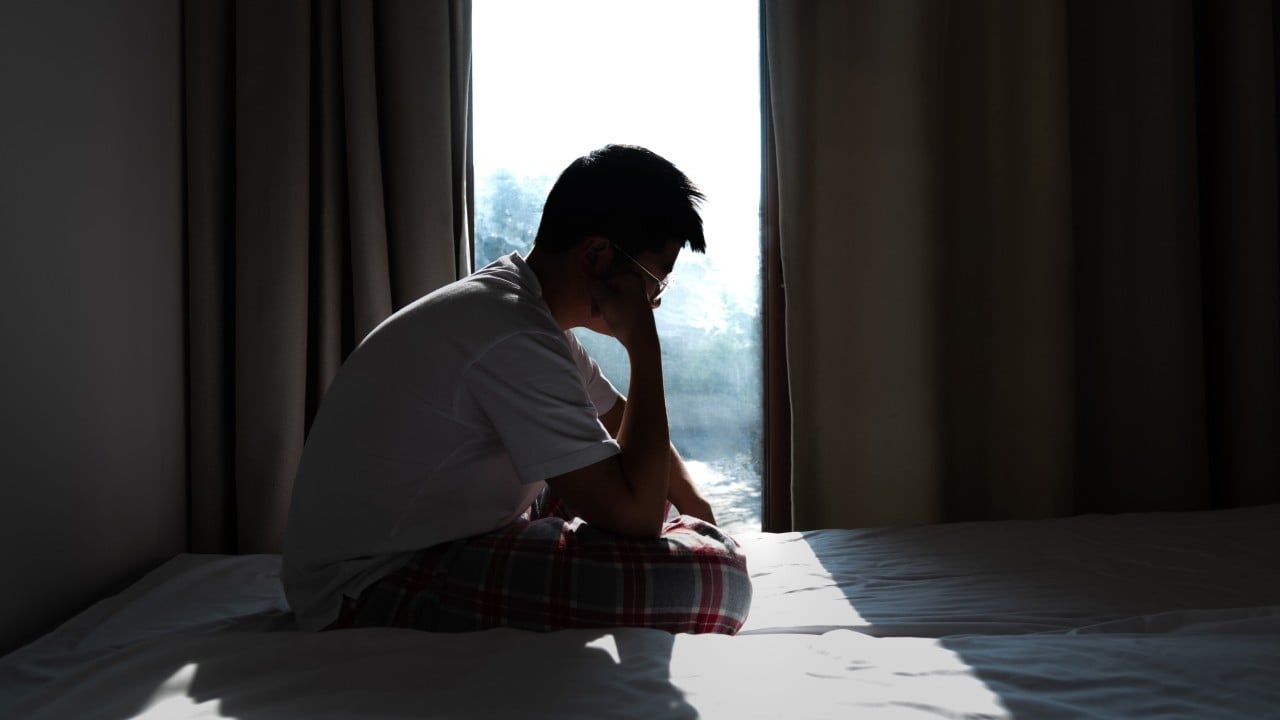
The desk is perfectly clean. On it sits a single, blue ballpoint pen, aligned precisely parallel to the edge of the wood. A stack of mock exam papers rests next to it, the top sheet marked with a score of ninety-two percent in red ink. In a city that trades on excellence, ninety-two percent is not a victory. It is an eight-percent failure.
Let us call him Lok. He is a fiction, a composite born from the stark, unyielding data recently published by the Hong Kong Coroner’s Court, but his reality is lived out in thousands of tiny bedrooms stacked high above the neon-lit streets of Mong Kok and Causeway Bay. Lok did not leave a note. He left only the heavy silence of a room that suddenly stopped breathing.
The latest court reports reveal a truth that the city’s glittering skyline attempts to hide. Youth suicides in Hong Kong have climbed to their highest peak in an entire decade. It is a statistic that sounds cold when read from a courtroom podium, but it represents a catastrophic fracturing of a generation. The numbers tell us that the safety nets are fraying, that the pressures are compounding, and that the quiet desperation of the young has crossed a terrifying threshold.
To walk through Hong Kong in the late afternoon is to witness an army of ghosts in school uniforms. They move through the MTR stations in packs, yet their eyes are fixed on glowing screens or the concrete floor. Their backpacks are unnaturally heavy, stuffed with textbooks, supplementary exercises, and the crushing weight of familial expectation.
The pressure does not begin in high school. It starts in the cradle. Parents, driven by a deep-seated fear of their children falling behind in a hyper-competitive society, enroll toddlers in interview-preparation classes for prestigious kindergartens. By the time a child reaches adolescence, life has been reduced to a series of high-stakes elimination rounds. The Hong Kong Diploma of Secondary Education (HKDSE) ceases to be a mere examination; it becomes a definitive verdict on human worth.
Consider the architecture of a typical high-rise apartment. Space is a luxury few can afford. Families of four or five often co-exist in spaces no larger than a standard Western parking spot. When the home becomes a pressure cooker and the outside world offers nothing but relentless competition, where does a child go to simply breathe?
The Coroner's Court data points to a toxic confluence of factors. It is never just one bad grade or one broken relationship. The crisis builds slowly, like water rising in a sealed room. Academic anxiety locks arms with social isolation. The prolonged isolation of the pandemic years left a lingering scar, disrupting the natural development of emotional resilience and peer support networks. When the world reopened, the expectations returned at double speed, but the coping mechanisms had withered away.
There is a profound disconnect between the institutional response and the lived reality of these teenagers. When a tragedy occurs, bureaucratized systems frequently respond with task forces, checklist assessments, and standardized mental health awareness campaigns. But a teenager spiraling into darkness does not need a checklist. They need to be heard through the noise.
Mental health support in schools is often stretched to a breaking point. A single educational psychologist might be responsible for thousands of students across multiple campuses. The result is a reactive system rather than a protective one. Counselors are forced to act as firefighters, rushing to put out the most visible blazes while the embers glow unnoticed in the quiet students who never make trouble, who turn in their homework on time, and who smile politely while drowning inside.
Stigma remains a fierce adversary. In many households, admitting to depression or anxiety is still viewed as a character flaw, a lack of willpower, or worse, an act of ingratitude toward parents who sacrifice everything to pay for tuition and cram schools. The phrase chi sin—crazy—is still tossed around carelessly, wounding those who are desperately trying to hide their psychological fractures. Children learn early that it is safer to suffer in silence than to risk bringing shame upon the family unit.
We must look closely at what happens when the burden becomes too great to bear. The transition from childhood to adulthood is difficult under the best circumstances, but in an environment where success is narrowly defined by financial prestige and academic metrics, the exit ramps feel incredibly narrow. When a young person looks into the future and sees only an endless treadmill of toil with no guarantee of stability, the horizon darkens.
Changing this trajectory requires more than just incremental policy adjustments. It demands a fundamental reassessment of what constitutes a successful life. If the cost of maintaining an efficient, high-performing economy is the systemic sacrifice of our youth's mental well-being, then the price is far too high.
Communities are beginning to realize that the traditional metrics are failing. Grassroots organizations, independent youth workers, and grieving families are fighting to create spaces where vulnerability is normalized, not penalized. They are trying to teach young people that a test score is a measure of memory on a specific afternoon, not a reflection of their cosmic value.
But turning the tide against decades of deeply ingrained cultural expectations is an uphill battle. The institutional gears turn slowly, while the calendar moves relentlessly forward, bringing another exam season, another round of results, and another wave of intense anxiety.
The city continues to hum. The ferries cross the harbor, the stock exchange ticks upward, and the double-decker buses roar through the narrow streets. The machinery of society demands that life go on, efficient and unyielding.
Yet, in the quiet corners of the city, in the bedrooms where the lights stay on long past midnight, the stakes remain impossibly high. We are left to confront the empty chairs at the dinner tables and the clean desks that will never again be cluttered with the messy, beautiful chaos of a young life.
Somewhere right now, a teenager is staring at a textbook, the text blurring under the weight of exhaustion, wondering if anyone sees the person behind the grades, waiting for a sign that it is okay to just be human.