Out there, in the cold, silent blackness between worlds, things do not simply disappear when we are finished with them. We tend to think of space as an infinite trash bin, an ocean so vast that a discarded hull or a spent engine block becomes a ghost, drifting forever in peaceful anonymity. But gravity has a long memory.
Consider what happens when a piece of industrial machinery, abandoned seven years ago in the high corridors of orbital space, finally runs out of hiding places.
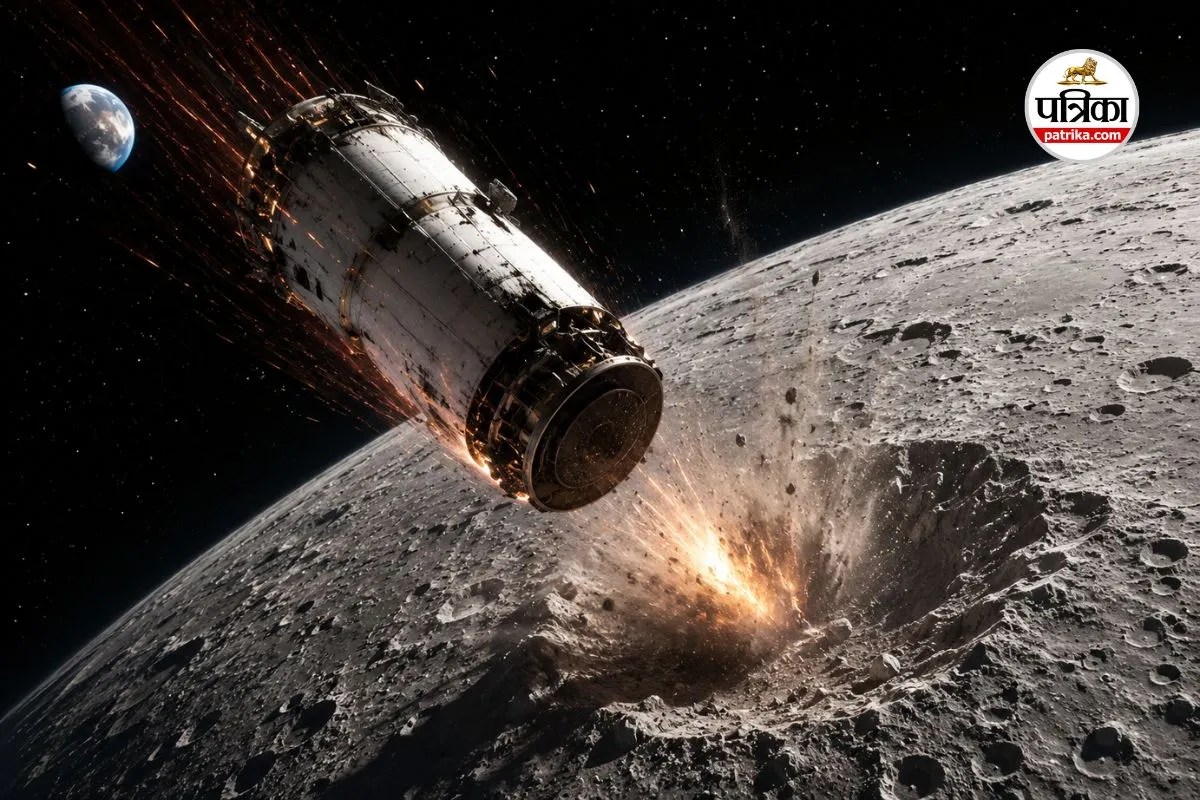
Back in 2015, a Falcon 9 upper stage helped launch a deep-space weather observatory. Once its job was done, it was stranded. Too far from Earth to fall back immediately, yet too tethered by the Sun and the Moon to escape into true interplanetary freedom, it began a slow, chaotic dance. It tumbled through the gravitational tug-of-war between our planet and its silver satellite, a four-metric-ton cylinder of metal quietly looping through the void.
Four thousand kilograms. That is roughly the weight of a heavy-duty pickup truck, speeding through the vacuum with no pilot, no brakes, and no steering wheel.
By the time astronomers calculated its final trajectory, the math was brutal in its simplicity. It was heading straight for the lunar far side. Not with a gentle brush, but at eight thousand six hundred and ninety kilometers per hour.
The View from the Void
Imagine standing on the desolate plains of the lunar highlands. There is no air to carry a sound, no wind to weather the craters, no atmosphere to catch a falling ember and turn it into a streak of fleeting fire.
If you were standing there when the impact happened, you would feel nothing in your ears. But the ground beneath your boots would shudder. A shockwave would ripple through the ancient regolith, kicking up a plume of gray dust that would hang frozen in the low gravity for a fraction of a moment before settling back into the eternal quiet.
When that four-thousand-kilogram mass struck the surface at nearly nine thousand kilometers an hour, it carved out a fresh scar. A brand-new crater, wide and jagged, added to a surface already scarred by billions of years of cosmic impacts. Nature does this all the time, of course. Asteroids and micrometeorites pepper the Moon daily.
Yet this impact was different. This one bore a serial number.
It carried the unmistakable signature of human ambition. We have spent decades climbing out of our atmospheric cradle, reaching for the stars, yet we have left our footprints not just in the dust of the Sea of Tranquility, but in the untidy wake of our ascent. We have littered the road to the cosmos.
The Long Shadow of Our Reach
We do not like to talk about the junk. It is much easier to look at the glossy launch videos, the thunderous plumes of white smoke, the crisp uniforms of engineers cheering in mission control, and feel a surge of collective pride. We are explorers. We are breaking the bounds of Earth.
All true. But every great leap leaves a trail of debris.
In low Earth orbit, defunct satellites and flecks of paint streak around the planet at orbital velocities, turning tiny objects into kinetic bullets. That is a problem we obsess over daily, tracking thousands of pieces to protect the International Space Station and operational spacecraft. But deep space? Out near the Moon and beyond, we tend to forget. We assume the universe is big enough to swallow our leftovers without a burp.
This specific impact served as a rude awakening. It proved that the space between Earth and the Moon is not an empty desert; it is an attic we have been filling with old boxes, forgetting that sooner or later, things fall off the shelf.
The physics are merciless. What goes up into orbit possesses energy—massive amounts of it. When that energy is no longer managed by thrusters, it obeys only the cold equations of celestial mechanics. It waits. It loops. And eventually, it intersects with something solid.
The Morning After the Crash
When the dust settled on the lunar far side, the world barely blinked. There were no breaking news banners dominating every screen, no sirens wailing in the streets. A distant thud on a barren rock does not rattle the daily commute.
And yet, it marked a turning point in how we view our neighborhood.
For the first time, amateur astronomers and orbital dynamicists had tracked a piece of deep-space debris from its quiet drift all the way to its violent end. They plotted its path through the dark, watched it tumble, and predicted the exact moment of collision with eerie precision.
That precision is our only saving grace. If we can track a stray rocket stage falling into a crater five hundred thousand kilometers away, perhaps we can begin to take better inventory of what else we have left behind. The era of carelessly shedding upper stages into permanent heliocentric or cislunar drift without a thought for their final resting place is drawing to a close. Space agencies and private aerospace companies alike are staring at a crowded sky—and a crowded backyard.
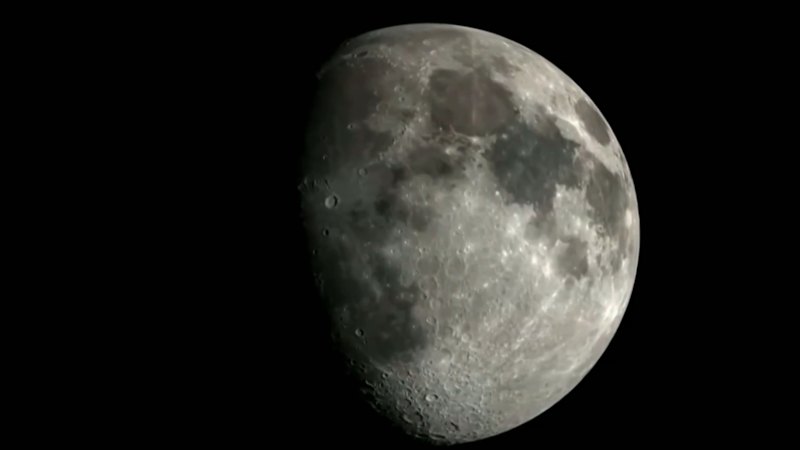
The Moon took the hit this time. A quiet, unpopulated basin absorbed the blow, taking the brunt of our technological overflow. The crater is there now, a fresh, raw dent in the ancient dust.
Look up at the night sky tonight. Find the Moon hanging pale and silent in the dark. Somewhere on its hidden face, a new mark bears our name, reminding us that every journey leaves a footprint, and every height we scale requires us to eventually clean up our own backyard.