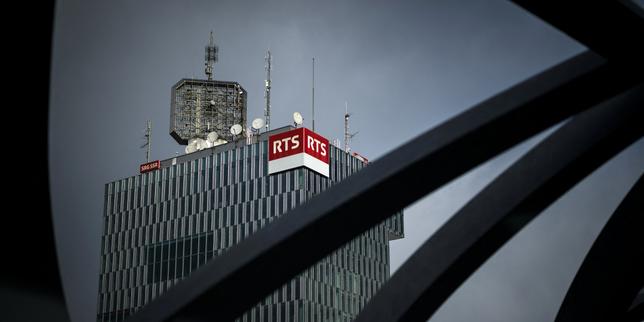
In a small wooden chalet perched above the mist of Lake Geneva, an elderly man named Beat adjusts the dial on a radio that has sat on his kitchen counter for thirty years. For Beat, the voice coming through the speaker isn't just background noise. It is his connection to a world that feels increasingly fragmented. It is the sound of his own dialect, his own history, and the weather report that tells him whether the mountain passes will be clear for his grandson’s visit.
But that voice is currently under trial.
Switzerland is currently gripped by a quiet, high-stakes drama that has nothing to do with watches or secret bank accounts. It is a battle over the "Soli-Abo"—the solidarity subscription—better known as the mandatory license fee that funds the Swiss Broadcasting Corporation (SRG SSR). A populist movement, spearheaded by the right-wing Swiss People’s Party (SVP), has forced a national referendum to slash this fee from 335 Swiss francs to 200.
On the surface, it looks like a simple pocketbook issue. Who doesn't want to save 135 francs? Dig deeper, and you find a nation wrestling with its very identity.
The Price of a Shared Language
Switzerland is a geographical impossibility held together by a shared will. It is a country with four national languages—German, French, Italian, and Romansh—tucked into valleys separated by some of the most formidable terrain on earth. Without a centralized, public media apparatus, these valleys don't just become isolated; they become different worlds.
Imagine a hypothetical citizen named Elena in the Italian-speaking canton of Ticino. Under the current system, her news, her films, and her children's programming are produced in her mother tongue, funded largely by the license fees collected from the much larger German-speaking population. This is the "solidarity" in the subscription.
If the initiative passes, the budget for SRG SSR would be gutted. The math is brutal. In a private, market-driven world, Elena’s language group is too small to be "profitable." Advertisers don't see the value in high-quality investigative journalism for a population the size of a mid-sized European city.
Without public funding, Elena’s screen goes dark, or worse, it fills with content imported from Italy—a neighboring country with its own politics, its own biases, and its own culture that is decidedly not Swiss. The invisible threads that tie Ticino to Zurich and Geneva begin to fray.
The Algorithm vs. The Anchor
The proponents of the "200 Francs is Enough" initiative argue that in the age of Netflix, YouTube, and TikTok, the state has no business forcing citizens to pay for a "dinosaur" media outlet. They see the SRG as a bloated entity that competes unfairly with private newspapers already struggling to survive the digital shift.
They aren't entirely wrong about the struggle. Private media is bleeding. But the solution they propose—starving the public broadcaster—is like trying to save a drowning man by draining the entire lake.
Consider the nature of the information we consume today. When you open a social media app, an algorithm designed by a corporation in California decides what you see. Its only goal is engagement. It doesn't care about the nuances of Swiss direct democracy or the complex nuances of a local housing law in Glarus. It cares about what makes you angry or what makes you stay on the app for five more seconds.
Public broadcasting serves a different master: the citizen.
When a Swiss citizen goes to the polls four times a year to vote on everything from fighter jets to cow horns, they need a baseline of shared facts. They need a space where a moderator ensures that both sides are heard without the conversation devolving into a shouting match for clicks.
The Romansh Question
Nowhere are the stakes more visceral than in the Grisons, the home of Romansh. It is a language spoken by fewer than 60,000 people. It is beautiful, ancient, and fragile.
For the Romansh community, the SRG is not a television station; it is a life-support system. It provides the only daily news program in their language. It records their music. It archives their stories. To cut the funding is to tell these people that their culture is a luxury the state can no longer afford. It is an act of linguistic Darwinism.
The critics call this "sentimentalism." They talk about "market efficiency." But culture has never been efficient. A symphony orchestra is not efficient. A national park is not efficient. The preservation of a 2,000-year-old language is certainly not efficient. These things are, however, the very definition of a civilization.
A Conflict of Trust
The battle is also about trust. In many parts of the world, public media has been co-opted by the state to become a megaphone for whoever is in power. The Swiss model, however, is designed to be independent of the government, governed by an association of citizens.
Yet, the populist right argues that the "media elite" in Bern and Zurich have lost touch with the "real people" in the mountains. They point to a perceived liberal bias, a focus on global issues over local concerns, and a salaries-to-service ratio they find offensive.
This grievance is real. It is felt by people who see their traditional values challenged and feel that the national broadcaster doesn't "speak" for them anymore. The referendum is their way of punching back.
But what happens the day after the punch?
If the budget is slashed, the SRG will have to make impossible choices. Do they cut the Italian sports coverage? Do they stop producing Swiss-made dramas that reflect local life? Do they shut down the regional radio stations that Beat listens to in his chalet?
The Ghost of the Future
In a world where "fake news" is a literal industry, the value of a trusted, audited, and locally-owned news source is skyrocketing even as its funding is threatened. We are seeing what happens in countries where local news dies. It is replaced by "news deserts," where corruption goes unchecked because there is no reporter at the town hall meeting, and where national polarization spikes because people no longer share a common set of facts.
Switzerland is currently a fortress of stability in a volatile Europe. That stability is built on the painstaking process of consensus. You cannot have consensus if you cannot talk to one another. And you cannot talk to one another if you don't have a common language—not just linguistically, but factually.
The 135 francs in question is roughly the price of two or three pizzas in a Swiss restaurant. It is a small amount for an individual, but for the nation, it is the difference between a vibrant, multi-vocal democracy and a collection of isolated valleys staring at foreign screens.
Beat turns off his radio as the sun sets behind the mountains. The silence in his kitchen is heavy. For now, the signal is still there, vibrating through the thin Alpine air, carrying stories from Lugano to St. Gallen. It is a fragile ghost of a national identity, waiting for a vote to decide if it still has a place in the modern world.
The screen hasn't gone dark yet. But the finger is on the switch.


