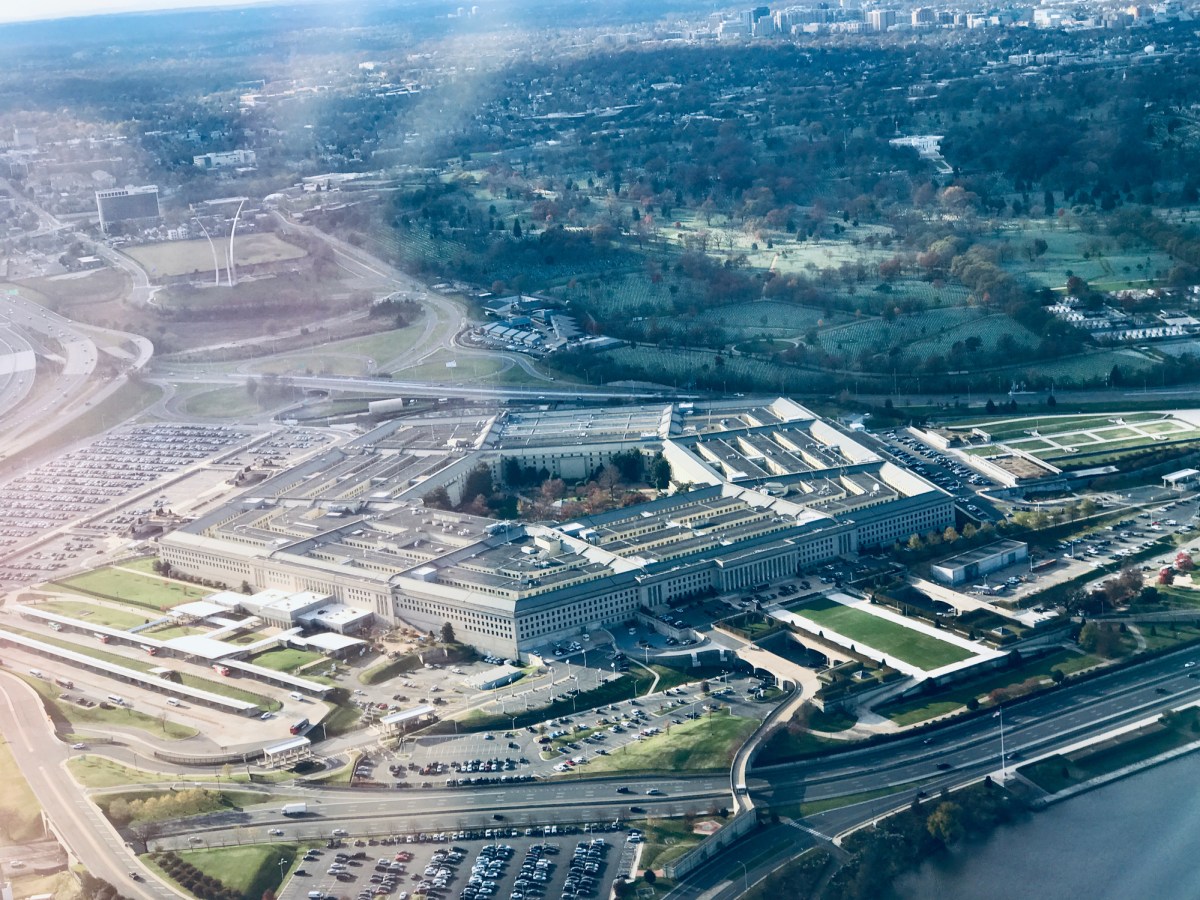
The shifting tectonic plates of American defense procurement just underwent a violent realignment. In a sequence of events that has left the Beltway and the Bay Area reeling, OpenAI has formalized a high-stakes partnership with the Department of Defense to integrate its language models into military operations. This development would be significant on its own, but the timing is what makes it a watershed moment in the history of the military-industrial complex. The deal was finalized within a tight window of the Trump administration effectively blacklisting Anthropic, OpenAI’s primary domestic rival, from federal defense contracts.
This is not merely a story about software updates or cloud computing. It is a fundamental rewriting of how the United States intends to maintain its qualitative edge over global adversaries. By choosing Sam Altman’s firm while freezing out Dario Amodei’s, the administration is signaling that "safety-first" philosophies—the hallmark of Anthropic’s Constitutional AI—are now viewed as a strategic liability. The Pentagon wants speed, scale, and aggressive deployment. OpenAI has positioned itself as the only partner willing to provide all three without the friction of excessive ethical hand-wringing.
The Death of Neutrality in the AI Arms Race
For years, the major players in generative modeling maintained a veneer of pacifism. They scrubbed their terms of service to prohibit "high-risk" military use. They spoke in platitudes about global benefit. That era ended this week. OpenAI’s decision to drop its explicit ban on military and warfare applications was not a clerical change. It was a prerequisite for this contract.
The Pentagon’s current priority is the integration of large language models into the "kill chain"—the process of identifying, tracking, and engaging targets. While the public-facing narrative focuses on mundane tasks like summarizing intelligence reports or streamlining logistics, the underlying infrastructure is designed for much more. We are looking at the foundational layer for autonomous command and control. OpenAI’s models will now be used to parse massive streams of battlefield data, offering real-time recommendations to commanders.
The speed of this integration is breathtaking. In traditional defense contracting, a deal of this magnitude would take years of bureaucratic maneuvering. This happened in hours. This suggests that the technical groundwork was already laid in secret, waiting only for the political obstacles to be cleared.
Why Anthropic Was Left in the Cold
The blacklisting of Anthropic by the Trump administration serves as a warning shot to the rest of the industry. The official reasoning points to "national security concerns" and the influence of foreign investors, but the reality is more nuanced and far more political. Anthropic has long championed a cautious approach to AI development. Their "Constitutional AI" framework is designed to bake specific values and constraints into the model’s core.
To the current administration, these constraints look like digital shackles. There is a growing sentiment within the National Security Council that American AI must be "unfettered" to compete with the rapid, ethics-free progress being made in Beijing. Anthropic’s insistence on rigorous safety testing and its public advocacy for global AI governance are now seen as traits of a "weak" partner.
Furthermore, Anthropic’s ties to Amazon and Google—two companies that have had a fractious relationship with the current White House—provided the necessary political cover for the blacklist. By removing Anthropic from the board, the administration has effectively narrowed the field to a single "national champion." OpenAI is no longer just a tech company; it is becoming a state-sanctioned utility for the American war machine.
The Technical Reality of AI on the Battlefield
The military isn't looking for a chatbot to write poetry. They are looking for a reasoning engine capable of operating in degraded environments. When a drone swarm loses its link to a central server, it needs local intelligence to complete its mission. OpenAI’s recent advances in reasoning-heavy models provide exactly the kind of logic required for these scenarios.
The Intelligence Bottleneck
Currently, the U.S. military is drowning in data. Satellites, signals intelligence, and ground sensors produce more information than human analysts can possibly process in real-time. This is the primary problem the OpenAI deal aims to solve.
- Automated Threat Assessment: The ability to scan thousands of hours of drone footage to identify a specific type of mobile missile launcher.
- Predictive Logistics: Managing the supply lines for a multi-front conflict with a level of precision that eliminates waste and anticipates shortages before they happen.
- Cyber Warfare: Using LLMs to identify vulnerabilities in enemy code and generate exploits at a speed that humans cannot match.
These applications represent a massive leap in capability. However, they also introduce a catastrophic new failure mode: "hallucination" in a lethal context. If a model misidentifies a civilian convoy as a military target due to a statistical anomaly in its training data, the consequences are final.
The Economic Consolidation of Power
This deal cements a monopoly that should concern every industry observer. By securing the Pentagon, OpenAI gains access to a nearly bottomless pit of funding and, perhaps more importantly, the most valuable data sets on earth. Military data is the "high ground" of AI training. It is proprietary, highly structured, and impossible to scrape from the open web.
OpenAI’s competitors are now at a dual disadvantage. They are locked out of the lucrative federal market, and they are denied the training data that will define the next generation of "frontier" models. We are witnessing the birth of a feedback loop where state power feeds AI capability, which in turn increases state power.
Microsoft, as OpenAI’s primary cloud and distribution partner, stands to gain the most. Their Azure Government Cloud will likely be the exclusive host for these military-grade models. This effectively shuts out AWS and Google Cloud from the most critical growth sector in the technology economy. The "Triple Alliance" of OpenAI, Microsoft, and the Department of Defense is now the most formidable force in the global tech landscape.
The Geopolitical Fallout
The international community is watching this development with a mixture of fear and envy. By blacklisting Anthropic and fast-tracking OpenAI, the U.S. has abandoned the idea of a coordinated, international approach to AI safety. The message to the world is clear: The AI arms race is on, and the U.S. intends to win it by any means necessary.
China will almost certainly respond by accelerating its own state-sponsored AI programs. We are entering a period of "digital balkanization," where the world is split between American-aligned AI and Chinese-aligned AI. There will be no middle ground. Smaller nations will be forced to choose which "brain" they want to run their infrastructure, their economies, and their militaries.
The risks here are not theoretical. We are moving toward a world where conflict is managed by algorithms that operate at speeds far beyond human comprehension. The "flash crash" of the stock market could soon have a military equivalent—a "flash war" triggered by two competing AI systems misinterpreting each other’s signals and escalating to kinetic strikes before a human can even reach for a telephone.
The Moral Hazard of the "National Champion"
Sam Altman has successfully navigated the political minefield that has claimed so many other Silicon Valley CEOs. By positioning OpenAI as the essential partner for national defense, he has secured a level of political immunity. It is very difficult for regulators to break up or heavily tax a company that is considered vital to the survival of the republic.
But this immunity comes at a price. OpenAI is now beholden to the requirements of the state. If the Pentagon demands a version of GPT that is optimized for psychological operations or social engineering in foreign populations, OpenAI will find it very difficult to say no. The company’s original mission—to ensure that AGI benefits all of humanity—now seems like a quaint relic of a more optimistic time.
The reality is that we have traded a competitive market for a controlled one. We have traded safety for speed. And we have done so without a single vote being cast or a single piece of legislation being debated in the public square.
Investors need to look past the hype of the contract's dollar value and realize what has actually happened. The "safety" debate is over. The "alignment" problem has been solved not by technology, but by decree. The models will be aligned with the interests of the Department of Defense, and anything that gets in the way of that alignment will be discarded.
The immediate next step for any organization currently using Anthropic or other "safety-focused" providers is to audit their own exposure to federal shifts. If the government can wipe out a multi-billion dollar competitor in an afternoon, no enterprise contract is truly safe. You must build your infrastructure with the assumption that the "national champion" model will eventually be the only one allowed to operate at scale.