Chasing commercial wins is the fastest way for Singapore to waste its best trick.
Read the standard playbook on Singapore pharma and you get the exact same sermon every quarter. Eight of the top ten global drugmakers have plants, regional hubs, or manufacturing footprints here. Therefore, the argument goes, the next stage of maturity must be commercial dominance. More homegrown blockbusters. Bigger commercial launches out of the city-state. More late-stage marketing muscle staying local instead of shipping off to Boston, Basel, or New York.
Sounds sensible on paper. In practice, it confuses manufacturing gravity with commercial gravity.
Those are not the same force. Treating them like they are will burn capital, distort incentives, and push Singapore into a fight where its size works against it.
The Commercial Illusion in a City of Six Million
Let's be blunt about the math. A domestic market of roughly six million people does not give a pharmaceutical company a massive commercial proving ground on its own. Even with strong public healthcare infrastructure, tight regulatory coordination through the Health Sciences Authority, and high clinical standards, commercial scale in biopharma comes from deep, fragmented, high-spending markets and massive patient pools.
That does not mean zero commercial activity happens in Singapore. Regional headquarters sit here. Commercial leaders manage Asia-Pacific territories from here. Clinical trials run here.
Still, there is a canyon between running regional commercial operations and building a true global commercial powerhouse. Global commercial engines depend on enormous sales forces, complex payer negotiations across dozens of reimbursement systems, dense specialist networks, and years of market-access trench warfare. A tiny domestic base cannot carry that weight by itself.
I have watched life-sciences teams burn millions trying to force square pegs into round geographic holes. A biotech or regional unit sets up grand commercial ambitions in a market that simply cannot generate the volume or pricing depth needed to justify heavy fixed commercial overhead early. They hire commercial directors before they even have a differentiated clinical asset with clean Phase II data. Twelve months later, the commercial deck is thicker than the clinical evidence, and the burn rate is doing all the talking.
When commentators say Singapore "needs commercial wins," what they usually mean is: we want visible trophies that look like Boston or Basel. That is vanity disguised as strategy.
Why Biologics Manufacturing Is Already a Moat
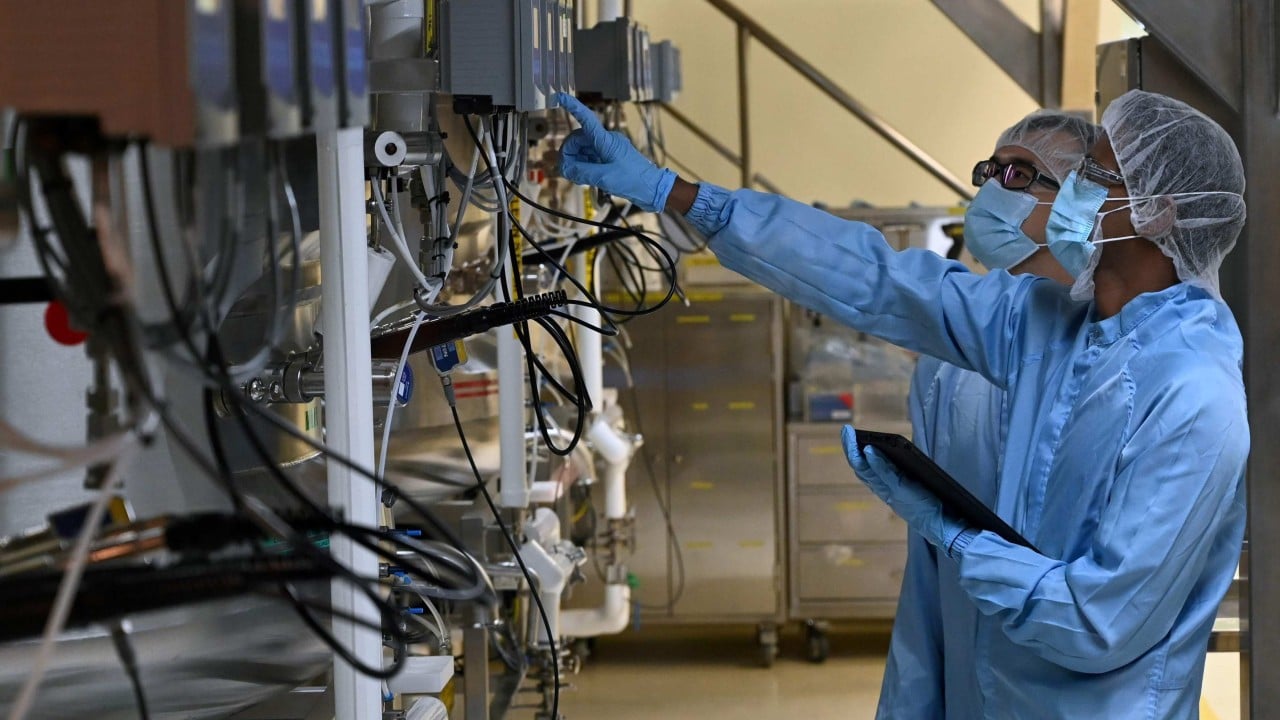
Look at what Singapore actually built over the past two decades. It built serious, high-spec manufacturing credibility—especially in biologics, active pharmaceutical ingredients, and sterile operations—backed by political stability, rule of law, talent pipelines, and coordinated industrial policy through agencies like the Economic Development Board.
Biologics manufacturing is unforgiving. Small-molecule pills are one thing; living cell lines, strict cold chains, batch consistency, regulatory inspections, and supply-chain resilience are another. You cannot fake your way through a biologics facility audit.
Manufacturing credibility in biopharma is earned over decades of boring, disciplined execution—and lost the moment a government starts chasing flashy headlines over operational reliability.
That boring, disciplined execution is Singapore's real advantage. Supply chains in pharmaceuticals have grown more fragile and geopolitically sensitive. Drugmakers care deeply about regulatory predictability, intellectual property protection, customs and logistics speed, and talent retention among process engineers and quality specialists.
Chasing "commercial wins" often tempts policymakers and executives to over-index on visibility—splashy announcements, commercial headquarters hype, or domestic sales metrics—while taking their eye off the unglamorous work that keeps multi-billion-dollar plants humming. If a factory hiccups or regulatory trust erodes, no commercial launch in the world saves the reputation.
Manufacturing vs. Commercial Reality
| Dimension | High-Spec Manufacturing & Hub Role | Chasing "Commercial Wins" Locally |
|---|---|---|
| Core Advantage | Stability, regulatory trust, engineering talent, supply-chain reliability | Domestic market scale (limited by small population) |
| Time Horizon | Multi-decade capital and capability compounding | Often pressured by short-term visibility and deal headlines |
| Primary Risk | Rising costs, talent bottlenecks, geopolitical shifts | Over-investing in commercial overhead ahead of clinical proof |
| Strategic Fit | High—leverages structural strengths of a compact city-state | Mixed—stronger as a regional launchpad than a standalone market |
The Questions People Are Asking Wrong
Scroll through the usual questions around this topic and you see the same flawed assumptions repeated like gospel.
"Does having 8 of the top 10 drugmakers automatically turn Singapore into a commercial hub?"
No. Having a plant or a regional office does not equal building global commercial muscle. Multinationals place assets where specific functions make sense: tax and legal structures, regional coordination, clinical trial execution, or specialized manufacturing. Putting a pin on the map does not transfer the commercial center of gravity away from the United States and major European markets.
"How can Singapore turn its pharma presence into homegrown commercial blockbusters?"
Ask yourself first: why is a commercial blockbuster the yardstick? Most biopharma startups—even in the United States—never build a standalone commercial sales force to take a drug to global market alone. They license out, partner with large pharma, or get acquired once clinical proof-of-concept is clear. Obsessing over turning every local win into a full-stack commercial giant misreads how drug development actually makes money.
"What is the biggest bottleneck holding back commercial success here?"
Scale and capital depth. Late-stage clinical development and global commercial launches swallow staggering amounts of money and require deep specialist talent across every sub-discipline. A smaller economy naturally faces tighter limits on domestic patient volume and local risk capital compared with massive healthcare markets. Pretending otherwise just sets unrealistic benchmarks.
Where the Nuance Actually Lives
Here is the part the lazy consensus misses: the goal should not be commercial dominance for its own sake; it should be high-margin leverage.
Imagine a scenario where a mid-sized Singapore-based biotech develops a targeted oncology therapy with strong early clinical data. Imagine a scenario where its founders face a choice: spend years and tens of millions building an in-house commercial organization from scratch across Asia, or partner early with a global pharma player that already has established reimbursement access, oncology sales teams, and regulatory playbooks in major markets while keeping high-value translational, clinical, or specialized manufacturing work anchored locally.
In most cases, taking the partnership or licensing route—while protecting equity, IP, and technical value—beats trying to play Goliath on a David budget.
To be fair, my contrarian stance has real downsides. If you push too hard against commercial ambition, you risk encouraging a "branch-plant mentality" forever—where local teams execute someone else's strategy and capture a smaller slice of long-term value than they could if they built stronger commercial leadership at home. Talent that wants to run global commercial P&Ls might leave if the ceiling feels too low. And over time, sticking strictly to what already works can make an ecosystem slow to adapt if manufacturing or supply models shift.
That trade-off is real. You do not solve it by chasing commercial mirages. You solve it by being ruthless about where value is actually captured at each stage of the drug lifecycle.
What Smart Operators Should Do Instead
If you run a biotech, lead regional strategy, or shape industrial policy in Singapore, stop measuring success by how "commercial" the headlines look. Measure it by durability, capital efficiency, and technical irreplaceability.
- Fund unsexy translation before commercial theater. Put capital behind clinical readiness, regulatory strategy, CMC (chemistry, manufacturing, and controls), and data quality. Investors pay for de-risked science and clean execution, not premature marketing org charts.
- Treat Singapore as a launchpad and control tower, not the whole stadium. Use the city-state's connectivity, legal clarity, and regional access to run tight clinical programs and coordinate multi-market entry—then plug into global commercial distribution where scale already lives.
- Double down on specialized talent and process depth. Biopharma lives or dies on people who know how to navigate complex trials, quality systems, and regulatory expectations. Keep sharpening the edges that are hard to copy.
- Pick battles where small size is an asset. Speed of coordination, clear governance, and focused execution beat slow bureaucracy every single time.
Stop trying to out-commercialize giants built on continental markets. Own the high-trust, high-precision links in the chain that giants cannot afford to break.