Hope is a rare commodity when millions of tons of mud, rock, and debris reshape a landscape overnight. Yet, miracles do happen in the most harrowing circumstances.
In Nepal's remote Rasuwa district, a six-year-old girl named Manisha was pulled alive from the wreckage of a devastating flash flood. She had spent seventy-two hours buried entirely beneath soil and broken infrastructure. Her survival stands as a defiant spark of light amid a regional disaster that claimed hundreds of lives and left thousands missing.
The Anatomy of a Himalayan Disaster
The catastrophe began when relentless monsoon rains and overflowing river systems triggered massive flash floods and landslides across parts of Nepal and neighboring regions. Torrential waters from the Bhote Koshi River tore through settlements like Timure with terrifying speed. Homes were flattened, roads vanished, and entire communities were buried under heavy layers of silt and stone.
When rescue operations finally commenced, teams faced monumental hurdles. Low visibility, washed-out bridges, and ongoing weather threats hampered early response phases. Governments and specialized units deployed personnel to search for survivors among miles of grey wasteland. Nobody expected anyone to remain breathing under the dense layers of packed earth three days after the initial impact.
Hearing Life Beneath the Debris
The discovery happened purely by chance, driven by the persistence of Nepal's Armed Police Force (APF). While combing through the destroyed settlement of Timure on a Friday evening, officers paused. Amid the silence of the wreckage, they heard faint, muffled sounds.
At first, some team members thought it might be an animal trapped beneath the collapsed structure. They quickly realized the noise was human.
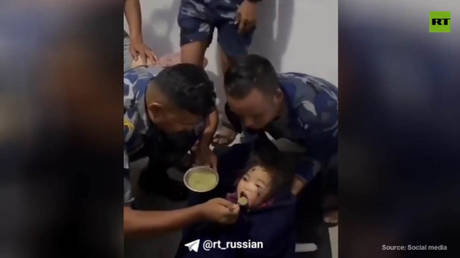
Working with extreme caution to avoid causing further structural collapses, the rescue squad spent roughly two hours digging through mud and debris. They uncovered the young child, barely responsive but miraculously alive.
The Race to Medical Safety
Extricating her was only the first hurdle. Field medics immediately administered first aid at an APF border post, providing water and boiled rice water as she slowly regained consciousness. Her medical condition quickly proved precarious, demanding immediate hospitalization.
Severe weather and encroaching darkness grounded all evacuation flights on Friday night, forcing local responders to stabilize her on-site. By Saturday afternoon, weather conditions cleared enough for a helicopter transfer to Kathmandu. She was admitted directly to the pediatric emergency department of a major teaching hospital, where specialist doctors monitored her recovery.
What This Recovery Means for Families Searching for Loved Ones
Disasters of this magnitude leave behind a heavy psychological toll. With thousands still unaccounted for across Nepal, families cling to every shred of positive news. Manisha's extraction provided a much-needed morale boost to exhausted rescue workers who have labored around the clock.
Hospital updates confirmed that she was steadily recovering and managed to reunite with her parents. While the broader recovery effort faces a multi-billion-dollar bill and years of rebuilding infrastructure, individual stories of survival remind the world of human resilience against nature's raw power.