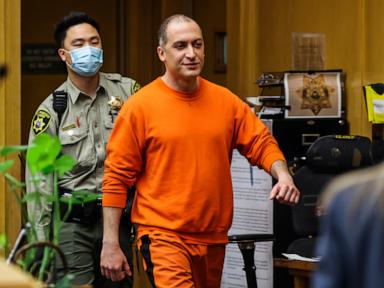
Nima Momeni will spend at least sixteen years behind bars for the fatal stabbing of Cash App creator Bob Lee, following a sentencing hearing in San Francisco Superior Court that formally closed one of the most sensationalized criminal cases in recent Silicon Valley history. Judge Alexandra Robert Gordon handed down the sentence of 16 years to life after a jury convicted the 40-year-old tech consultant of second-degree murder, rejecting first-degree premeditation charges while dismissing his claim of self-defense.
The verdict landed like a quiet thud compared to the deafening roar that accompanied Lee’s death in April 2023. For nearly two years, the killing served as an ideological Rorschach test for a city at war with itself, forcing a reckoning over public safety, the insular culture of the technology elite, and the dangerous speed at which viral speculation hardens into conventional wisdom.
The Anatomy of a Premature Narrative
Before police had even identified a suspect, the narrative was already carved in stone. Within hours of the news that Bob Lee had bled to death on a quiet street in San Francisco’s Rincon Hill neighborhood, high-profile venture capitalists and tech executives took to social media to declare the tragedy proof of an urban apocalypse.
San Francisco, they argued, had succumbed to lawlessness. Random street crime had finally claimed one of their own. Elon Musk weighed in, demanding to know what the city was doing to stop violent crime. Other prominent founders echoed the sentiment, framing Lee’s death as the inevitable consequence of progressive policies, homelessness, and a gutted police force.
It was a tidy, politically potent story. It was also completely wrong.
When San Francisco police arrested Nima Momeni nine days later in Emeryville, the foundation of that viral outrage collapsed overnight. Lee was not killed by a stranger on a chaotic sidewalk. He was killed by an acquaintance—a fellow member of the Bay Area tech ecosystem—following a night of heavy substance use, interpersonal friction, and a dispute involving Momeni’s younger sister, Khazar Elyassnia.
The speed with which the tech establishment weaponized Lee’s death reveals a deep structural flaw in how modern crises are processed. Influential figures with massive digital platforms reacted to an emotional shock by projecting their pre-existing political grievances onto a crime scene they knew nothing about. By the time forensic evidence, surveillance footage, and cell phone records painted the real picture, the initial outrage had already achieved its political utility, leaving behind a distorted public memory that took a grueling seven-week trial to correct.
Inside the Night in Rincon Hill
To understand why a jury settled on second-degree murder rather than first-degree premeditation, you have to look closely at the chaotic, drug-fueled timeline reconstructed by prosecutors and defense attorneys. This was not a cold-blooded hit orchestrated weeks in advance, nor was it a clear-cut act of self-defense. It was an impulsive eruption inside a tightly wound social circle.
In the days leading up to April 4, 2023, Lee and Khazar Elyassnia had been partying together in San Francisco. Both were active participants in an underground social scene—often referred to in local media as "The Lifestyle"—characterized by casual sex, MDMA, cocaine, and ketamine. Elyassnia, who was married to a prominent San Francisco plastic surgeon, had been spending time with Lee and a mutual acquaintance, Jeremy Boivin.
On the afternoon of April 3, Momeni confronted Lee over the phone. Prosecutors presented evidence showing that Momeni was furious about how his sister had been treated while partying with Lee and Boivin, specifically questioning whether Lee had supplied her with drugs or placed her in an inappropriate situation. Text messages entered into evidence showed Elyassnia thanking Lee for making sure she was okay, while Momeni adopted the posture of an overprotective older brother demanding accountability.
Later that night, Lee visited Elyassnia’s luxury apartment at the Millennium Tower. Momeni arrived shortly after. Surveillance cameras captured the two men leaving the building together around 2:00 a.m. on April 4, stepping into Momeni’s white BMW.
What happened next unfolded over roughly ten minutes in a secluded stretch of Main Street beneath the Bay Bridge.
- The Confrontation: Prosecutors argued that Momeni drove Lee to a dark, isolated spot with a kitchen knife taken from his sister's apartment, intending to confront him away from witnesses.
- The Attack: Forensic pathology confirmed Lee was stabbed three times, including a fatal wound that pierced his heart. No defensive wounds were found on Lee's hands, undercutting the theory of a prolonged, mutual struggle.
- The Aftermath: Surveillance footage showed Momeni’s BMW speeding away from the scene while Lee stumbled down the street, calling 911 and desperately flagging down passing cars that failed to stop before he collapsed.
The Forensic Reality Versus the Defense Theory
During the trial, Momeni’s legal team—a high-powered defense squad led by Saam Zangeneh—attempted to flip the script entirely. Taking the witness stand in his own defense, Momeni claimed that Lee had initiated the violence. According to Momeni, he had made a joke about Lee spending his final night in San Francisco with his family rather than stripping clubs, which supposedly sent Lee into a cocaine- and alcohol-induced rage.
Momeni testified that Lee pulled the knife first, and that during a struggle to disarm him, the blade accidentally plunged into Lee’s chest and hip.
The physical evidence simply could not bear the weight of that story.
Investigators recovered the murder weapon—a paring knife with a four-inch blade—tossed over a nearby fence. DNA analysis revealed a critical detail: Momeni’s DNA was found on the handle of the knife, while Lee’s DNA was found exclusively on the blade. There was no trace of Lee’s genetic material on the handle where a person gripping the weapon to attack someone would naturally leave skin cells.
Furthermore, prosecutors dismantled Momeni’s post-incident behavior. A man who has just survived a terrifying, accidental struggle for his life typically calls 911, flags down authorities, or seeks immediate medical help for his friend. Momeni did none of those things. Instead, he drove back to the East Bay, disposed of the weapon at the scene, and remained silent for over a week until tactical officers breached his apartment door.
The jury’s deliberation—spanning seven days—reflected the complexity of the legal thresholds involved. To convict on first-degree murder, prosecutors had to prove beyond a reasonable doubt that Momeni weighed the consequences and decided to kill Lee before the fatal blow was struck. By opting for second-degree murder, the twelve jurors signaled that while they rejected Momeni’s self-defense fabrication, they believed the killing was an unpremeditated act of malice committed in the heat of an escalating confrontation.
The Mirage of the Tech Consultant
In the immediate aftermath of the arrest, headlines routinely described Nima Momeni as a "tech entrepreneur" and "IT consultant," placing him on the same professional plane as Bob Lee, the former Chief Technology Officer of Square and Chief Product Officer of MobileCoin. That framing was generous to the point of inaccuracy.
Lee was a genuine architect of modern financial infrastructure. He helped build Android at Google before joining Square, where he spearheaded the creation of Cash App, transforming peer-to-peer payments for tens of millions of users. Within the engineering community, Lee was widely liked, technically respected, and deeply embedded in the upper echelons of Silicon Valley product development.
Momeni operated on the periphery of that world. He ran a small, one-man IT support business called Expand IT out of an Emeryville loft. While he mingled in the same social circles, attended the same parties, and drove a luxury car, his business footprint was tiny. Neighbors and former associates described him as a man eager to project wealth and status, yet frequently isolated and prone to erratic behavior.
This distinction matters because it highlights a pervasive blind spot in tech journalism and social media commentary. In the Bay Area, the label "tech founder" or "consultant" functions as an equalizer, masking vast disparities in actual accomplishment, stability, and credibility. Momeni used the trappings of Silicon Valley success to gain proximity to genuine industry leaders, creating a social collision between a celebrated executive and a volatile hanger-on.
The Uncomfortable Truth About Silicon Valley Party Culture
Beyond the courtroom drama and political finger-pointing lies an aspect of the case that much of the tech industry would prefer to forget. The trial peeled back the curtain on a subculture of extreme wealth, recreational drug use, and blurred personal boundaries operating behind the key-carded doors of San Francisco’s luxury high-rises.
Toxicology reports showed that Lee had cocaine, ketamine, and alcohol in his system at the time of his death. Testimony from multiple witnesses painted a portrait of sleepless multi-day benders, casual infidelity, and transactional relationships where money, status, and narcotics flowed freely.
There is nothing unique about wealthy professionals using recreational drugs. Wall Street, Hollywood, and Washington have their own versions of the same excess. What makes the Silicon Valley iteration distinct is the rhetoric of optimization and moral superiority that often surrounds it. An industry that markets itself as building a cleaner, smarter, more rational future frequently operates with the same chaotic impulses as any other boomtown, only with better NDAs and higher-end real estate.
When personal disputes erupt inside these closed ecosystems, the absence of normal social guardrails becomes dangerous. Friends hesitate to call the police because they fear exposure, career ruin, or the discovery of illicit substances. Text messages are deleted. Stories are massaged to protect reputations. In the days after Lee’s murder, key witnesses—including Khazar Elyassnia—retained criminal defense attorneys before speaking openly with homicide detectives, slowing down an investigation that should have been straightforward.
The Sentencing Calculus and What Comes Next
Under California law, a conviction for second-degree murder carries a mandatory indeterminate sentence of 15 years to life. Judge Gordon added an additional year for the personal use of a deadly weapon—the kitchen knife—bringing the minimum term to 16 years.
Because Momeni was convicted of a violent felony, he is not eligible for early release programs designed for non-violent offenders. Under California’s parole guidelines, he will serve the vast majority of those 16 years before he can even sit before the Board of Parole Hearings. At that point, release is far from guaranteed; parole commissioners routinely deny applications from inmates who fail to demonstrate genuine remorse or continue to minimize their responsibility for a fatal crime. Given that Momeni maintained his self-defense claim throughout the trial, his path to eventual release will depend entirely on whether he abandons that narrative in the years ahead.
During the sentencing hearing, members of Lee’s family delivered victim impact statements that stripped away the tabloid sensationalism and centered the human cost of the crime. Lee’s father, Rick Lee, and his former wife, Krista Lee, spoke of the two children left without a father—a loss that no prison term can repair.
The prosecution, led by Assistant District Attorney Omid Talai, pushed for the maximum allowable sentence, emphasizing the callousness with which Momeni left a bleeding man alone on an empty street in the middle of the night. Defense attorneys asked the court to consider Momeni’s lack of a prior violent criminal record, though the statutory sentencing structure left Judge Gordon with virtually no discretion to reduce the term below 16 years.
A Case Study in Institutional Distrust
Looking back at the trajectory of the Bob Lee case, the most enduring damage may not be legal, but civic. The tragedy exposed how easily public discourse can be hijacked when institutional trust breaks down.
In 2023, San Francisco was genuinely struggling with visible street disorder, open-air drug markets, and retail theft. Those problems were real, documented, and deeply frustrating to residents and business owners alike. Because city leadership had lost credibility on street-level safety, a critical mass of observers was primed to believe that Bob Lee was the victim of a random mugging gone wrong.
When the truth emerged—that Lee was killed by an acquaintance over a personal dispute—two opposite mistakes occurred. The critics who had blamed San Francisco’s street conditions quietly moved on without retracting their claims, leaving the false impression intact among millions of casual readers. Meanwhile, defenders of the city’s status quo seized on the arrest as proof that San Francisco’s crime concerns were entirely manufactured by right-wing media and tech billionaires.
Both reactions missed the mark. Acknowledging that Bob Lee’s murder was an interpersonal crime does not erase the reality of San Francisco’s street-level challenges, just as acknowledging those street-level challenges does not excuse the reckless rush to judgment that followed Lee’s death.
The courtroom proceedings provided what social media never could: sworn testimony, cross-examination, physical forensics, and a standard of proof that requires facts rather than viral engagement. Nima Momeni is going to prison because DNA on a knife blade, timestamped security footage, and cell phone tower data told a coherent, undeniable story of lethal violence. Everything else built around his crime was noise.