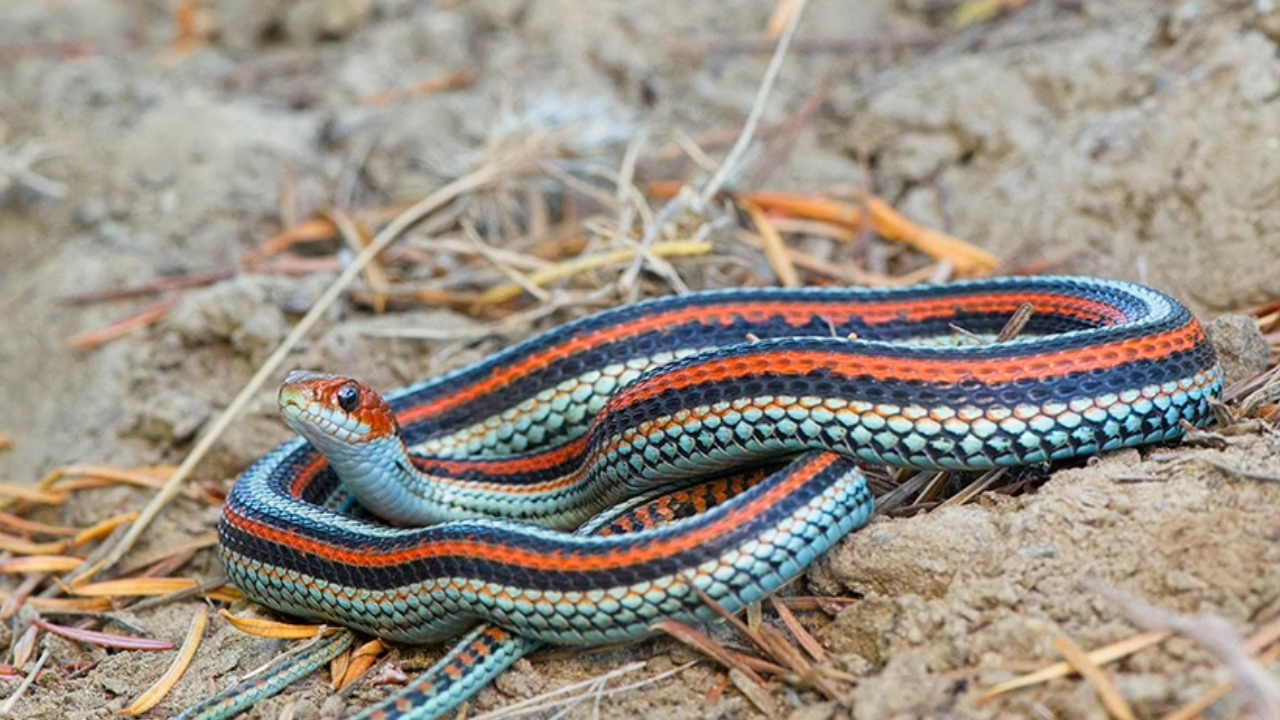
Releasing 62 captive-bred young snakes back into their native habitat marks a rare conservation victory, yet the real test of wildlife reintroduction begins the moment the transport crates open. While a zoo celebrating its first successful reptile release and scheduling another cohort for 2027 makes for an easy press release, decades of field biology show that hatching animals behind glass is the simple part. Keeping them alive against predators, seasonal freezes, and fragmented habitats requires a brutal gauntlet of biological conditioning and long-term telemetry tracking.
Most conservation coverage treats a release date as the finish line. In reality, it is the starting gun for an ecological gamble where mortality rates in the first ninety days frequently exceed fifty percent.
The Myth of the Instant Wild Animal
Captivity is a padded cell. Inside a climate-controlled zoological facility, a juvenile snake never experiences a sudden autumn cold snap, never has to outmaneuver a red-tailed hawk, and never starves because a drought wiped out the local amphibian population. Captive-reared naivete is the single biggest killer in wildlife reintroduction programs.
When handlers drop 62 young reptiles into brushland or wetland edges, those animals carry zero generational memory of local threats. Mammals and birds learn survival tactics by shadowing their mothers. Snakes do not. Once a neonate emerges from the egg or is born live, it is entirely on its own, relying on hardwired instincts that captivity can easily dull.
To counter this, modern conservation programs have had to abandon traditional zoo husbandry. Keepers can no longer hand-feed thawed rodents with tongs in sterile plastic tubs. Instead, pre-release protocols now force young snakes to hunt live, elusive prey inside complex, naturalistic enclosures filled with shifting temperatures, rough terrain, and overhead shadows that mimic avian predators. Even then, biology offers no guarantees.
The Hibernaculum Bottleneck
For temperate-zone snakes, surviving summer is child's play compared to surviving winter. Many imperiled snake species rely on communal underground dens, known as hibernacula, to survive freezing temperatures. These sites are not random holes in the ground. They are specific geological formations—deep rock fissures, abandoned mammal burrows, or root systems extending below the frost line—that maintain precise moisture and temperature levels for months on end.
In the wild, young snakes often find these sites by following the chemical pheromone trails left behind by older, experienced adults. When a zoo releases 62 juveniles into a depleted ecosystem, there may not be enough adult snakes left in the landscape to lay down those chemical highways. Without a map to the frost-free underground, an entire cohort can freeze to death during their first November.
Biologists often try to solve this by using a soft-release strategy. Rather than dumping the animals into open terrain, teams build temporary, predator-proof enclosures directly over known underground dens, holding the snakes inside for weeks or months so they imprint on the exact location before the walls come down.
Why Reptiles Get Left Behind in Conservation Funding
If a zoo releases 62 wolves, condors, or black-footed ferrets, federal agencies and private donors open their checkbooks. Reptiles do not enjoy that luxury. Conservation biology suffers from a severe taxonomic bias, where charismatic mammals and birds capture the overwhelming majority of global funding, media attention, and academic research.
Snakes trigger deep-seated evolutionary fear in humans, making them a tough sell for fundraising galas. Yet ecologically, they sit squarely in the middle of the food web. Remove native snakes from a wetland or prairie, and rodent populations explode, bringing tick-borne diseases and agricultural damage in their wake. Simultaneously, hawks, owls, foxes, and larger reptiles lose a critical caloric staple.
Because funding is scarce, reptile reintroductions operate on razor-thin margins. Every dollar spent on veterinary screening, genetic sequencing, and field monitoring has to be justified. That makes a multi-year commitment—like staging an initial release of 62 snakes and already locking in a follow-up wave for 2027—a massive logistical lift for any zoological institution.
The Disease Vector Nightmare
Before a single snake touches wild soil, veterinarians have to run an exhaustive gauntlet of biosecurity protocols. Releasing captive animals carries a catastrophic risk: introducing novel pathogens into a naive wild population.
In recent years, Snake Fungal Disease, caused by the pathogen Ophidiomyces ophiodiicola, has devastated wild snake populations across North America and Europe. Captive colonies can also harbor cryptic viruses, parasites, or antibiotic-resistant bacteria picked up from feeders or neighboring enclosures.
To prevent an ecological disaster, animals slated for release must undergo months of strict quarantine. Technicians run repeated PCR swabs, fecal floats, and blood panels. If a single animal in a cohort tests positive for an infectious agent, the entire release can be scrubbed. The 62 snakes that made it out the door represent not just a breeding success, but a clean bill of health that cleared some of the strictest veterinary hurdles in wildlife management.
Inside the 2027 Follow-Up Strategy
Scheduling a second release for 2027 is not merely an encore. From a population genetics standpoint, a single release of 62 young snakes is an evolutionary dead end.
In small, isolated populations, genetic diversity collapses rapidly through inbreeding and genetic drift. When a founder group is too small, recessive deleterious mutations accumulate, leading to spinal deformities, reduced fertility, and weakened immune systems within a few generations. Wildlife geneticists generally point to the 50/500 rule as a baseline concept: a minimum effective population of 50 individuals is needed just to prevent immediate inbreeding depression, while 500 are required to maintain long-term evolutionary adaptability.
Because juvenile mortality is high, releasing 62 young snakes might yield only 15 to 20 breeding adults by 2027. Staging a second wave two years later injects fresh genetic material into the fledgling colony right as the survivors of the first cohort reach sexual maturity.
Pairing captive stock with wild genetics
To make the 2027 cohort count, zoo curators cannot simply breed the same two founder snakes over and over. They rely on studbooks—meticulous genealogical databases managed across accredited zoos—to pair unrelated adults and maximize heterozygosity.
In some advanced programs, biologists also use head-starting alongside traditional captive breeding. Take a hypothetical example of how this works in the field: researchers locate wild pregnant females, bring them into the zoo just long enough to give birth, raise the neonates past their most vulnerable first year of life, and then release both the mothers and the oversized juveniles back at the exact capture coordinates. Combining pure captive-bred lines with wild-caught head-starts creates a genetic bridge that anchors the new population to the local environment.
The Invisible War of Post-Release Monitoring
A release without tracking is just expensive animal abandonment. If biologists do not know where the 62 snakes go, what eats them, or whether they successfully breed, the 2027 release cannot be adjusted to fix mistakes.
Tracking small snakes, however, is an engineering headache. You cannot slap a heavy GPS collar onto a slender reptile that squeezes through half-inch cracks in limestone.
Field teams have to rely on two primary methods:
- Passive Integrated Transponders (PIT tags): Tiny glass-encapsulated microchips injected just under the skin. They require no battery and last a lifetime, but a researcher has to physically catch the snake or wave a scanner within inches of it to read the ID number.
- VHF Radio Telemetry: Miniature transmitters surgically implanted into the body cavity of larger individuals. These emit a distinct radio pulse that technicians track on foot using directional Yagi antennas and receivers, logging exact GPS coordinates, body temperatures, and microhabitat choices every few days.
Surgical implantation carries its own risks. The transmitter cannot exceed roughly three to five percent of the snake's total body weight, or it will impede movement, digestion, and hunting efficiency. Because many juvenile snakes are too small to carry a radio battery, researchers often track a subset of slightly larger individuals as sentinel animals, assuming the smaller siblings are dispersing along similar corridors.
The Road Mortality Trap
Even when a snake masters hunting, dodges hawks, and finds a winter den, it still faces an obstacle evolution never prepared it for: asphalt.
Snakes are ectotherms. They rely on external heat sources to regulate their body temperature and digest food. On cool evenings after a sunny day, paved roads act like massive thermal batteries, radiating stored heat long after the surrounding grass has gone cold. To a young snake, a two-lane highway looks like a five-star warming pad.
Road mortality is a primary driver of snake declines worldwide, and worse, some drivers intentionally swerve to hit reptiles on the pavement. When conservationists select a release site for 62 young snakes, proximity to paved roads is often the deciding factor that disqualifies otherwise pristine habitat. A single busy county road bisecting a wetland can quietly bleed a reintroduced population dry over five summers.
Habitat Restoration Must Come First
Zoos love talking about breeding numbers because breeding numbers are easy to count and photograph. Habitat quality is messy, political, and expensive. Yet pouring 62 captive-bred snakes into degraded land is like pouring water into a cracked bucket.
Before a reintroduction permit is ever signed by state or federal wildlife agencies, land managers typically have to spend years repairing the ecological machinery of the release site. That work rarely makes headlines:
- Prescribed burns to clear out invasive woody shrubs that shade out the open basking sites snakes need to thermoregulate.
- Hydrological engineering to restore seasonal vernal pools where frogs and salamanders breed, ensuring a reliable buffet for growing juveniles.
- Removing artificial debris or old agricultural fencing that can entangle snakes as they shed their skin.
If the underlying reason the native snakes vanished—whether agricultural runoff, suburban sprawl, or invasive predators like feral hogs—has not been neutralized, the 2027 release will simply be feeding more zoo-raised animals into the same ecological meat grinder.
Measuring Real Success
Conservation agencies define reintroduction success across three distinct milestones, and crossing the first one is merely administrative.
- Short-term survival: A statistically significant percentage of the 62 released snakes survive their first winter hibernation and emerge active the following spring.
- Reproduction: The surviving captive-bred snakes successfully mate in the wild and produce the first generation of wild-born offspring (the F1 generation).
- Self-sustaining persistence: The population expands across the landscape, maintains genetic health without further zoo supplementation, and withstands natural stochastic events like droughts or floods over a 10-to-20-year horizon.
The zoo's initial release of 62 snakes puts the species on the board, and the planned 2027 follow-up shows the institution understands that recovery is a marathon rather than a photo op. Until biologists pull unmarked, wild-born juveniles out of those brush piles three or four years from now, those 62 snakes are simply pioneers carrying the weight of an entire local lineage on their scales.