Darkness over the desert rarely arrives in a gentle gradient. It falls like a heavy curtain, sweeping across miles of silent sand and jagged stone. In that stillness, far from the neon glow of capital cities or the hum of crowded markets, the night sky tells a different story.
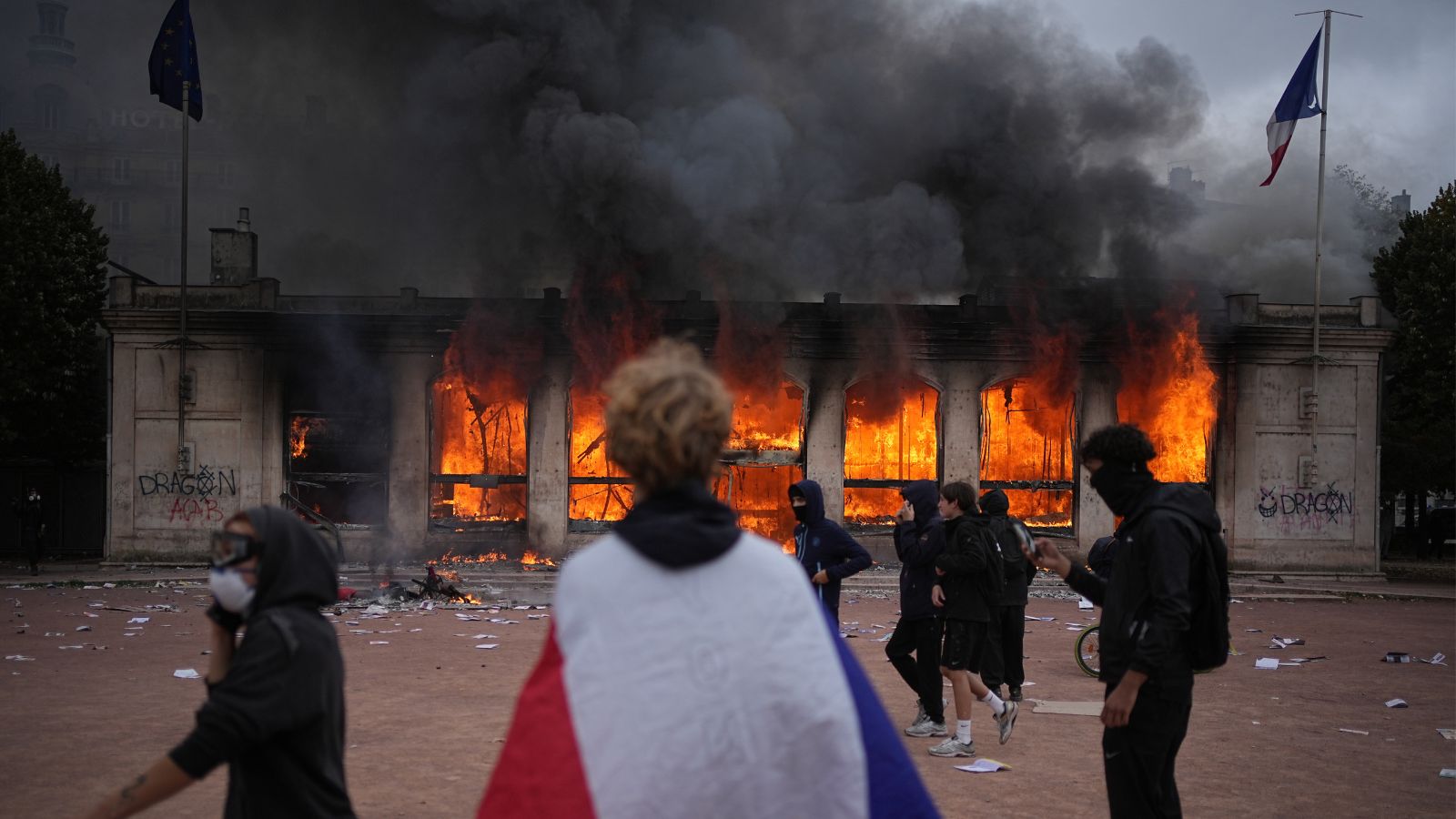
Radar screens flicker in dim control rooms. Technicians watch green lines sweep across glass monitors, tracing arcs through the upper atmosphere. Thousands of miles away, families gather around dinner tables, talking softly about the rising cost of bread, unaware that the quiet air above them carries an invisible tension. Expanding on this theme, you can also read: Inside the French Unrest Crisis Trump Turned Into a Punchline.
The news reports speak in cold, administrative terms. A coalition intercepts drones. A neighboring state weighs its options, measuring the cost of intervention against the peril of standing still. Words like stability, defense, and airspace echo through morning broadcasts. But behind those clinical terms lies a human reality of calculated risks, sleepless watches, and the heavy burden of keeping ordinary life separate from encroaching chaos.
Consider what happens when a single warning bell rings in the dark. Observers at Reuters have shared their thoughts on this trend.
For years, the rhythm of regional politics has been measured by brief flashes of light on the horizon and urgent dispatches that fade by the afternoon
The Sky Above the Border and the Wait for Quiet
news
The coffee goes cold on the zinc counter before anyone remembers to drink it. In a quiet room hundreds of miles from the frontline, a technician stares at a glowing green cluster of pixels that looks less like a threat and more like a stray ember drifting across a dark screen. Down below, on the ground, children do not hear the hum of the engine until it is already overhead, a thin, insectoid drone vibrating against the morning air.
We talk about geopolitics as if it were a game of chess played on a polished mahogany board by old men in velvet chairs. We use words like "coalition" and "airspace" to soften the edges of things that burn. But scale down the lens. Look closer.
Consider a hypothetical resident of a border town, someone named Tariq, who wakes up not to an alarm clock, but to the dry, sharp rattle of windowpanes. He does not check a news feed first; he looks up. The sky is the color of bruised iron. Somewhere out there, hidden in the stratosphere, a machine built of carbon fiber and microchips is flying on autopilot, carrying a payload designed to turn a neighborhood into rubble. And somewhere else, a radar operator’s finger twitches over a red switch.
This is the reality of the skies over the Arabian Peninsula lately. It is a theatre of invisible mechanics where threats arrive unannounced from the dark.
Reports flash across international terminals with clinical detachment. A coalition led by Saudi forces intercepts hostile drones over strategic sectors. Routine intercepts. Statistics. Numbers on a spreadsheet. Yet, behind every successful interception—every flash of light in the upper atmosphere that turns a flying explosive into harmless confetti—lies a cascade of split-second human decisions. Seconds matter. Hesitation is fatal.
Meanwhile, diplomatic currents shift beneath the surface like tectonic plates. Whispers from Cairo suggest that Egypt, with its massive military apparatus and deep historical stake in regional stability, weighs the heavy question of sending help. Not just ammunition or spare parts, but real, tangible boots and strategic weight into a theater that threatens to unravel entirely. To understand why that matters, you have to look past the press releases and understand the sheer exhaustion of a region that has lived on the precipice of escalation for too long.
War has a way of becoming white noise until it knocks on your door.
When drones cross borders without permission, they are not just violating sovereignty; they are puncturing the fragile illusion of safety that ordinary people cling to. Imagine standing in your courtyard, smelling the dust and the dry earth, and watching a streak of fire cut across the blue. You wonder: Is it ours? Is it theirs? Will it land in the market, or will the invisible shield catch it in time?
That anxiety is the hidden cost of modern defense.
The coalition forces work in shifts, eyes bloodshot, fueled by cheap stimulants and adrenaline. They watch screens that track dots moving at hundreds of miles per hour. When a drone is spotted, interceptor missiles roar upward. The physics are brutal. Kinetic energy meets kinetic energy. A roar shakes the ground, followed by a shower of smoking debris falling safely into uninhabited dunes or intercepted miles out at sea.
Relief washes over the control room. For now.
But geopolitical equations are never solved by a single interception. Every time a drone is neutralized, the underlying tension remains unaddressed. Who launched it? Why? What happens when the next wave is faster, smarter, harder to catch?
Egypt's deliberation adds a new layer to this tense geometry. Cairo is cautious. History teaches Egyptian leadership that stepping into the quagmire of Gulf and peninsular conflicts is a heavy burden. It requires a delicate dance between showing solidarity with allies and avoiding an endless spiral of entanglement. Every diplomatic cable sent across the Red Sea is weighed against the domestic economic pressures at home, the cost of deployment, and the unpredictable nature of modern proxy warfare.
Yet, inaction has its price, too. If regional security fractures entirely, the shockwaves will reach Cairo anyway—in the price of fuel, in shipping lanes through the Suez Canal, in the quiet destabilization of an already fragile neighborhood.
Back in the border town, the smoke from the morning's interception fades into the haze of the desert heat. Tariq finishes his lukewarm tea. The radio plays a low, rhythmic newscast reporting that the situation is "under control."
He walks outside and looks up at the blank, blue sky. It looks empty. It looks peaceful. But he knows better. Everyone knows better. The quiet is only ever temporary, just a deep breath held before the machine wakes up again.