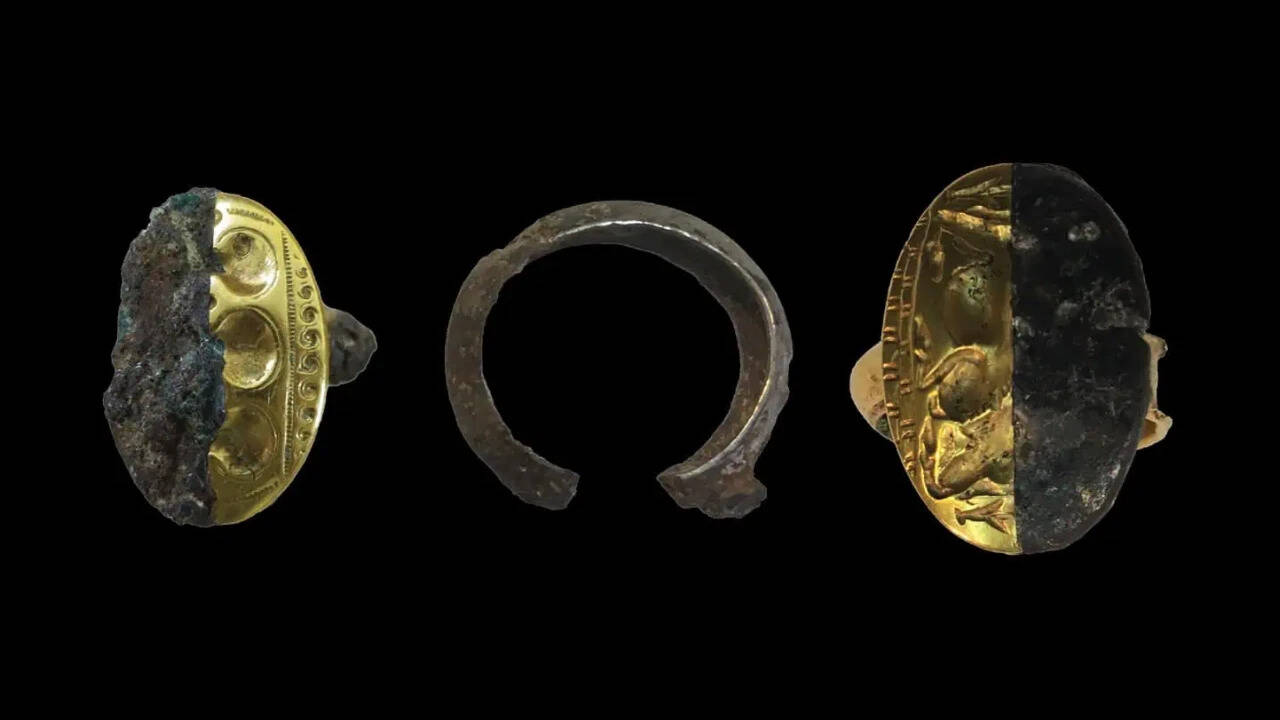
Long before mass-produced furnaces mastered terrestrial ore, the most powerful people in the Aegean wore jewelry forged from chunks of fallen space rock. Recent chemical analyses of ninety-one Bronze Age and Early Iron Age artifacts from across Greece reveal that thirteen antique rings and fragments contain the telltale nickel concentrations of extraterrestrial iron meteorites. These objects, primarily dating from the eighteenth to fourteenth centuries BCE, demonstrate that celestial metal was a carefully curated luxury of Minoan and Mycenaean elites.
The findings upend the conventional narrative of early metallurgy. For decades, standard historical models assumed that iron only entered widespread circulation following the collapse of palatial centers around the twelfth century BCE. Yet these tiny rings indicate that an ultra-rare alternative existed centuries earlier. Because iron meteorites arrive on Earth already reduced to metallic form, ancient artisans could bypass the complex, high-temperature smelting procedures required to extract usable metal from earthly stone. They worked with what dropped from the heavens.
The Chemistry of Ancient Prestige
Pinpointing the origin of these ancient artifacts required non-destructive analytical techniques capable of protecting fragile museum pieces. Researchers deployed portable X-ray fluorescence to scan artifacts housed across nineteen different institutions without taking physical samples.
The primary marker for celestial origin is nickel. While terrestrial iron melted from local ores typically contains negligible amounts of the element, iron-nickel alloys native to asteroids often boast high concentrations. Out of the comprehensive collection surveyed, thirteen items triggered high nickel readings.
Every single one of those thirteen nickel-bearing items shared a specific format: they were finger rings or fragments of rings.
The wider archaeological collection contained weapons, utilitarian tools, and miscellaneous ornaments. None of the weapons showed meteoritic signatures. The material was reserved exclusively for personal adornment, specifically elite signet rings that often combined the dark, shimmering iron with gold, silver, or bronze.
Decoding the Elite Distribution
The physical locations where these rings surfaced tell a clear story of political hierarchy and centralized wealth. Archaeologists recovered the items from wealthy tholos and chamber tombs in regions like the Peloponnese, including sites such as Mycenae, Vapheio, Kakovatos, Aidonia, and Dendra.
One particularly telling example emerged from the Minoan sanctuary at Anemospilia on Crete. Here, an iron ring rested on the finger of an individual identified by excavators as a high-ranking priest. Another pair of rings from a tomb at Dendra turned up inside an ornate gold vessel decorated with maritime motifs.
These contexts rule out any notion of accidental utility. The rings functioned as elite signets, power tokens, and visible markers of status. To wear iron before the Iron Age was an explicit statement of exceptional access. To wear iron that had fallen from the sky elevated that statement into the realm of the divine.
The Trade Route Question
Greece and Crete lack the arid environmental conditions necessary to preserve meteorites on the surface over millennia, and actual impact events in the immediate region were exceptionally rare. Local populations could not simply walk out into a backyard desert and pick up fallen asteroids.
The raw material had to travel. Researchers point toward Egypt as a primary source for the metallic imports. Egypt possessed vast, dry desert expanses where meteorites remained visible and intact, coupled with an established history of utilizing celestial iron—exemplified most famously by the iron dagger found in the tomb of Tutankhamun.
Extensive maritime trade networks connected the Aegean palatial centers with the Nile Valley and the broader Near East. Raw or semi-worked meteoritic chunks likely moved along these exact commercial corridors, traded alongside luxury goods, glass, and precious stones.
The Disappearance of Celestial Fashion
By the end of the twelfth century BCE, this exclusive tradition vanished. Meteoritic iron rings disappear from the archaeological record precisely as the Mycenaean palatial system collapses and conventional iron-smelting technology becomes widespread.
When ordinary iron tools and weapons flooded the market, the exceptional aura of space metal dissolved. A ring forged from a meteorite could no longer serve as a unique monopoly on metallic iron when any local blacksmith could pull functional metal from terrestrial ore. The fashion faded into obscurity, leaving behind silent metallic circles buried in the tombs of a forgotten aristocracy.


