The Sound of the Morning Routine
Chen Feng wakes up at 5:30 AM to the smell of roasted coffee beans and the distant, familiar drone of turboprop engines. He does not open his eyes right away. Instead, he lies in his small Taipei apartment, listening, measuring the pitch of the sound against the hum of the city’s early morning traffic.
For the people living on this island, geopolitics is not a headline you scroll past over breakfast. It is a sensory experience. It is the vibration in your teacup.
On this particular morning, the air feels heavier. The news cycle had already been humming with the fallout from Donald Trump’s latest remarks regarding Taiwan's defense and its economic relationship with the United States. To the outside world, these statements are pieces on a global chessboard, fodder for talk shows and think-tank white papers. But in the Taiwan Strait, words have immediate, physical weight. Within hours of the rhetoric shifting across the Pacific, the sky filled with steel.
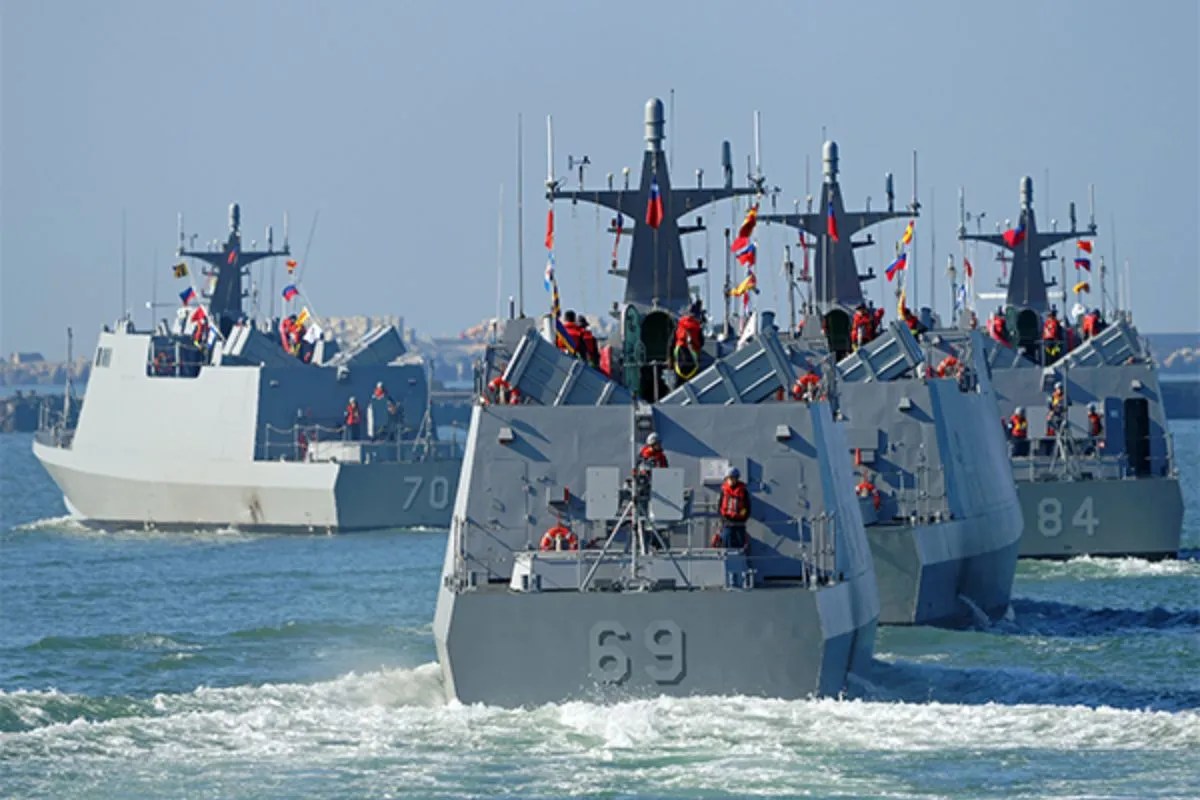
Sixteen Chinese military aircraft. Eight naval vessels.
They crossed the median line, carving paths through the air defense identification zone. They did not drop bombs. They did not fire missiles. They did something far more calculated: they conducted a rehearsal.
The Geography of Anxiety
To understand why sixteen planes matter, you have to look at a map through the eyes of a strategist in Beijing. Taiwan sits like a cork in the bottle of the First Island Chain. For the Chinese Communist Party, the island is a historical loose end, a piece of unfinished business from a civil war that paused but never truly ended.
But for Chen and his neighbors, it is simply home. It is a place of night markets, bustling semiconductor fabs, and quiet temples nestled in green mountains.
The strategy currently unfolding is what military analysts call gray-zone warfare. It is an intentional blur between peace and conflict. If a nation launches a full-scale invasion, the world reacts. The global community mobilizes. Sanctions fall like hammers. But what do you do when a neighbor simply edges closer, day by day, testing the boundaries until the boundaries themselves cease to mean anything?
Consider the mechanics of psychological exhaustion. Every time an Shaanxi Y-8 anti-submarine aircraft or a J-16 fighter jet breaches the zone, Taiwan’s air force must scramble. Pilots drop their forks, sprint to their hangars, and rocket into the sky. Mechanics work overtime. Metal fatigues. Fuel burns.
More importantly, human nerves fray.
It is a slow, grinding tax on a nation’s collective psyche. The goal is not a sudden, explosive victory. The goal is to make the people of Taiwan look up at the sky, sigh, and accept the encroachment as the new normal. Beijing is painting a blueprint for capture, not with a sudden stroke of a brush, but with thousands of tiny, agonizing lines.
The Rhetoric Catalyst
Washington has long maintained a policy of strategic ambiguity regarding Taiwan. It is a diplomatic dance where the U.S. provides the island with the means to defend itself but remains intentionally vague about whether American troops would actually bleed for Taipei. It is a delicate equilibrium that has kept the peace for decades.
Then comes the disruption.
When political figures suggest that defense agreements are transactional, or that distance dictates destiny, the equilibrium shatters. Beijing views these moments not as political theater, but as green lights. They are windows of opportunity to test resolve, to see if the fabric of international alliances is as sturdy as it looks on paper.
The sixteen aircraft and eight ships that swarmed the strait following the latest American political commentary were not sent by accident. They were a live-fire questionnaire sent to both Washington and Taipei. The question was simple: If we move a little closer today, who will stop us?
The response from Taiwan’s defense ministry was predictably stoic. Ships were deployed, air reconnaissance patrols were stood up, and land-based missile systems tracked the intruders. It is a highly professional, deeply disciplined dance. But it is also a dangerous one.
When dozens of high-speed military assets operate in close proximity under high stress, the margin for error evaporates. A single pilot miscalculating a turn, a lone radar operator misinterpreting a signal, and a cold war instantly turns hot.
Living in the Shadow of the Blueprint
Walk through the streets of Ximending in Taipei on a weekend afternoon, and you will see teenagers filming dance videos, couples holding hands over plates of stinky tofu, and elderly men playing chess in the park. It looks like any prosperous, peaceful democratic society.
But talk to them long enough, and the vulnerability emerges.
"We don't talk about it every day," says Lin, a twenty-four-year-old software engineer, when asked about the naval ships circling the island. "If you think about the planes every hour, you go crazy. So you buy your groceries, you pay your rent, and you pretend the sky is just the sky."
This is the true human cost of the blueprint Beijing is drawing. It forces an entire population to compartmentalize their own existential dread. It requires a quiet, heroic level of resilience just to go to work in the morning when you know your city is considered a target on someone else's war room table.
The blueprint for occupation is not just about amphibious landings and cyberattacks on the power grid. It is about isolating Taiwan. By surrounding the island with naval vessels, China demonstrates its capability to implement a blockade. They are showing that they can cut off the lifeblood of the island—its energy imports and its global trade—without firing a single shot.
Taiwan produces over ninety percent of the world's most advanced microchips. If this island is choked out, the global economy does not just slow down; it grinds to a terrifying halt. Your smartphone, your car’s braking system, the medical equipment in your local hospital—they all trace their lineage back to the factories sitting in the shadow of Chinese fighter paths.
The Weight of the Unwritten Future
The confrontation in the Taiwan Strait is often framed as a clash of systems: authoritarianism versus democracy. And it is. But fundamentally, it is a story about people who want the right to choose their own tomorrow.
The sixteen planes have returned to their bases on the mainland. The eight ships have drifted back toward their designated patrol sectors. The immediate alarm has faded, replaced once again by the hum of Taipei’s traffic and the chatter of evening news anchors analyzing the stock market.
But the silence is deceptive.
Everyone on the island knows that the planes will return tomorrow, or the day after, or the day after that. Each transgression erodes a little more of the old status quo, leaving behind a raw, unpredictable reality. The blueprint is being drawn in real-time, one flight path, one naval coordinate, one political statement at a time.
Chen Feng sits at his kitchen table, finishing the last of his coffee. The drone of the aircraft has completely vanished now, swallowed by the roar of a city waking up to face another day of ordinary life under extraordinary circumstances. He picks up his briefcase, locks his door, and steps out into the morning heat, fully aware that the quiet above him is merely an intermission.