The smell reaches you long before you see the flames. It is a dense, oily stench—burning rubber mixed with the bitter scent of scorched insulation and damp earth.
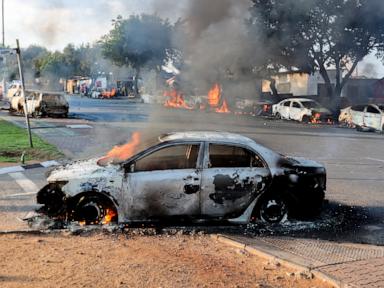
By the time the commuter minibus swerves onto the gravel shoulder, choking on a plume of black smoke, the barricade is already set. Tires blaze in the middle of the national route, glowing with an angry, pulsating core against the bruised twilight of a Johannesburg evening. Men silhouettes dance against the glare, shouting through cupped hands, their voices lost to the crackle of synthetic rubber melting into asphalt. You might also find this similar story insightful: Why Blaming ICE Misses The Real Killer In Our Broken Border System.
This is not a riot born of sudden impulse. It is the physical manifestation of waiting.
To understand why a nation erupts over a piece of paper, you have to stand in the queues. Not for an hour, but for days. Imagine arriving before dawn outside the Department of Home Affairs offices in Pretoria or Marabastad. The air is cold, biting through cheap jackets. Thousands of people cluster together like migratory birds caught in a sudden frost. They are teachers, accountants, mechanics, and mothers holding infants wrapped in worn blankets. They have fled conflict zones across the continent—from the rolling hills of the Kivus to the scorched plains of the Horn of Africa—seeking sanctuary under a constitution that promised dignity to all who live within its borders. As reported in recent coverage by NBC News, the effects are notable.
Then the iron gates open. Or worse, they do not.
A security guard steps forward, waving a clipboard, shaking his head. The quota is met. The system is offline. Come back next week. Come back next month. Except next month, the temporary asylum transit visa will have expired. And an expired visa in a foreign land transforms a human being into a ghost.
Without valid documentation, bank accounts freeze. Employers refuse to pay, terrified of labor inspectors. Landlords demand rent while threatening eviction to extortionist heights because the tenant has no legal recourse. You are reduced to an invisible cipher, breathing air but existing entirely outside the ledger of the state.
When the state tells a population for months, or years, that their administrative limbo is permanent, the frustration metastasizes. It turns inward first—manifesting as quiet desperation in cramped rented rooms where four families share a single tap. Then, inevitably, it spills outward into the streets.
Smoke rises. Traffic halts. And the world outside looks on, confused by the sudden violence.
The recent protests over asylum rulings in South Africa did not erupt in a vacuum. They are the friction point where two unstoppable forces collide: a strained legal infrastructure buckling under the sheer weight of continental migration, and human beings whose survival depends entirely on the stroke of a bureaucratic pen.
Consider the complexity of the machine itself. South Africa’s Refugee Act of 1998 was once hailed as a beacon of progressive human rights. It offered an open-door policy rooted in the trauma of the country's own apartheid past, promising that those fleeing persecution would find safe harbor. But laws written on clean parliamentary paper often fray when dragged across the rough terrain of economic reality.
Decades of high unemployment, severe infrastructural strain, and deep-seated inequality have left local communities feeling equally abandoned. When jobs are scarce and municipal services falter—when water taps run dry in townships that have waited twenty years for basic upgrades—the arrival of hundreds of thousands of asylum seekers creates a tinderbox.
Populist rhetoric easily finds fertile ground in such soil. It is simpler to point a finger at the stranger standing at the corner looking for day labor than it is to untangle the centuries-old structural knots of economic stagnation. Resentment grows. Rumors spread like dry grass in summer. And soon, the argument shifts from a failure of state administration to a conflict between neighbors who should be allies in survival.
Yet, behind the political posturing and the burning barricades lie individual lives stripped of their narrative.
Take someone like Samuel. Let us call him that, though his real name is known only to the registry clerks who lost his file three years ago. Back home, Samuel taught high school mathematics. He knows the proof of the Pythagorean theorem by heart and can calculate the trajectory of falling bodies without blinking. But none of that matters when you are sleeping on a flattened cardboard box beneath a highway overpass in Durban, watching the headlights sweep across the concrete ceiling overhead.
Samuel does not want to burn tires. He wants to grade papers. He wants to pay taxes. He wants his children to sleep through the night without waking up to the sound of sirens or the paralyzing fear of a midnight raid by law enforcement officers checking papers.
When an asylum ruling is delayed, denied, or mishandled by an overburdened appellate body, it is not just a statistic added to an annual government report. For Samuel, it is another year of living in suspension. It is another season of missed opportunities, of watching potential curdle into stagnation.
When millions of people exist in this twilight state, the social fabric begins to tear at the seams. Communities polarize. Trust evaporates. The rule of law—the very foundation required to adjudicate claims fairly and protect both citizens and newcomers—begins to look less like a shield and more like an arbitrary weapon wielded by an invisible hand.
The burning vehicles on the highway are symptoms of a deeper fever. They are loud, destructive, and impossible to ignore. They force television cameras to pan away from entertainment broadcasts to show charred metal frames sitting mournfully on the asphalt. They demand attention from politicians sitting in air-conditioned offices miles away from the smoke.
But focusing solely on the fire misses the tragedy of the fuel.
True reform will never be found in stronger police batons or harsher deportation targets alone. Those are merely attempts to douse a gasoline fire with a teacup. The solution requires a fundamental reckoning with the capacity of the state to process human dignity at scale. It requires digitized archives that do not mysteriously catch fire, transparent adjudication processes that do not take a decade to resolve, and economic policies that address the legitimate grievances of local citizens while honoring humanitarian obligations.
Until then, the tension remains suspended in the air like dust before a thunderstorm.
The sun dips below the horizon, painting the Johannesburg skyline in shades of bruised purple and gold. The roadblocks are cleared by dawn, swept away by municipal cleaners who push the ash into neat piles by the curb. The traffic resumes its relentless, hurried pulse.
People step around the blackened patches on the road, adjusting their bags, checking their watches, and keeping their eyes fixed forward. But the smell of scorched rubber lingers in the morning breeze, a silent reminder that paper walls cannot hold back the tide of human need forever.