The air inside the boardroom on the upper floors of a Beijing skyscraper is always chilled to exactly twenty-one degrees. Outside, the smog blurs the horizon. Inside, the digital ticker glows red. For five years, the math was simple. You pour billions of yuan into the red mud of Central Sulawesi, you build processing plants that eat electricity and breathe sulfur, and you secure the one thing the future cannot run without.
Nickel.
Without it, the electric vehicle revolution stalls on the drawing board. Without it, the mega-factories in Shenzhen and Shanghai have nothing to feed their battery lines. So, the capital flowed south. It flowed into a remote Indonesian coastline that, almost overnight, transformed from a sleepy cluster of fishing villages into a roaring, metallic metropolis known as the Morowali Industrial Park.
But a few months ago, the music slowed. The ink on the latest regulatory decrees from Jakarta dried, and a sudden, freezing draft blew through those climate-controlled boardrooms in China.
Indonesia changed the rules of the game it invited everyone to play.
The Weight of the Red Dirt
To understand why a bureaucrat’s pen stroke in Jakarta can cause a billionaire in Hangzhou to lose sleep, you have to stand in the dust.
Let us conjure a man named Chen. He is not a real executive, but he represents a very real, very anxious class of project managers currently pacing the floors of Jakarta’s luxury hotels. For three years, Chen’s life has been measured in metric tons of high-pressure acid leach residue. He knows the smell of the tropical rain hitting hot slag. He knows the exact percentage of nickel ore required to make a venture profitable when the global market prices fluctuate.
For a long time, Indonesia was a paradise for men like Chen. The government wanted development, and China had the cash and the engineering blueprint. When Indonesia banned the export of raw, unprocessed nickel ore in 2020, it was a masterstroke of economic nationalism. The message was clear: if you want our resources, you must build your factories here.
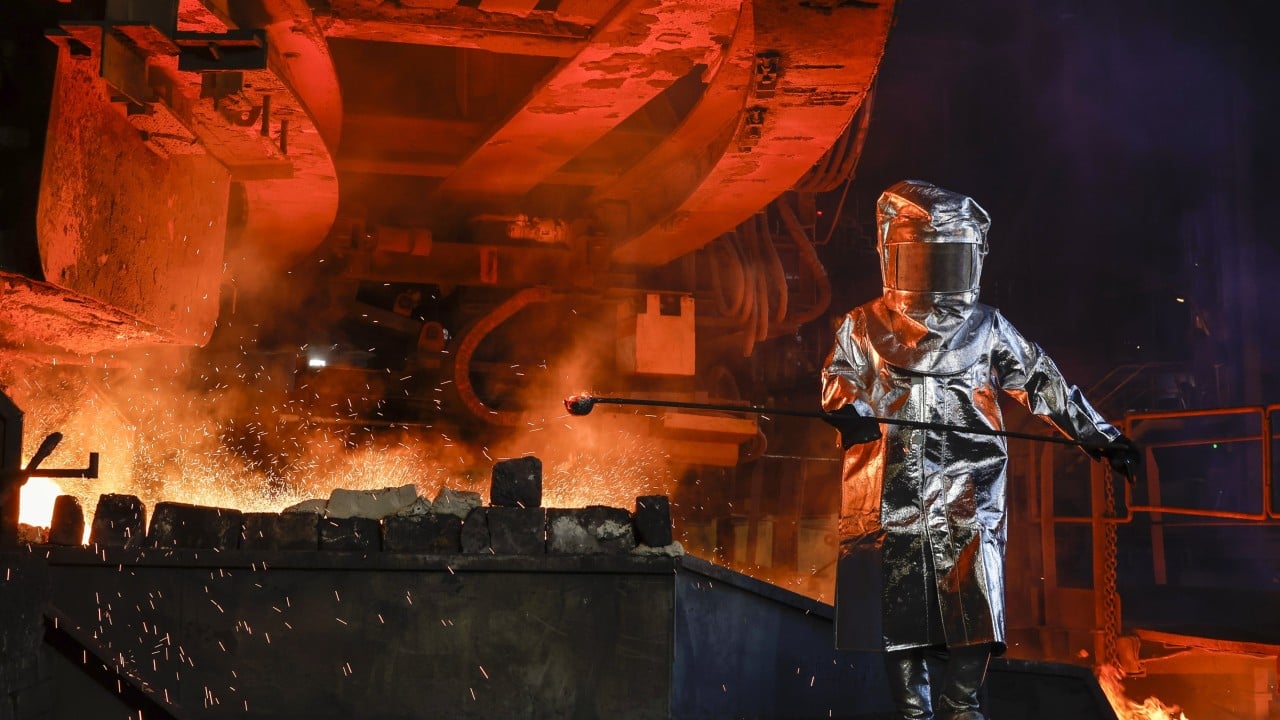
And so, they built. They built roads, coal-fired power plants, deep-water ports, and smelting complexes that look like sci-fi fortresses dropped into the middle of the jungle. Chinese companies plowed over thirty billion dollars into the archipelago's nickel sector.
Then came the shift.
It did not arrive with a dramatic announcement or a sudden expulsion of foreign workers. It arrived in the quiet, agonizing delay of paperwork. The Indonesian government began tightening its grip on RKAB approvals—the annual production and mining quotas that every company needs just to dig dirt out of the ground.
Suddenly, the conveyor belts slowed down.
Imagine buying a state-of-the-art sports car, fueling it up, and then being told you are only allowed to drive it at five miles per hour because the local council is recalculating the speed limits. That is the reality settling over the industrial parks. The raw ore isn't moving to the smelters fast enough. Prices for local ore spiked because of the artificial scarcity, cutting deeply into the profit margins of the very plants foreign investors just spent billions to construct.
The Phantom of the Green Market
The anxiety runs deeper than a mere administrative bottleneck. The real friction is cultural, geopolitical, and environmental.
For years, the Western world looked at Indonesia’s nickel boom with a mixture of envy and distaste. The process used by many Chinese-funded plants to extract battery-grade nickel is incredibly carbon-intensive. It relies heavily on coal power. It generates massive amounts of waste tailing that must be stored safely in a region prone to violent earthquakes and torrential monsoons.
Jakarta is acutely aware of this reputation. The political leadership realizes that if Indonesian nickel is branded as "dirty," Western automakers like Tesla, Volkswagen, and Ford will hesitate to buy it. They want the investment, yes, but they also want to climb the global value chain. They want to produce the actual batteries, even the cars themselves, right there in Java and Sumatra.
To do that, Indonesia needs to clean up its act. Or at least, it needs to look like it is trying.
This is where the trap snaps shut on the investors. Jakarta has started hinting at caps on lower-grade nickel capacity to prevent oversupply and force a pivot toward cleaner, more sustainable technologies. They are also aggressively pushing for a free trade agreement with the United States so that Indonesian nickel can qualify for the lucrative tax credits under the American Inflation Reduction Act.
But Washington is explicit: if a project has too much Chinese ownership, it gets frozen out of the American market.
Consider the position this puts an investor in. You risked your capital when no one else would. You built the infrastructure in the mud. Now, the host country is politely suggesting that you might need to dilute your equity, slow down your production, and change your entire energy source to appease customers in a country that views your homeland as a strategic rival.
It feels like betrayal. But in the world of global commodities, there is no room for hurt feelings. There is only risk assessment.
When the Capital Goes Cold
Money is a coward. It runs at the first sign of unpredictable governance.
The hesitation among Chinese financiers is not a loud protest; it is a silence. It is the postponement of Phase 2 expansions. It is the extra weeks spent auditing compliance risks before signing off on a new loan.
The core issue isn't that the new regulations are inherently bad. A nation has every right to manage its natural wealth, protect its environment, and demand a fair share of the profits. The problem is the unpredictability. When rules change mid-stream, the spreadsheets used to justify a twenty-year investment become useless fiction.
The human cost of this corporate standoff doesn't register on the stock exchanges, but it is visible on the ground. It is found in the local Indonesian contractors who bought trucks on credit, banking on a continuous boom, now watching those trucks sit idle in the red dust. It is found in the young engineers from Hunan who signed three-year contracts away from their families, now wondering if their project will be mothballed before their tour is up.
The romance of the frontier is gone. The era of easy dirt and unmonitored smokestacks is ending.
The Silent Smelter
The sun sets over the Banda Sea, casting a long, orange glow over the metallic spires of Morowali. From a distance, the industrial park looks like an achievement of pure human will—a monument to what happens when massive capital meets massive resource wealth.
Smoke still rises from the stacks. The furnaces are still hot. But the atmosphere inside the complexes has fundamentally shifted. The wild, gold-rush optimism of the early 2020s has cured into something much more fragile.
Indonesia proved it could force the world to build factories on its shores. Now, it is trying to prove it can dictate terms to the very superpower that built them. It is a high-stakes game of chicken played with the literal building blocks of the twenty-first century economy.
The trucks continue to roll, their tires caked in that ubiquitous, rust-colored soil, carrying the raw pieces of tomorrow's batteries. But the drivers look at the sky a little more often now, wondering if the next storm will come from the clouds, or from the capital city across the sea.